Abstract
ABSTRACT. Haberlea rhodopensis (Friv.) is known as a plant capable to withstand harsh environmental conditions. Here we examined changes of photosynthetic pigments contents in plants subjected to prolonged light deprivation. For this purpose plants were kept for 5 weeks at constant temperature and humidity and in complete darkness. According to our data the pigment contents in light-deprived plants, measured as mg per gram dry weight (DW), were higher than those in light-grown plants. On the other hand, DW of leaves compared to the fresh weights (FW) decreased during first two weeks probably due to the usage of assimilates as energy sources. So we can explain the rapid initial increase in pigment contents with the decrease of DW. This explanation however did not correlate with observed changes in Chl a content, which continued to increase during the first three weeks. We found that excised leaves from plants deprived from light for two weeks and incubated in darkness in 5-aminolevolinic acid solution accumulated both protochlorophyllide and chlorophyllide. Therefore the observed changes in Chl a contents could be explained if we accept that Haberlea leaves continue to synthesize limited amounts of chlorophyll(ide) a in dankness.
Abstract from the paper’s OpenAlex record, shown for indexing and research. Copyright remains with the authors or the publisher. Read at the source ↗
The text the model read, with the source record’s inline markup (italics, sub- and superscripts) rendered and its character entities decoded; quote offsets refer to the raw text.
Claims 6
Claim · model-written summary
Pigment contents of light-deprived plants (per g dry weight) were higher than in light-grown plants.
- Taxon
- Haberlea rhodopensis
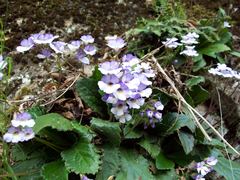 Haberlea rhodopensise0
- Treatment
- light-deprived plantse1
- Outcome
- pigment contentse1
- Direction
- highere1
- Comparator
- light-grown plantse1
Organisms pictured · Representative pictures of the matched species, not figures from the paper.
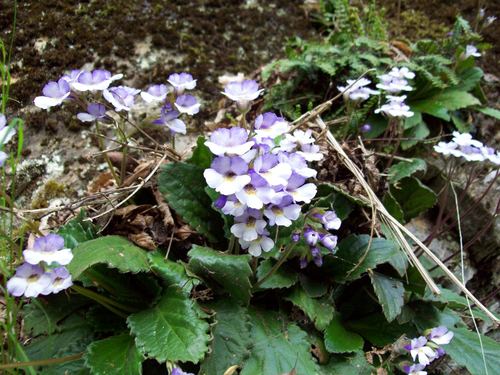
Verbatim
e0“Haberlea rhodopensis (Friv.) is known as a plant capable to withstand harsh environmental conditions”
e1“the pigment contents in light-deprived plants, measured as mg per gram dry weight (DW), were higher than those in light-grown plants”
Claim · model-written summary
Leaf dry weight relative to fresh weight decreased during the first two weeks of light deprivation.
- Taxon
- Haberlea rhodopensisHaberlea rhodopensise0
- Organ / stage
- leavese2
- Outcome
- DW of leaves compared to the fresh weights (FW)e2
- Direction
- decreasede2
- Qualifier
- during first two weekse2
Organisms pictured · Representative pictures of the matched species, not figures from the paper.
Verbatim
e0“Haberlea rhodopensis (Friv.) is known as a plant capable to withstand harsh environmental conditions”
e2“DW of leaves compared to the fresh weights (FW) decreased during first two weeks”
Claim · model-written summary
The rapid initial rise in pigment contents is explained by the decrease in dry weight.
- Taxon
- Haberlea rhodopensisHaberlea rhodopensise0
- Outcome
- rapid initial increase in pigment contentse3
- Qualifier
- with the decrease of DWe3
Organisms pictured · Representative pictures of the matched species, not figures from the paper.
Verbatim
e0“Haberlea rhodopensis (Friv.) is known as a plant capable to withstand harsh environmental conditions”
e3“So we can explain the rapid initial increase in pigment contents with the decrease of DW”
Claim · model-written summary
Chlorophyll a content continued to increase during the first three weeks of light deprivation.
- Taxon
- Haberlea rhodopensisHaberlea rhodopensise0
- Outcome
- Chl a contente4
- Direction
- continued to increasee4
- Qualifier
- during the first three weekse4
Organisms pictured · Representative pictures of the matched species, not figures from the paper.
Verbatim
e0“Haberlea rhodopensis (Friv.) is known as a plant capable to withstand harsh environmental conditions”
e4“observed changes in Chl a content, which continued to increase during the first three weeks”
Claim · model-written summary
Excised leaves from plants deprived of light for two weeks and incubated in darkness with 5-aminolevulinic acid accumulated protochlorophyllide and chlorophyllide.
- Taxon
- Haberlea rhodopensisHaberlea rhodopensise0
- Organ / stage
- excised leavese5
- Treatment
- 5-aminolevolinic acid solutione5
- Outcome
- accumulated both protochlorophyllide and chlorophyllidee5
Organisms pictured · Representative pictures of the matched species, not figures from the paper.
Verbatim
e0“Haberlea rhodopensis (Friv.) is known as a plant capable to withstand harsh environmental conditions”
e5“excised leaves from plants deprived from light for two weeks and incubated in darkness in 5-aminolevolinic acid solution accumulated both protochlorophyllide and chlorophyllide”
Claim · model-written summary
Haberlea leaves may continue to synthesize limited amounts of chlorophyll(ide) a in darkness, which would explain the Chl a changes.
- Taxon
- Haberlea rhodopensisHaberlea rhodopensise0
- Outcome
- Chl a contente4
- Qualifier
- continue to synthesize limited amounts of chlorophyll(ide) a in danknesse6
Organisms pictured · Representative pictures of the matched species, not figures from the paper.
Verbatim
e0“Haberlea rhodopensis (Friv.) is known as a plant capable to withstand harsh environmental conditions”
e4“observed changes in Chl a content, which continued to increase during the first three weeks”
e6“could be explained if we accept that Haberlea leaves continue to synthesize limited amounts of chlorophyll(ide) a in dankness”