Abstract
A field experiment was performed to determine the effects of using humic acid with irrigation on quantitative and qualitative yield traits of sugar beet grown on calcareous soils in Esfaraen, located in the North-East of Iran. Treatments consisted of three levels of humic acid concentration (zero or control, 2.5 and 5 L ha-1) and the number of applications (once 45 days after planting; twice, 45 and 75 days after planting; three times, respectively 45, 75 and 105 days after planting). The effect of the two experimental factors on sugar beet yield traits such as the content of sucrose, refined sugar, molasses forming substances, root yield and refined sugar yield were evaluated. The results proved the existence of a significant interaction between humic acid concentration and the number of applications on all parameters under study. The application of humic acid caused a significant increase of sucrose, refined sugar, root yield and refined sugar yield and a reduction in molasses forming substances content, compared to the control. The increased amount of sucrose and refined sugar content in all applications in concentration of 2.5 L ha-1 humic acid was more than with 5 L ha-1. Similarly, the content of molasses forming substances showed more reduction in 2.5 L ha-1 than in 5 L ha-1 treatment. However, the results revealed that the highest root yield and refined sugar yield, as the main qualitative and quantitative parameters of sugar beet yield, were achieved by three times application of 5 L ha-1 that had 24 and 37% increase compared to control.
Abstract from the paper’s OpenAlex record; open copy licensed cc-by. Read at the source ↗
The text the model read, with the source record’s inline markup (italics, sub- and superscripts) rendered and its character entities decoded; quote offsets refer to the raw text.
Claims 11
Claim · model-written summary
Concentration and application number interacted significantly for all studied parameters.
- Taxon
- Sugar Beet (Beta vulgaris L.)
 Beta vulgarist0
- Treatment
- humic acid concentratione0
- Outcome
- all parameters under studye0
Not reportedDirection
Organisms pictured · Representative pictures of the matched species, not figures from the paper.
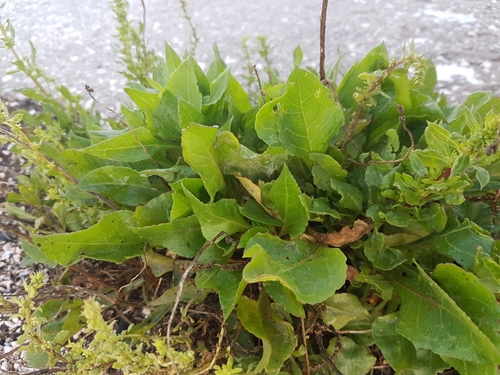
Verbatim
e0“The results proved the existence of a significant interaction between humic acid concentration and the number of applications on all parameters under study.”
t0“Sugar Beet (Beta vulgaris L.)”
Claim · model-written summary
Humic acid increased sucrose versus control.
- Taxon
- sugar beet
 Beta vulgaris subsp. vulgarist0
- Treatment
- humic acide0
- Outcome
- sucrosee0
- Direction
- increasee0
- Comparator
- the controle0
Organisms pictured · Representative pictures of the matched species, not figures from the paper.

Verbatim
e0“The application of humic acid caused a significant increase of sucrose, refined sugar, root yield and refined sugar yield and a reduction in molasses forming substances content, compared to the control.”
t0“Sugar Beet (Beta vulgaris L.)”
Claim · model-written summary
Humic acid increased refined sugar versus control.
- Taxon
- sugar beetBeta vulgaris subsp. vulgarist0
- Treatment
- humic acide0
- Outcome
- refined sugare0
- Direction
- increasee0
- Comparator
- the controle0
Organisms pictured · Representative pictures of the matched species, not figures from the paper.
Verbatim
e0“The application of humic acid caused a significant increase of sucrose, refined sugar, root yield and refined sugar yield and a reduction in molasses forming substances content, compared to the control.”
t0“Sugar Beet (Beta vulgaris L.)”
Claim · model-written summary
Humic acid increased root yield versus control.
- Taxon
- sugar beetBeta vulgaris subsp. vulgarist0
- Treatment
- humic acide0
- Outcome
- root yielde0
- Direction
- increasee0
- Comparator
- the controle0
Organisms pictured · Representative pictures of the matched species, not figures from the paper.
Verbatim
e0“The application of humic acid caused a significant increase of sucrose, refined sugar, root yield and refined sugar yield and a reduction in molasses forming substances content, compared to the control.”
t0“Sugar Beet (Beta vulgaris L.)”
Claim · model-written summary
Humic acid increased refined sugar yield versus control.
- Taxon
- sugar beetBeta vulgaris subsp. vulgarist0
- Treatment
- humic acide0
- Outcome
- refined sugar yielde0
- Direction
- increasee0
- Comparator
- the controle0
Organisms pictured · Representative pictures of the matched species, not figures from the paper.
Verbatim
e0“The application of humic acid caused a significant increase of sucrose, refined sugar, root yield and refined sugar yield and a reduction in molasses forming substances content, compared to the control.”
t0“Sugar Beet (Beta vulgaris L.)”
Claim · model-written summary
Humic acid reduced molasses forming substances versus control.
- Taxon
- sugar beetBeta vulgaris subsp. vulgarist0
- Treatment
- humic acide0
- Outcome
- molasses forming substances contente0
- Direction
- reductione0
- Comparator
- the controle0
Organisms pictured · Representative pictures of the matched species, not figures from the paper.
Verbatim
e0“The application of humic acid caused a significant increase of sucrose, refined sugar, root yield and refined sugar yield and a reduction in molasses forming substances content, compared to the control.”
t0“Sugar Beet (Beta vulgaris L.)”
Claim · model-written summary
sucrose content increased more at 2.5 than 5 L ha-1.
- Taxon
- sugar beetBeta vulgaris subsp. vulgarist0
- Treatment
- 2.5 L ha-1 humic acide0
- Outcome
- sucrosee0
- Direction
- more thane0
- Comparator
- 5 L ha-1e0
Organisms pictured · Representative pictures of the matched species, not figures from the paper.
Verbatim
e0“The increased amount of sucrose and refined sugar content in all applications in concentration of 2.5 L ha-1 humic acid was more than with 5 L ha-1.”
t0“Sugar Beet (Beta vulgaris L.)”
Claim · model-written summary
refined sugar content increased more at 2.5 than 5 L ha-1.
- Taxon
- sugar beetBeta vulgaris subsp. vulgarist0
- Treatment
- 2.5 L ha-1 humic acide0
- Outcome
- refined sugare0
- Direction
- more thane0
- Comparator
- 5 L ha-1e0
Organisms pictured · Representative pictures of the matched species, not figures from the paper.
Verbatim
e0“The increased amount of sucrose and refined sugar content in all applications in concentration of 2.5 L ha-1 humic acid was more than with 5 L ha-1.”
t0“Sugar Beet (Beta vulgaris L.)”
Claim · model-written summary
Molasses forming substances fell more at 2.5 than 5 L ha-1.
- Taxon
- sugar beetBeta vulgaris subsp. vulgarist0
- Treatment
- 2.5 L ha-1e0
- Outcome
- content of molasses forming substancese0
- Direction
- more reductione0
- Comparator
- 5 L ha-1 treatmente0
Organisms pictured · Representative pictures of the matched species, not figures from the paper.
Verbatim
e0“Similarly, the content of molasses forming substances showed more reduction in 2.5 L ha-1 than in 5 L ha-1 treatment.”
t0“Sugar Beet (Beta vulgaris L.)”
Claim · model-written summary
root yield peaked with three 5 L ha-1 applications, increasing 24 and 37% versus control.
- Taxon
- sugar beetBeta vulgaris subsp. vulgarist0
- Treatment
- three times application of 5 L ha-1e0
- Outcome
- root yielde0
- Direction
- higheste0
- Value
- 24 and 37%e0
- Comparator
- controle0
Organisms pictured · Representative pictures of the matched species, not figures from the paper.
Verbatim
e0“the highest root yield and refined sugar yield, as the main qualitative and quantitative parameters of sugar beet yield, were achieved by three times application of 5 L ha-1 that had 24 and 37% increase compared to control.”
t0“Sugar Beet (Beta vulgaris L.)”
Claim · model-written summary
refined sugar yield peaked with three 5 L ha-1 applications, increasing 37% versus control.
- Taxon
- sugar beetBeta vulgaris subsp. vulgarist0
- Treatment
- three times application of 5 L ha-1e0
- Outcome
- refined sugar yielde0
- Direction
- higheste0
- Value
- 37%e0
- Comparator
- controle0
Organisms pictured · Representative pictures of the matched species, not figures from the paper.
Verbatim
e0“the highest root yield and refined sugar yield, as the main qualitative and quantitative parameters of sugar beet yield, were achieved by three times application of 5 L ha-1 that had 24 and 37% increase compared to control.”
t0“Sugar Beet (Beta vulgaris L.)”
The same questions in other papers
other · molecular: metabolites · Beta vulgaris (beet)Positive and negative results
11 papers in the same direction as this paper · 1 reporting no difference from an alternative
- positive
- no effect
- positive
9 papers more in this group
See all 13 papers →other · quality: sugar starch · Beta vulgaris (beet)Results agree
15 papers in the same direction as this paper
- positive
- positive
- positive
12 papers more in this group
See all 16 papers →other · yield · Beta vulgaris (beet)Results agree
27 papers in the same direction as this paper
- positive
- positive
- positive
24 papers more in this group
See all 28 papers →Claims are grouped by organism, treatment and what was measured or targeted. A paper counts as positive when any of its claims in the group is positive.