Abstract
Grapes (Vitis vinifera L.) are subject to contamination by filamentous fungi present in crops, during harvest and winemaking, Aspergillus being the main producing genus of ochratoxin A (OTA) in grapes. The incidence of fungi and toxin levels vary depending on the variety of grapes, the winemaking region, agricultural practices, weather conditions, harvest and the winemaking process. Thus, this study aimed to evaluate the diversity of Aspergillus and Penicillium fungi isolated from the grapes and the cultivation soil in the São Francisco Submidle Valley winegrowing region, the presence of OTA in experimental wines, as well as if there is a correlation between the occurrence of Aspergillus and Penicillium fungi and the physicochemical characteristics of the wine grapes grown in the region. Samples of grapes and soil from the vineyards were collected from the 2/2014 and 1/2015 crops. For the isolation of filamentous fungi from the grape berries, the direct plating technique in DRBC culture medium was used. For soil samples the surface-spreading technique in DG-18 medium was used. The Aspergillus and Penicillium species were identified by morphological characteristics and the presence of OTA in experimental wines was detected by HPLC. The physicochemical characterization of the grapes was also performed. Contamination of vineyard soil ranged from 2.34 x 10³CFU/g to 4.35 x 10⁴CFU /g. The species found in the wine grapes were Aspergillus niger, A. carbonarius, A. aculeatus, A. niger Aggregate, A. flavus, A. sojae, Penicillium sclerotiorum, P. citrinum, P. glabrum, P. decumbens, P. implicatum and P. solitum. All of A. carbonarius isolates, 18.18% of A. niger, 14.29% of A. niger Aggregate and 60% of A. ochraceus were OTA-producing fungi. All A. parasiticus were producers of B1, B2, G1 and G2 aflatoxins, whereas only 14% of A. flavus were producers of B1, B2 aflatoxin. All P. citrinum were citrinin producers. The highest OTA concentration was found in red wine (0.29μg / L) and in white wines it ranged from 0.02 to 0.04μg / L. All identified species in this study showed a positive correlation with at least one evaluated physicochemical parameter, highlighting the pectin content, total sugar, total acidity and phenolic compounds. It was observed that the fungi incidence and OTA levels vary according to the variety of grapes, cultivation methods, weather conditions and crop.
Abstract from the paper’s OpenAlex record; open copy licensed other-oa. Read at the source ↗
The text the model read, with the source record’s inline markup (italics, sub- and superscripts) rendered and its character entities decoded; quote offsets refer to the raw text.
Claims 13
Claim · model-written summary
Several Aspergillus species were found in wine grapes.
- Taxon
- wine grapes
 Vitis viniferae0
- Interactor
- Aspergillus niger
 Aspergillus nigere0pathogen
- Outcome
- species found in the wine grapese0
- Qualifier
- A. carbonarius, A. aculeatus, A. niger Aggregate, A. flavus, A. sojaee0
Organisms pictured · Representative pictures of the matched species, not figures from the paper.


Verbatim
e0“The species found in the wine grapes were Aspergillus niger, A. carbonarius, A. aculeatus, A. niger Aggregate, A. flavus, A. sojae”
Claim · model-written summary
Several Penicillium species were found in wine grapes.
- Taxon
- wine grapesVitis viniferae1
- Interactor
- Penicillium sclerotiorumPenicillium sclerotiorume0pathogen
- Outcome
- Penicillium sclerotiorum, P. citrinum, P. glabrume0
- Qualifier
- P. decumbens, P. implicatum and P. solitume0
Organisms pictured · Representative pictures of the matched species, not figures from the paper.
Verbatim
e0“Penicillium sclerotiorum, P. citrinum, P. glabrum, P. decumbens, P. implicatum and P. solitum”
e1“species found in the wine grapes”
Claim · model-written summary
All A. carbonarius isolates produced OTA.
- Taxon
- Grapese1
- Interactor
- A. carbonariusAspergillus carbonariuse0pathogen
- Outcome
- OTA-producing fungie0
- Value
- Alle0
Verbatim
e0“All of A. carbonarius isolates, 18.18% of A. niger, 14.29% of A. niger Aggregate and 60% of A. ochraceus were OTA-producing fungi”
e1“Grapes (Vitis vinifera L.)”
Claim · model-written summary
18.18% of A. niger isolates produced OTA.
- Taxon
- Grapese1
- Interactor
- A. nigerAspergillus nigere0pathogen
- Outcome
- OTA-producing fungie0
- Value
- 18.18%e0
Organisms pictured · Representative pictures of the matched species, not figures from the paper.
Verbatim
e0“18.18% of A. niger, 14.29% of A. niger Aggregate and 60% of A. ochraceus were OTA-producing fungi”
e1“Grapes (Vitis vinifera L.)”
Claim · model-written summary
14.29% of A. niger Aggregate isolates produced OTA.
- Taxon
- Grapese1
- Interactor
- A. niger AggregateAspergillus nigere0pathogen
- Outcome
- OTA-producing fungie0
- Value
- 14.29%e0
Organisms pictured · Representative pictures of the matched species, not figures from the paper.
Verbatim
e0“14.29% of A. niger Aggregate and 60% of A. ochraceus were OTA-producing fungi”
e1“Grapes (Vitis vinifera L.)”
Claim · model-written summary
60% of A. ochraceus isolates produced OTA.
- Taxon
- Grapese1
- Interactor
- A. ochraceus
 Aspergillus ochraceuse0pathogen
- Outcome
- OTA-producing fungie0
- Value
- 60%e0
Organisms pictured · Representative pictures of the matched species, not figures from the paper.
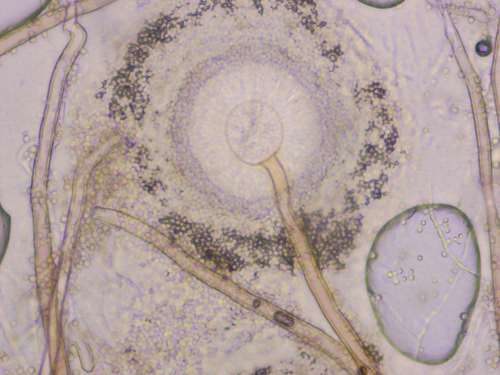
Verbatim
e0“60% of A. ochraceus were OTA-producing fungi”
e1“Grapes (Vitis vinifera L.)”
Claim · model-written summary
All A. parasiticus isolates produced B1, B2, G1 and G2 aflatoxins.
- Taxon
- Grapese1
- Interactor
- A. parasiticus
 Aspergillus parasiticuse0pathogen
- Outcome
- B1, B2, G1 and G2 aflatoxinse0
- Value
- Alle0
Organisms pictured · Representative pictures of the matched species, not figures from the paper.

Verbatim
e0“All A. parasiticus were producers of B1, B2, G1 and G2 aflatoxins”
e1“Grapes (Vitis vinifera L.)”
Claim · model-written summary
14% of A. flavus isolates produced B1 and B2 aflatoxin.
- Taxon
- Grapese1
- Interactor
- A. flavus
 Aspergillus flavuse0pathogen
- Outcome
- B1, B2 aflatoxine0
- Value
- 14%e0
Organisms pictured · Representative pictures of the matched species, not figures from the paper.

Verbatim
e0“14% of A. flavus were producers of B1, B2 aflatoxin”
e1“Grapes (Vitis vinifera L.)”
Claim · model-written summary
All P. citrinum isolates produced citrinin.
- Taxon
- Grapese1
- Interactor
- P. citrinumPenicillium citrinume0pathogen
- Outcome
- citrinin producerse0
- Value
- Alle0
Verbatim
e0“All P. citrinum were citrinin producers”
e1“Grapes (Vitis vinifera L.)”
Claim · model-written summary
Red wine had the highest OTA concentration, 0.29μg / L.
Verbatim
e0“The highest OTA concentration was found in red wine (0.29μg / L)”
e1“Grapes (Vitis vinifera L.)”
Claim · model-written summary
White wine OTA concentration ranged from 0.02 to 0.04μg / L.
Verbatim
e0“in white wines it ranged from 0.02 to 0.04μg / L”
e1“The highest OTA concentration was found in red wine”
e2“Grapes (Vitis vinifera L.)”
Claim · model-written summary
Identified fungal species correlated positively with at least one grape physicochemical parameter.
Verbatim
e0“All identified species in this study showed a positive correlation with at least one evaluated physicochemical parameter, highlighting the pectin content, total sugar, total acidity and phenolic compounds”
e1“Grapes (Vitis vinifera L.)”
Claim · model-written summary
Fungal incidence and OTA levels varied with grape variety, cultivation, weather and crop.
- Taxon
- grapese0
- Material
- variety of grapese0
- Outcome
- fungi incidence and OTA levelse0
- Qualifier
- cultivation methods, weather conditions and crope0
Not reportedDirection
Verbatim
e0“fungi incidence and OTA levels vary according to the variety of grapes, cultivation methods, weather conditions and crop”