Abstract
The leaf anatomical structure of Nitraria tangutorum Bobr.from three natural populations(WMX,ZGL,JGC)of different habitats along Hexi corridor were researched.The leaves were anatomically observed,and indexes including leaf length,width and thickness,upper and lower pubescence length,width and density,upper and lower stoma length,width,area and density,upper and lower cuticle thickness,upper and lower epidermal cell thickness,palisade tissue thickness,spongy tissue thickness,diameter of main vein,diameter of lateral vein,diameter of crystal cell,mucilage cell length,width and aqueous tissue length,width were measured.At the same time,the ratio of palisade tissue thickness to spongy tissue thickness(P/S),tightness(CTR)and looseness of leaf tissue structure were statistically analyzed.The differences of one index among three populations were compared to explore the adaptive response mechanism of leaf morphology anatomy features to different habitats.The results are as follows:(1)The indexes had different degrees of differences except some indexes including leaf length,width,ratio of length to width and lower pubescence width,the indexes such as leaf thickness and area,upper and lower pubescence length and density,upper and lower stoma length and density,upper epidermal cell thickness,upper and lower palisade tissue thickness,spongy tissue thickness,but P/S,CTR,diameter of vascular bundle,mucilage cell length and width all had significant differences among three populations.(2)The rank of variation coefficients and plasticity indices of aggregative indicators from three populations were the same,the order was JGCWMXZGL.It showed that the ecological adaptability of N.tangutorum Bobr.was JGCWMXZGL.(3)The plasticity indices of palisade tissue,spongy tissue,pubescence,cuticle of N.tangutorumBobr.from three populations were relatively high.These organizations played a dominant role in response to different environment.The results above may be the adaptive response mechanism of leaf anatomical characteristics to different habitat conditions.
Abstract from the paper’s OpenAlex record, shown for indexing and research. Copyright remains with the authors or the publisher. Read at the source ↗
The text the model read, with the source record’s inline markup (italics, sub- and superscripts) rendered and its character entities decoded; quote offsets refer to the raw text.
Claims 6
Claim · model-written summary
Multiple leaf anatomical indexes differed significantly among three populations.
- Taxon
- Nitraria tangutorum Bobr.
 Nitraria tangutorumt0
- Organ / stage
- leaft1
- Outcome
- significant differences among three populationse0
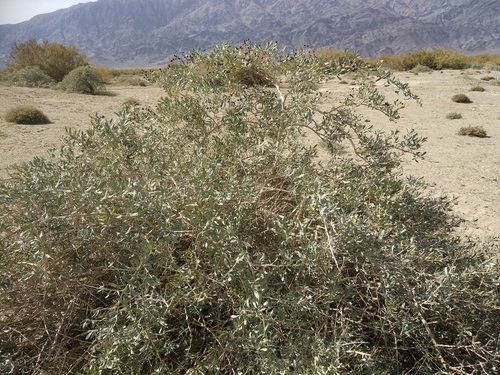
Organisms pictured · Representative pictures of the matched species, not figures from the paper.
Verbatim
e0“the indexes such as leaf thickness and area,upper and lower pubescence length and density,upper and lower stoma length and density,upper epidermal cell thickness,upper and lower palisade tissue thickness,spongy tissue thickness,but P/S,CTR,diameter of vascular bundle,mucilage cell length and width all had significant differences among three populations.”
t0“Nitraria tangutorum Bobr.”
t1“leaf anatomical structure”
Claim · model-written summary
Leaf length, width, length-to-width ratio and lower pubescence width were exceptions to population differences.
- Taxon
- Nitraria tangutorum Bobr.Nitraria tangutorumt0
- Outcome
- leaf length,width,ratio of length to width and lower pubescence widthe0
Not reportedDirection
Organisms pictured · Representative pictures of the matched species, not figures from the paper.
Verbatim
e0“except some indexes including leaf length,width,ratio of length to width and lower pubescence width”
t0“Nitraria tangutorum Bobr.”
Claim · model-written summary
Aggregative indicator variation coefficients and plasticity indices shared the population ranking JGCWMXZGL.
- Taxon
- Nitraria tangutorum Bobr.Nitraria tangutorumt0
- Outcome
- rank of variation coefficients and plasticity indicese0
- Value
- JGCWMXZGLe0
Not reportedDirection
Organisms pictured · Representative pictures of the matched species, not figures from the paper.
Verbatim
e0“The rank of variation coefficients and plasticity indices of aggregative indicators from three populations were the same,the order was JGCWMXZGL.”
t0“Nitraria tangutorum Bobr.”
Claim · model-written summary
The authors inferred the same JGCWMXZGL ranking for ecological adaptability.
- Taxon
- N.tangutorum Bobr.Nitraria tangutorume0
- Outcome
- ecological adaptabilitye0
- Value
- JGCWMXZGLe0
Organisms pictured · Representative pictures of the matched species, not figures from the paper.
Verbatim
e0“It showed that the ecological adaptability of N.tangutorum Bobr.was JGCWMXZGL.”
Claim · model-written summary
Palisade tissue, spongy tissue, pubescence and cuticle had relatively high plasticity indices.
- Taxon
- N.tangutorumBobr.Nitraria tangutorume0
- Organ / stage
- palisade tissue,spongy tissue,pubescence,cuticlee0
- Outcome
- plasticity indicese0
- Direction
- relatively highe0
Organisms pictured · Representative pictures of the matched species, not figures from the paper.
Verbatim
e0“The plasticity indices of palisade tissue,spongy tissue,pubescence,cuticle of N.tangutorumBobr.from three populations were relatively high.”
Claim · model-written summary
The authors inferred these leaf tissues played a dominant role in environmental response.
- Taxon
- Nitraria tangutorum Bobr.Nitraria tangutorumt0
- Outcome
- response to different environmente0
- Qualifier
- dominant rolee0
Organisms pictured · Representative pictures of the matched species, not figures from the paper.
Verbatim
e0“These organizations played a dominant role in response to different environment.”
t0“Nitraria tangutorum Bobr.”