Abstract
Autumn maize intercropped with tropical forages can raise the amount of crop residues and improve nutrient cycling, favoring subsequent soybean crop. The objective of this study was to evaluate the effect of forms of implementation of intercropping of irrigated autumn maize with tropical forages on yield, decomposition, nutrient accumulation and release, and on the ratio of lignin/total N of forage residues, yield components, and grain yield of subsequent soybean, and on soil physical and chemical properties, under no-tillage in lowland Cerrado. The experiment was arranged in randomized blocks in a factorial (4 × 3 + 1) design with one control and four replications. The treatments consisted of four forages: Palisade grass, Congo grass, and two Guinea grass cultivars (Tanzânia and Áries); and three methods of sowing intercrops of forage-autumn maize: forage sown simultaneously with maize in the sowing furrow, mixed with fertilizer; forage sown by broadcasting on the day of maize sowing; and forage seeds mixed with fertilizer broadcast on maize in growth stage V4; plus a control (maize monoculture). The decomposition and nutrient release rate of the forage residues were evaluated by the litter bag method, 30, 60, 90, and 120 days after desiccation. Sowing the forages in the furrow and by broadcasting raise the total amount of maize residues compared to method V4. Regardless of the forage type and sowing methods, intercropping increases the amount of residues compared to maize monoculture. The forages and sowing methods had no influence on nutrient accumulation in the residues at the time of desiccation and at the lowest lignin/total N ratio in Congo grass residues, and a logarithmic decay was observed. Forage and sowing methods did not influence the macronutrient release rate from crop residues for 120 days after desiccation; the release of N, P, K and Mg is logarithmic and the release of Ca and S exponential. Forage and sowing methods do not influence yield components and grain yield of subsequent soybean. However, intercropping increased grain yield of subsequent soybean compared to soybean after maize monoculture, and preserved the soil chemical and physical properties.
Abstract from the paper’s OpenAlex record; open copy licensed cc-by. Read at the source ↗
The text the model read, with the source record’s inline markup (italics, sub- and superscripts) rendered and its character entities decoded; quote offsets refer to the raw text.
Claims 11
Claim · model-written summary
Furrow sowing raised total maize residues relative to V4 sowing.
- Treatment
- in the furrowe0
- Outcome
- total amount of maize residuese0
- Direction
- raisee0
- Comparator
- method V4e0
 Zea mays
Organisms pictured · Representative pictures of the matched species, not figures from the paper.

Verbatim
e0“Sowing the forages in the furrow and by broadcasting raise the total amount of maize residues compared to method V4.”
Claim · model-written summary
Broadcast sowing raised total maize residues relative to V4 sowing.
- Treatment
- by broadcastinge0
- Outcome
- total amount of maize residuese0
- Direction
- raisee0
- Comparator
- method V4e0
Organisms pictured · Representative pictures of the matched species, not figures from the paper.
Verbatim
e0“Sowing the forages in the furrow and by broadcasting raise the total amount of maize residues compared to method V4.”
Claim · model-written summary
Intercropping increased residue amount over maize monoculture regardless of forage or sowing method.
- Treatment
- intercroppinge0
- Outcome
- amount of residuese0
- Direction
- increasese0
- Comparator
- maize monoculturee0
Organisms pictured · Representative pictures of the matched species, not figures from the paper.
Verbatim
e0“Regardless of the forage type and sowing methods, intercropping increases the amount of residues compared to maize monoculture.”
Claim · model-written summary
Forage type and sowing method did not influence nutrient accumulation in residues at desiccation.
- Treatment
- forages and sowing methodse0
- Outcome
- nutrient accumulation in the residuese0
- Direction
- no influencee0
- Qualifier
- at the time of desiccatione0
Not reportedComparator
Organisms pictured · Representative pictures of the matched species, not figures from the paper.
Verbatim
e0“The forages and sowing methods had no influence on nutrient accumulation in the residues at the time of desiccation”
t0“Maize”
Claim · model-written summary
Congo grass residues had the lowest lignin/total N ratio.
- Taxon
- Congo grass
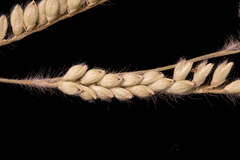 Urochloa ruziziensise0
- Outcome
- lignin/total N ratioe0
- Direction
- loweste0
Organisms pictured · Representative pictures of the matched species, not figures from the paper.

Verbatim
e0“the lowest lignin/total N ratio in Congo grass residues”
Claim · model-written summary
Forage and sowing methods did not influence macronutrient release from crop residues over 120 days.
- Treatment
- Forage and sowing methodse0
- Outcome
- macronutrient release rate from crop residuese0
- Direction
- did not influencee0
- Qualifier
- for 120 days after desiccatione0
Not reportedComparator
Organisms pictured · Representative pictures of the matched species, not figures from the paper.
Verbatim
e0“Forage and sowing methods did not influence the macronutrient release rate from crop residues for 120 days after desiccation”
t0“Maize”
Claim · model-written summary
N, P, K and Mg release followed a logarithmic pattern.
- Outcome
- release of N, P, K and Mg is logarithmice0
Not reportedDirection
Organisms pictured · Representative pictures of the matched species, not figures from the paper.
Verbatim
e0“the release of N, P, K and Mg is logarithmic”
t0“Maize”
Claim · model-written summary
Ca and S release followed an exponential pattern.
- Outcome
- release of Ca and S exponentiale0
Not reportedDirection
Organisms pictured · Representative pictures of the matched species, not figures from the paper.
Verbatim
e0“the release of Ca and S exponential”
t0“Maize”
Claim · model-written summary
Forage and sowing methods did not influence yield components or grain yield of subsequent soybean.
- Taxon
- soybean
 Glycine maxe0
- Treatment
- Forage and sowing methodse0
- Outcome
- yield components and grain yielde0
- Direction
- do not influencee0
Not reportedComparator
Organisms pictured · Representative pictures of the matched species, not figures from the paper.

Verbatim
e0“Forage and sowing methods do not influence yield components and grain yield of subsequent soybean.”
Claim · model-written summary
Intercropping increased subsequent soybean grain yield relative to soybean after maize monoculture.
- Taxon
- soybeanGlycine maxe0
- Treatment
- intercroppinge0
- Outcome
- grain yielde0
- Direction
- increasede0
- Comparator
- soybean after maize monoculturee0
Organisms pictured · Representative pictures of the matched species, not figures from the paper.
Verbatim
e0“intercropping increased grain yield of subsequent soybean compared to soybean after maize monoculture”
Claim · model-written summary
Intercropping preserved soil chemical and physical properties.
- Taxon
- soybeanGlycine maxe0
- Treatment
- intercroppinge0
- Outcome
- soil chemical and physical propertiese0
- Direction
- preservede0
Organisms pictured · Representative pictures of the matched species, not figures from the paper.
Verbatim
e0“intercropping increased grain yield of subsequent soybean compared to soybean after maize monoculture, and preserved the soil chemical and physical properties.”
The same questions in other papers
transplanting · organism · Zea mays (maize)Positive and negative results
6 papers in the same direction as this paper · 2 in the opposite direction
- negative
- no effect
- positive
5 papers more in this group
See all 9 papers →irrigation · organism · Zea mays (maize)Positive and negative results
18 papers in the same direction as this paper · 13 in the opposite direction
- no effect
- negative
- negative
28 papers more in this group
See all 32 papers →intercropping · yield · Glycine max (soybean)Positive and negative results
130 papers in the same direction as this paper · 79 in the opposite direction · 8 reporting no difference from an alternative
- no effect
- positive
- positive
214 papers more in this group
See all 218 papers →Claims are grouped by organism, treatment and what was measured or targeted. A paper counts as positive when any of its claims in the group is positive.