Abstract
In order to use reclaimed water to irrigate landscape plants and minimize damage and loss, salinity tolerance of commonly used landscape plants needs to be identified and characterized. Eight herbaceous perennials and groundcovers were obtained from a nursery, transplanted to 2.6-L plastic containers, and grown in the greenhouse for 2 weeks before salinity treatments (1.0, 3.2, 6.4, and 12 dS·m -1 ) were initiated. Plants were irrigated with measured amounts of saline solutions to obtain a 30% leaching when ≈50% water was depleted. After 12 weeks, half of the plants in each treatment were destructively harvested and dry weights of shoots and roots were taken. Three Penstemon species ( pseudospectabilis, eatoni , and strictus ) and Lavandula angustifolia at 6.4 and 12 dS·m -1 and most of them at 3.2 dS/m did not survive. Shoot dry weight of Delosperma cooperi decreased by 25% at 12 dS·m –1 , but there were no significant differences among the rest of the treatments. All plants of Teucrium chamaedrys survived, but growth was reduced significantly with lower visual scores as salinity of irrigation water increased. Although growth was reduced in Gazaniarigens as salinity increased, no other signs of stress were observed. Ceratostigma plumbaginoides had less growth at 3.2 dS·m –1 , and older leaves showed reddish pigmentation at 6.4 dS·m -1 , whereas those at 12 dS·m -1 did not survive. Among the tested species, D.cooperi and G.rigens indicated a high tolerance to salinity; T. chamaedrys and C. plumbaginoides were moderately tolerant; and the rest were salt sensitive.
Abstract from the paper’s OpenAlex record; open copy licensed public-domain. Read at the source ↗
The text the model read, with the source record’s inline markup (italics, sub- and superscripts) rendered and its character entities decoded; quote offsets refer to the raw text.
Claims 12
Claim · model-written summary
Three Penstemon species did not survive high salinity.
 Penstemon
Not reportedComparator
Organisms pictured · Representative pictures of the matched species, not figures from the paper.

Verbatim
e0“Three Penstemon species ( pseudospectabilis, eatoni , and strictus ) and Lavandula angustifolia at 6.4 and 12 dS·m -1 and most of them at 3.2 dS/m did not survive.”
Claim · model-written summary
Lavandula angustifolia did not survive at 6.4 and 12 dS·m -1.
- Taxon
- Lavandula angustifolia
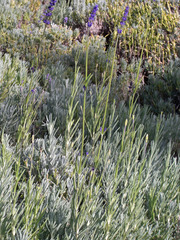 Lavandula angustifoliae0
- Treatment
- 6.4 and 12 dS·m -1e0
- Outcome
- survivee0
- Direction
- did not survivee0
Not reportedComparator
Organisms pictured · Representative pictures of the matched species, not figures from the paper.
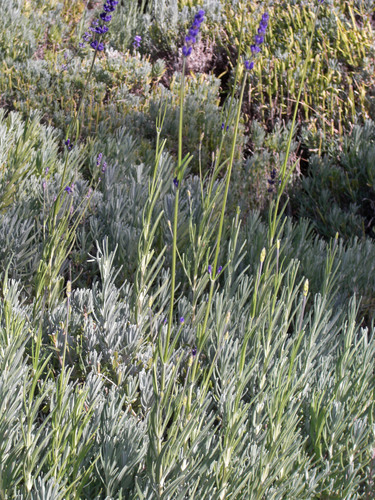
Verbatim
e0“Lavandula angustifolia at 6.4 and 12 dS·m -1 and most of them at 3.2 dS/m did not survive.”
Claim · model-written summary
Delosperma cooperi shoot dry weight decreased 25% at 12 dS·m –1.
- Taxon
- Delosperma cooperi
 Delosperma cooperie0
- Treatment
- 12 dS·m –1e0
- Outcome
- Shoot dry weighte0
- Direction
- decreasede0
- Value
- 25%e0
Not reportedComparator
Organisms pictured · Representative pictures of the matched species, not figures from the paper.

Verbatim
e0“Shoot dry weight of Delosperma cooperi decreased by 25% at 12 dS·m –1”
Claim · model-written summary
All Teucrium chamaedrys plants survived salinity treatments.
- Taxon
- Teucrium chamaedrys
 Teucrium chamaedryse0
- Outcome
- survivede0
Organisms pictured · Representative pictures of the matched species, not figures from the paper.

Verbatim
e0“All plants of Teucrium chamaedrys survived”
Claim · model-written summary
Teucrium chamaedrys growth and visual scores fell with increasing irrigation salinity.
Not reportedTaxonComparator
Verbatim
e0“growth was reduced significantly with lower visual scores as salinity of irrigation water increased”
Claim · model-written summary
Gazania rigens growth declined as salinity rose.
Not reportedComparator
Verbatim
e0“Although growth was reduced in Gazaniarigens as salinity increased”
Claim · model-written summary
Gazania rigens showed no other stress symptoms.
Not reportedTaxon
Verbatim
e0“no other signs of stress were observed”
Claim · model-written summary
Ceratostigma plumbaginoides grew less at 3.2 dS·m –1.
- Taxon
- Ceratostigma plumbaginoides
 Ceratostigma plumbaginoidese0
- Treatment
- 3.2 dS·m –1e0
- Outcome
- growthe0
- Direction
- lesse0
Not reportedComparator
Organisms pictured · Representative pictures of the matched species, not figures from the paper.

Verbatim
e0“Ceratostigma plumbaginoides had less growth at 3.2 dS·m –1”
Claim · model-written summary
Older Ceratostigma leaves developed reddish pigmentation at 6.4 dS·m -1.
Not reportedTaxonComparatorDirection
Verbatim
e0“older leaves showed reddish pigmentation at 6.4 dS·m -1”
Claim · model-written summary
Ceratostigma did not survive 12 dS·m -1 salinity.
Not reportedTaxonComparator
Verbatim
e0“those at 12 dS·m -1 did not survive”
Claim · model-written summary
Delosperma cooperi and Gazania rigens were highly salt tolerant.
- Taxon
- D.cooperiDelosperma cooperie0
- Outcome
- tolerance to salinitye0
- Direction
- highe0
Organisms pictured · Representative pictures of the matched species, not figures from the paper.
Verbatim
e0“D.cooperi and G.rigens indicated a high tolerance to salinity”
Claim · model-written summary
Teucrium chamaedrys and Ceratostigma plumbaginoides were moderately salt tolerant.
- Taxon
- T. chamaedrysTeucrium chamaedryse0
- Outcome
- tolerante0
- Direction
- moderatelye0
Organisms pictured · Representative pictures of the matched species, not figures from the paper.
Verbatim
e0“T. chamaedrys and C. plumbaginoides were moderately tolerant”