Abstract
Sorgoleone exudated from the root hairs of sorghum (Sorghum bicolor (L.) Moench) is a potent bioherbicide. The living root hairs of young developing sorghum plants exude higher content of sorgoleone. The concentration of sorgoleone is proportional to the formation of root hairs. A set of factors that enhance root hair formation and subsequently sorgoleone production were studied under in vitro conditions. The effect of auxins on root growth and root hair formation were studied by incorporating IAA, IBA, NAA and 2,4-D in the concentration range of 0.5- 2.0 mg/L respectively, as a supplement in half-strength Murashige and Skoog (MS) medium. In addition, the effect of gibberellic acid (GA3) was also studied by supplementing it in half-strength MS medium at a concentration range of 0.5-2.0 mg/L. Among the auxins tested for their in vitro rhizogenic potential, the optimal response was observed in IBA at 1.0 mg/L. Further, GA3 at 1.0 mg/L also showed a significant optimal effect on root hair formation. The effect of strength of MS medium, addition of copper, phloroglucinol, polyamines such as spermidine and putrescine on optimal root hair induction were also investigated in separate experiments. The results indicated that root hair formation was beneficially promoted in half- strength MS medium containing 1.0 mg/L of IBA and GA3 respectively. Also inclusion of copper sulfate at 0.5 mg/L in half-strength MS medium in the presence of 1.0 mg/L of IBA and GA3 respectively, resulted in enhanced root growth and root hair formation. The individual addition of phloroglucinol, spermidine and putrescine to root induction media did not provide any additive effects on promoting root hair formation but however, it was observed that a combination of optimal phytohormones together with copper sulphate and phloroglucinol improved the root hair formation to a significant extent. Further, the optimal temperature for root hair formation was identified to be 30oC and the roots of 7-days old seedlings showed an increased synthesis of root hairs. An aqueous root extract containing sorgoleone showed bioherbicidal activity against Acalypha indica during in vitro phytotoxic assay.
Abstract from the paper’s OpenAlex record, shown for indexing and research. Copyright remains with the authors or the publisher. Read at the source ↗
The text the model read, with the source record’s inline markup (italics, sub- and superscripts) rendered and its character entities decoded; quote offsets refer to the raw text.
Claims 13
Claim · model-written summary
Young sorghum root hairs exuded higher sorgoleone content.
 Sorghum
Organisms pictured · Representative pictures of the matched species, not figures from the paper.

Verbatim
e0“The living root hairs of young developing sorghum plants exude higher content of sorgoleone.”
Claim · model-written summary
Sorgoleone concentration was proportional to root hair formation.
Not reportedDirection
Organisms pictured · Representative pictures of the matched species, not figures from the paper.
Verbatim
e0“The concentration of sorgoleone is proportional to the formation of root hairs.”
t0“sorghum”
Claim · model-written summary
IBA at 1.0 mg/L gave the optimal rhizogenic response among auxins.
Not reportedComparator
Organisms pictured · Representative pictures of the matched species, not figures from the paper.
Verbatim
e0“the optimal response was observed in IBA at 1.0 mg/L.”
t0“sorghum”
Claim · model-written summary
GA3 at 1.0 mg/L significantly optimized root hair formation.
Not reportedComparator
Organisms pictured · Representative pictures of the matched species, not figures from the paper.
Verbatim
e0“GA3 at 1.0 mg/L also showed a significant optimal effect on root hair formation.”
t0“sorghum”
Claim · model-written summary
Half strength MS medium with IBA and GA3 promoted root hair formation.
- Treatment
- half- strength MS medium containing 1.0 mg/L of IBA and GA3 respectivelye0
- Outcome
- root hair formatione0
- Direction
- promotede0
Not reportedComparator
Organisms pictured · Representative pictures of the matched species, not figures from the paper.
Verbatim
e0“root hair formation was beneficially promoted in half- strength MS medium containing 1.0 mg/L of IBA and GA3 respectively.”
t0“sorghum”
Claim · model-written summary
Copper sulfate enhanced root growth and root hair formation.
- Treatment
- copper sulfate at 0.5 mg/Le0
- Outcome
- root growth and root hair formatione0
- Direction
- enhancede0
Not reportedComparator
Organisms pictured · Representative pictures of the matched species, not figures from the paper.
Verbatim
e0“inclusion of copper sulfate at 0.5 mg/L in half-strength MS medium in the presence of 1.0 mg/L of IBA and GA3 respectively, resulted in enhanced root growth and root hair formation.”
t0“sorghum”
Claim · model-written summary
Individual phloroglucinol addition had no additive effect on root hairs.
- Treatment
- phloroglucinole0
- Outcome
- root hair formatione0
- Direction
- did not provide any additive effectse0
Not reportedComparator
Organisms pictured · Representative pictures of the matched species, not figures from the paper.
Verbatim
e0“The individual addition of phloroglucinol, spermidine and putrescine to root induction media did not provide any additive effects on promoting root hair formation”
t0“sorghum”
Claim · model-written summary
Individual spermidine addition had no additive effect on root hairs.
Not reportedComparator
Organisms pictured · Representative pictures of the matched species, not figures from the paper.
Verbatim
e0“The individual addition of phloroglucinol, spermidine and putrescine to root induction media did not provide any additive effects on promoting root hair formation”
t0“sorghum”
Claim · model-written summary
Individual putrescine addition had no additive effect on root hairs.
Not reportedComparator
Organisms pictured · Representative pictures of the matched species, not figures from the paper.
Verbatim
e0“The individual addition of phloroglucinol, spermidine and putrescine to root induction media did not provide any additive effects on promoting root hair formation”
t0“sorghum”
Claim · model-written summary
Combined phytohormones, copper sulphate and phloroglucinol significantly improved root hairs.
- Treatment
- a combination of optimal phytohormones together with copper sulphate and phloroglucinole0
- Outcome
- root hair formatione0
- Direction
- improvede0
Not reportedComparator
Organisms pictured · Representative pictures of the matched species, not figures from the paper.
Verbatim
e0“a combination of optimal phytohormones together with copper sulphate and phloroglucinol improved the root hair formation to a significant extent.”
t0“sorghum”
Claim · model-written summary
Optimal temperature for root hairs was 30oC.
Organisms pictured · Representative pictures of the matched species, not figures from the paper.
Verbatim
e0“the optimal temperature for root hair formation was identified to be 30oC”
t0“sorghum”
Claim · model-written summary
Roots of seven day seedlings had increased root hair synthesis.
Organisms pictured · Representative pictures of the matched species, not figures from the paper.
Verbatim
e0“the roots of 7-days old seedlings showed an increased synthesis of root hairs.”
t0“sorghum”
Claim · model-written summary
Sorgoleone containing root extract showed bioherbicidal activity against Acalypha indica.
- Interactor
- Acalypha indica
 Acalypha indicae0weed
- Outcome
- bioherbicidal activity against Acalypha indicae0
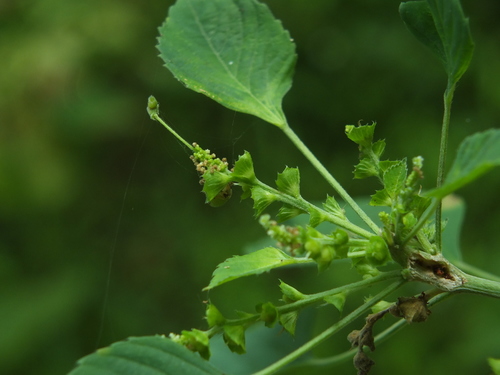
Organisms pictured · Representative pictures of the matched species, not figures from the paper.
Verbatim
e0“An aqueous root extract containing sorgoleone showed bioherbicidal activity against Acalypha indica during in vitro phytotoxic assay.”
t0“sorghum”
The same questions in other papers
Gibberellic acid · growth · SorghumResults differ
14 papers in the same direction as this paper · 1 in the opposite direction
- no effect
- positive
- positive
12 papers more in this group
See all 16 papers →spermidine · growth · SorghumPositive and negative results
2 in the opposite direction
- positive
- positive
indole-3-butyric acid · growth · SorghumResults agree
2 papers in the same direction as this paper
- positive
- positive
copper atom · growth · SorghumResults agree
3 papers in the same direction as this paper
- positive
- positive
- positive
in vitro · growth · SorghumPositive and negative results
14 papers in the same direction as this paper · 3 in the opposite direction
- negative
- negative
- negative
14 papers more in this group
See all 18 papers →class · growth · SorghumResults agree
10 papers in the same direction as this paper
- positive
- positive
- positive
7 papers more in this group
See all 11 papers →Claims are grouped by organism, treatment and what was measured or targeted. A paper counts as positive when any of its claims in the group is positive.