Abstract
The beet culture has great economic and food importance in the world, especially with respect to energy generation. In Brazil the culture is still little studied, lacking studies in all stages of production of culture, mainly in the management of fertilization. This study aimed to evaluate the effect of organo-mineral fertilization on growth, gas exchanges and production of beet, cv. Katrina. The experiment was conducted under field conditions in the municipality of Pombal-PB, Brazil, from September to December 2015, in a randomized block design. The treatments were arranged in a 4 x 2 factorial scheme and corresponded to four periods of fermentation of the biofertilizer (10, 20, 30 and 40 days) applied in soils with and without mineral fertilization, with four replicates and 18 plants evaluated per plot. Plants were conducted for 70 days after transplanting, in 15-cm-high, 1-m-wide beds. During this period, plant growth, gas exchanges and production components were evaluated. The application of mineral biofertilizer fermented for 20 to 30 days, associated with mineral fertilization with 36 g m-2 of P2O5, 18.0 g m-2 of K2O and 14 g m-2 of N at planting, promoted better performance of growth, gas exchanges and production of beet plants. In the soil without mineral fertilization, it is recommended to use the longest biofertilizer fermentation periods, 30 to 40 days, for beet cultivation.
Abstract from the paper’s OpenAlex record; open copy licensed cc-by. Read at the source ↗
The text the model read, with the source record’s inline markup (italics, sub- and superscripts) rendered and its character entities decoded; quote offsets refer to the raw text.
Claims 2
Claim · model-written summary
Mineral biofertilizer fermented for 20 to 30 days, combined with mineral fertilization at planting, improved beet growth, gas exchange and production.
- Taxon
- beet
 Beta vulgarise1
- Treatment
- mineral biofertilizer fermented for 20 to 30 days, associated with mineral fertilization with 36 g m-2 of P2O5, 18.0 g m-2 of K2O and 14 g m-2 of N at plantinge1
- Outcome
- growth, gas exchanges and productione1
- Direction
- better performancee1
- Setting
- Pombal-PB, Brazile0
Not reportedComparator
Organisms pictured · Representative pictures of the matched species, not figures from the paper.
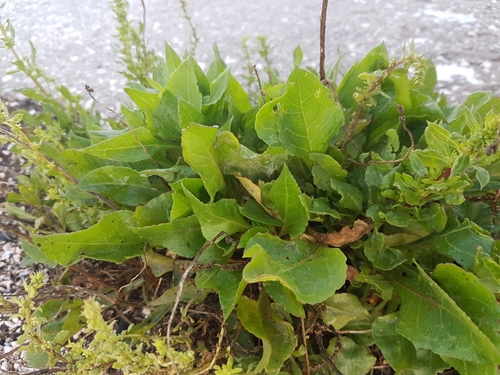
Verbatim
e0“in the municipality of Pombal-PB, Brazil”
e1“The application of mineral biofertilizer fermented for 20 to 30 days, associated with mineral fertilization with 36 g m-2 of P2O5, 18.0 g m-2 of K2O and 14 g m-2 of N at planting, promoted better performance of growth, gas exchanges and production of beet plants”
Claim · model-written summary
Without mineral fertilization, the longest biofertilizer fermentation periods of 30 to 40 days are recommended for beet.
- Taxon
- beetBeta vulgarise2
- Outcome
- longest biofertilizer fermentation periodse2
- Value
- 30 to 40 dayse2
- Qualifier
- In the soil without mineral fertilizatione2
Organisms pictured · Representative pictures of the matched species, not figures from the paper.
Verbatim
e2“In the soil without mineral fertilization, it is recommended to use the longest biofertilizer fermentation periods, 30 to 40 days, for beet cultivation”
The same questions in other papers
phosphorus · yield · Beta vulgaris (beet)Results differ
29 papers in the same direction as this paper · 8 in the opposite direction
- no effect
- no effect
- no effect
34 papers more in this group
See all 38 papers →potassium · yield · Beta vulgaris (beet)Results differ
51 papers in the same direction as this paper · 6 in the opposite direction
- no effect
- no effect
- negative
54 papers more in this group
See all 58 papers →processing · yield · Beta vulgaris (beet)Positive and negative results
3 papers in the same direction as this paper · 2 in the opposite direction
- negative
- negative
- positive
2 papers more in this group
See all 6 papers →inoculation · yield · Beta vulgaris (beet)Positive and negative results
24 papers in the same direction as this paper · 2 in the opposite direction
- no effect
- negative
- positive
23 papers more in this group
See all 27 papers →fertilization · yield · Beta vulgaris (beet)Positive and negative results
236 papers in the same direction as this paper · 24 in the opposite direction · 6 reporting no difference from an alternative
- no effect
- negative
- negative
263 papers more in this group
See all 267 papers →Claims are grouped by organism, treatment and what was measured or targeted. A paper counts as positive when any of its claims in the group is positive.