Abstract
Survey studies conducted in the rice growing districts of Telangana, revealed that incidence of stem rot disease varied from field to field (0 to 15%) in the surveyed districts of Khammam and Warangal.The disease incidence was varied from location to location.Highest disease incidence was recorded in late transplanted as compared to early transplanted crop.Maximum stem rot incidence (14.8%) was recorded in rice-rice followed by rice-groundnut (3.8%), rice-maize (2.8%) and sunhemprice-maize-vegetables (2.1%).Similarly, highest disease incidence was found in clay loam soils (14.0%), followed by clay soils (8.7%), loamy soils (7.8%), while lowest incidence of stem rot was noted in fields with sandy soils (2.7%) and sandy loam soils (2.6%).The fields received with 151-180 kg N ha -1 showed highest disease incidence (11.1%) followed by 120-150 kg N ha -1 (8.1%) and 100-120 kg N ha -1 (2.5%).Maximum disease incidence of stem rot was recorded in the fields which received pretilachlor (7.9%) as compared to the fields received butachlor (2.5%).studiesconducted in the rice growing districts of Andhra Pradesh, revealed that incidence of stem.The mycoflora and bacteria were isolated from rhizosphere soil associated with diseased rice plants during the survey on Martin medium and soil extract agar medium, respectively.Mycoflora viz., Aspergillus flavus, A. niger, Cladosporium, Trichoderma viride isolate-1 and 2 while bacterial isolates viz., Pseudomonas fluorescens (BI-1), isolate-2 (BI-2), isolate-3 (BI-3), isolate-4 (BI-4), isolate-5 (BI-5) were found to be antagonistic to test pathogen S. oryzae.The detected mycoflora and bacterial isolates were further screened following dual culture technique and the results indicated that among mycoflora screened, T. viride (T1) was found to have most potential antagonistic effect with maximum inhibition (75.3 %) of test pathogen.Similarly among antagonistic bacterial isolates screened P. fluorescens (BI-1) was found to be highly effective in inhibiting the test pathogen by 77.2 per cent.These potential biocontrol agents can be exploited as an integrated approach in the management of stem rot of rice.The compatibility studies between T. viride (T 1 ) and P. fluorescens (BI-1) following dual culture technique under in vitro conditions indicated that the per cent inhibition of T. viride (T 1 ) by P. fluorescens was 5.0 per cent, while no inhibition was observed in the growth of P. fluorescens.Out of six fungicides tested, Hexaconazole @ 200 ppm and Propiconazole @m100 ppm completely inhibited S. oryzae in poisoned medium.Out of two herbicides tested, the inhibition of test pathogen was high (97.1%) in Butachlor (400 ppm) and least (28.0%) in Oxadiargyl (150 ppm).In compatibility studies, T. viride (T 1 ) was incompatible with fungicides Propiconazole (100 ppm) and Hexaconazole (200 ppm).However, it was 60.6 per cent inhibited Studies on disease incidence and efficacy of fungicides, herbicides and antagonists micro flora against stem rot of rice (Sclerotium oryzae) along with integrated management
Abstract from the paper’s OpenAlex record, shown for indexing and research. Copyright remains with the authors or the publisher. Read at the source ↗
The text the model read, with the source record’s inline markup (italics, sub- and superscripts) rendered and its character entities decoded; quote offsets refer to the raw text.
Claims 18
Claim · model-written summary
Stem rot incidence in rice varied from 0 to 15% between surveyed fields in Telangana.
- Taxon
- rice
 Oryza sativat0
- Interactor
- Sclerotium oryzae
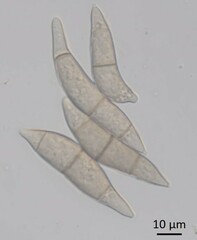 Nakataea oryzaet0pathogen
- Outcome
- incidence of stem rot diseasee0
- Value
- 0 to 15%e0
- Qualifier
- varied from field to fielde0
- Setting
- rice growing districts of Telanganae0
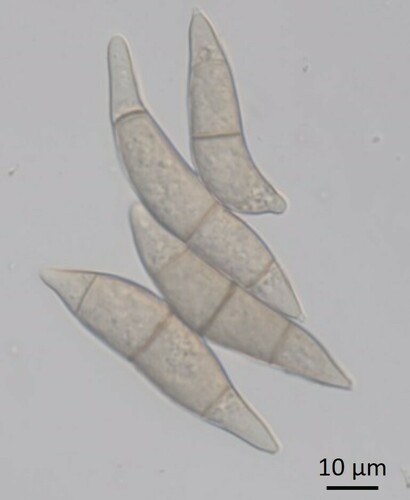
Organisms pictured · Representative pictures of the matched species, not figures from the paper.

Verbatim
t0“stem rot of rice (Sclerotium oryzae)”
e0“Survey studies conducted in the rice growing districts of Telangana, revealed that incidence of stem rot disease varied from field to field (0 to 15%) in the surveyed districts of Khammam and Warangal”
Claim · model-written summary
Stem rot incidence was highest in late-transplanted rice compared with early-transplanted rice.
- Taxon
- riceOryza sativat0
- Treatment
- late transplantede1
- Outcome
- disease incidencee1
- Direction
- Higheste1
- Comparator
- early transplanted crope1
Organisms pictured · Representative pictures of the matched species, not figures from the paper.
Verbatim
t0“stem rot of rice (Sclerotium oryzae)”
e1“Highest disease incidence was recorded in late transplanted as compared to early transplanted crop”
Claim · model-written summary
Maximum stem rot incidence (14.8%) occurred in rice-rice cropping compared with rice-groundnut.
- Taxon
- riceOryza sativat0
- Treatment
- rice-ricee2
- Outcome
- stem rot incidencee2
- Direction
- Maximume2
- Value
- 14.8%e2
- Qualifier
- 3.8%e2
- Comparator
- rice-groundnute2
Organisms pictured · Representative pictures of the matched species, not figures from the paper.
Verbatim
t0“stem rot of rice (Sclerotium oryzae)”
e2“Maximum stem rot incidence (14.8%) was recorded in rice-rice followed by rice-groundnut (3.8%), rice-maize (2.8%) and sunhemprice-maize-vegetables (2.1%)”
Claim · model-written summary
Stem rot incidence was lower in rice-groundnut cropping than in rice-rice cropping.
- Taxon
- riceOryza sativat0
- Treatment
- rice-groundnute2
- Outcome
- stem rot incidencee2
- Direction
- lowerinferrede2
- Value
- 3.8%e2
- Comparator
- rice-ricee2
Organisms pictured · Representative pictures of the matched species, not figures from the paper.
Verbatim
t0“stem rot of rice (Sclerotium oryzae)”
e2“Maximum stem rot incidence (14.8%) was recorded in rice-rice followed by rice-groundnut (3.8%), rice-maize (2.8%) and sunhemprice-maize-vegetables (2.1%)”
Claim · model-written summary
Stem rot incidence was lower in rice-maize cropping than in rice-rice cropping.
- Taxon
- riceOryza sativat0
- Treatment
- rice-maizee2
- Outcome
- stem rot incidencee2
- Direction
- lowerinferrede2
- Value
- 2.8%e2
- Qualifier
- sunhemprice-maize-vegetables (2.1%)e2
- Comparator
- rice-ricee2
Organisms pictured · Representative pictures of the matched species, not figures from the paper.
Verbatim
t0“stem rot of rice (Sclerotium oryzae)”
e2“Maximum stem rot incidence (14.8%) was recorded in rice-rice followed by rice-groundnut (3.8%), rice-maize (2.8%) and sunhemprice-maize-vegetables (2.1%)”
Claim · model-written summary
Stem rot incidence was highest in clay loam soils compared with clay soils.
- Taxon
- riceOryza sativat0
- Treatment
- clay loam soilse3
- Outcome
- disease incidencee3
- Direction
- higheste3
- Value
- 14.0%e3
- Qualifier
- loamy soils (7.8%)e3
- Comparator
- clay soilse3
Organisms pictured · Representative pictures of the matched species, not figures from the paper.
Verbatim
t0“stem rot of rice (Sclerotium oryzae)”
e3“highest disease incidence was found in clay loam soils (14.0%), followed by clay soils (8.7%), loamy soils (7.8%), while lowest incidence of stem rot was noted in fields with sandy soils (2.7%) and sandy loam soils (2.6%)”
Claim · model-written summary
Stem rot incidence was lowest in sandy soils.
- Taxon
- riceOryza sativat0
- Treatment
- sandy soilse3
- Outcome
- incidence of stem rote3
- Direction
- loweste3
- Value
- 2.7%e3
- Qualifier
- sandy loam soils (2.6%)e3
Not reportedComparator
Organisms pictured · Representative pictures of the matched species, not figures from the paper.
Verbatim
t0“stem rot of rice (Sclerotium oryzae)”
e3“highest disease incidence was found in clay loam soils (14.0%), followed by clay soils (8.7%), loamy soils (7.8%), while lowest incidence of stem rot was noted in fields with sandy soils (2.7%) and sandy loam soils (2.6%)”
Claim · model-written summary
Stem rot incidence was highest (11.1%) with 151-180 kg N per ha.
- Taxon
- riceOryza sativat0
- Treatment
- 151-180 kg N ha -1e4
- Outcome
- disease incidencee4
- Direction
- higheste4
- Value
- 11.1%e4
- Qualifier
- 120-150 kg N ha -1 (8.1%) and 100-120 kg N ha -1 (2.5%)e4
Not reportedComparator
Organisms pictured · Representative pictures of the matched species, not figures from the paper.
Verbatim
t0“stem rot of rice (Sclerotium oryzae)”
e4“The fields received with 151-180 kg N ha -1 showed highest disease incidence (11.1%) followed by 120-150 kg N ha -1 (8.1%) and 100-120 kg N ha -1 (2.5%)”
Claim · model-written summary
Stem rot incidence was highest in fields treated with pretilachlor compared with butachlor.
- Taxon
- riceOryza sativat0
- Treatment
- pretilachlore5
- Outcome
- disease incidence of stem rote5
- Direction
- Maximume5
- Value
- 7.9%e5
- Qualifier
- 2.5%e5
- Comparator
- butachlore5
Organisms pictured · Representative pictures of the matched species, not figures from the paper.
Verbatim
t0“stem rot of rice (Sclerotium oryzae)”
e5“Maximum disease incidence of stem rot was recorded in the fields which received pretilachlor (7.9%) as compared to the fields received butachlor (2.5%)”
Claim · model-written summary
Mycoflora and bacteria were isolated from rhizosphere soil of diseased rice plants.
- Taxon
- riceOryza sativat0
- Outcome
- isolated from rhizosphere soile7
Organisms pictured · Representative pictures of the matched species, not figures from the paper.
Verbatim
t0“stem rot of rice (Sclerotium oryzae)”
e7“The mycoflora and bacteria were isolated from rhizosphere soil associated with diseased rice plants”
Claim · model-written summary
Trichoderma viride (T1) showed maximum inhibition (75.3%) of the test pathogen S. oryzae in dual culture.
- Taxon
- riceOryza sativat0
- Treatment
- dual culture techniquee3
- Interactor
- S. oryzaeNakataea oryzaee2pathogen
- Second interactor
- T. viride
 Trichoderma viridee1biocontrol_agent
- Outcome
- inhibitione1
- Direction
- maximume1
- Value
- 75.3 %e1
Not reportedComparator
Organisms pictured · Representative pictures of the matched species, not figures from the paper.

Verbatim
t0“stem rot of rice (Sclerotium oryzae)”
e1“among mycoflora screened, T. viride (T1) was found to have most potential antagonistic effect with maximum inhibition (75.3 %) of test pathogen”
e2“were found to be antagonistic to test pathogen S. oryzae”
e3“The detected mycoflora and bacterial isolates were further screened following dual culture technique”
Claim · model-written summary
Pseudomonas fluorescens (BI-1) was highly effective in inhibiting the test pathogen S. oryzae (77.2%) in dual culture.
- Taxon
- riceOryza sativat0
- Treatment
- dual culture techniquee3
- Interactor
- S. oryzaeNakataea oryzaee2pathogen
- Second interactor
- P. fluorescens
 Pseudomonas fluorescense1biocontrol_agent
- Outcome
- inhibiting the test pathogene1
- Direction
- highly effectivee1
- Value
- 77.2 per cente1
Not reportedComparator
Organisms pictured · Representative pictures of the matched species, not figures from the paper.

Verbatim
t0“stem rot of rice (Sclerotium oryzae)”
e1“Similarly among antagonistic bacterial isolates screened P. fluorescens (BI-1) was found to be highly effective in inhibiting the test pathogen by 77.2 per cent”
e2“were found to be antagonistic to test pathogen S. oryzae”
e3“The detected mycoflora and bacterial isolates were further screened following dual culture technique”
Claim · model-written summary
P. fluorescens inhibited T. viride growth by 5.0% in compatibility tests.
- Taxon
- riceOryza sativat0
- Interactor
- T. virideTrichoderma viridee1other
- Second interactor
- P. fluorescensPseudomonas fluorescense1biocontrol_agent
- Outcome
- per cent inhibition of T. viridee1
- Value
- 5.0 per cente1
Organisms pictured · Representative pictures of the matched species, not figures from the paper.
Verbatim
t0“stem rot of rice (Sclerotium oryzae)”
e1“The compatibility studies between T. viride (T 1 ) and P. fluorescens (BI-1) following dual culture technique under in vitro conditions indicated that the per cent inhibition of T. viride (T 1 ) by P. fluorescens was 5.0 per cent, while no inhibition was observed in the growth of P. fluorescens”
Claim · model-written summary
No inhibition of P. fluorescens growth by T. viride was observed in compatibility tests.
- Taxon
- riceOryza sativat0
- Interactor
- P. fluorescensPseudomonas fluorescense1biocontrol_agent
- Outcome
- growth of P. fluorescense1
- Qualifier
- no inhibition was observede1
Organisms pictured · Representative pictures of the matched species, not figures from the paper.
Verbatim
t0“stem rot of rice (Sclerotium oryzae)”
e1“The compatibility studies between T. viride (T 1 ) and P. fluorescens (BI-1) following dual culture technique under in vitro conditions indicated that the per cent inhibition of T. viride (T 1 ) by P. fluorescens was 5.0 per cent, while no inhibition was observed in the growth of P. fluorescens”
Claim · model-written summary
Hexaconazole at 200 ppm completely inhibited S. oryzae in poisoned medium.
- Taxon
- riceOryza sativat0
- Treatment
- Hexaconazole @ 200 ppme1
- Interactor
- S. oryzaeNakataea oryzaee1pathogen
- Outcome
- S. oryzae in poisoned mediume1
- Direction
- completely inhibitede1
Not reportedComparator
Organisms pictured · Representative pictures of the matched species, not figures from the paper.
Verbatim
t0“stem rot of rice (Sclerotium oryzae)”
e1“Out of six fungicides tested, Hexaconazole @ 200 ppm and Propiconazole @m100 ppm completely inhibited S. oryzae in poisoned medium”
Claim · model-written summary
Propiconazole at 100 ppm completely inhibited S. oryzae in poisoned medium.
- Taxon
- riceOryza sativat0
- Treatment
- Propiconazole @m100 ppme1
- Interactor
- S. oryzaeNakataea oryzaee1pathogen
- Outcome
- S. oryzae in poisoned mediume1
- Direction
- completely inhibitede1
Not reportedComparator
Organisms pictured · Representative pictures of the matched species, not figures from the paper.
Verbatim
t0“stem rot of rice (Sclerotium oryzae)”
e1“Out of six fungicides tested, Hexaconazole @ 200 ppm and Propiconazole @m100 ppm completely inhibited S. oryzae in poisoned medium”
Claim · model-written summary
Butachlor (400 ppm) gave high inhibition (97.1%) of the test pathogen compared with oxadiargyl.
- Taxon
- riceOryza sativat0
- Treatment
- Butachlor (400 ppm)e1
- Interactor
- S. oryzaeNakataea oryzaee2pathogen
- Outcome
- inhibition of test pathogene1
- Direction
- highe1
- Value
- 97.1%e1
- Qualifier
- 28.0%e1
- Comparator
- Oxadiargyl (150 ppm)e1
Organisms pictured · Representative pictures of the matched species, not figures from the paper.
Verbatim
t0“stem rot of rice (Sclerotium oryzae)”
e1“Out of two herbicides tested, the inhibition of test pathogen was high (97.1%) in Butachlor (400 ppm) and least (28.0%) in Oxadiargyl (150 ppm)”
e2“were found to be antagonistic to test pathogen S. oryzae”
Claim · model-written summary
Trichoderma viride was incompatible with propiconazole (100 ppm) and hexaconazole (200 ppm).
- Taxon
- riceOryza sativat0
- Treatment
- Propiconazole (100 ppm) and Hexaconazole (200 ppm)e1
- Interactor
- T. virideTrichoderma viridee1biocontrol_agent
- Outcome
- incompatiblee1
Not reportedComparatorDirection
Organisms pictured · Representative pictures of the matched species, not figures from the paper.
Verbatim
t0“stem rot of rice (Sclerotium oryzae)”
e1“T. viride (T 1 ) was incompatible with fungicides Propiconazole (100 ppm) and Hexaconazole (200 ppm)”
The same questions in other papers
propiconazole · Nakataea oryzae · Oryza sativa (rice)Results agree
1 paper in the same direction as this paper
- positive
transplanting · disease · Oryza sativa (rice)Positive and negative results
16 papers in the same direction as this paper · 34 in the opposite direction
- positive
- positive
- positive
47 papers more in this group
See all 51 papers →Claims are grouped by organism, treatment and what was measured or targeted. A paper counts as positive when any of its claims in the group is positive.