Abstract
To evaluate crop rotation effects on maize seedling performance and its associated microbiome, maize plants were grown in the greenhouse in soils preceded by either maize, pea, soybean or sunflower. Soils originated from a replicated field experiment evaluating different four-year rotation combinations. In the greenhouse, a stressor was introduced by soil infestation with western corn rootworm (WCR) or Fusarium graminearum. Under non-infested conditions, maize seedlings grown in soils preceded by sunflower or pea had greater vigor. Stress with WCR or F. graminearum resulted in significant root damage. WCR root damage was equivalent for seedlings regardless of soil provenance; whereas F. graminearum root damage was significantly lower in maize grown in soils preceded by sunflower. Infestation with WCR affected specific microbial taxa (Acinetobacter, Smaragdicoccus, Aeromicrobium, Actinomucor). Similarly, F. graminearum affected fungal endophytes including Trichoderma and Endogone. In contrast to the biological stressors, rotation sequence had a greater effect on rhizosphere microbiome composition, with larger effects observed for fungi compared to bacteria. In particular, relative abundance of Glomeromycota was significantly higher in soils preceded by sunflower or maize. Defining the microbial players involved in crop rotational effects in maize will promote selection and adoption of favorable crop rotation sequences.
Abstract from the paper’s OpenAlex record; open copy licensed cc-by. Read at the source ↗
The text the model read, with the source record’s inline markup (italics, sub- and superscripts) rendered and its character entities decoded; quote offsets refer to the raw text.
Claims 13
Claim · model-written summary
Maize seedlings in soils preceded by sunflower had greater vigor without infestation.
- Treatment
- soils preceded by sunflowere0
- Outcome
- vigore0
- Direction
- greatere0
- Qualifier
- Under non-infested conditionse0
 Zea mays
Not reportedComparator
Organisms pictured · Representative pictures of the matched species, not figures from the paper.

Verbatim
e0“Under non-infested conditions, maize seedlings grown in soils preceded by sunflower or pea had greater vigor.”
Claim · model-written summary
Maize seedlings in soils preceded by pea had greater vigor without infestation.
Not reportedComparator
Organisms pictured · Representative pictures of the matched species, not figures from the paper.
Verbatim
e0“Under non-infested conditions, maize seedlings grown in soils preceded by sunflower or pea had greater vigor.”
Claim · model-written summary
WCR stress caused significant root damage.
Not reportedComparatorDirection
Organisms pictured · Representative pictures of the matched species, not figures from the paper.
Verbatim
e0“Stress with WCR or F. graminearum resulted in significant root damage.”
t0“maize”
Claim · model-written summary
F. graminearum stress caused significant root damage.
- Treatment
- F. graminearume0
- Interactor
- F. graminearum
 Fusarium graminearume0pathogen
- Outcome
- root damagee0
Not reportedComparatorDirection
Organisms pictured · Representative pictures of the matched species, not figures from the paper.

Verbatim
e0“Stress with WCR or F. graminearum resulted in significant root damage.”
t0“maize”
Claim · model-written summary
WCR root damage was equivalent across soil provenances.
Not reportedComparator
Organisms pictured · Representative pictures of the matched species, not figures from the paper.
Verbatim
e0“WCR root damage was equivalent for seedlings regardless of soil provenance”
t0“maize”
Claim · model-written summary
F. graminearum root damage was significantly lower in maize in soils preceded by sunflower.
- Treatment
- soils preceded by sunflowere0
- Interactor
- F. graminearumFusarium graminearume0pathogen
- Outcome
- F. graminearum root damagee0
- Direction
- lowere0
Not reportedComparator
Organisms pictured · Representative pictures of the matched species, not figures from the paper.
Verbatim
e0“F. graminearum root damage was significantly lower in maize grown in soils preceded by sunflower.”
Claim · model-written summary
WCR infestation affected Acinetobacter, Smaragdicoccus and Aeromicrobium.
- Taxon
- Acinetobacter
 Acinetobactere0
- Treatment
- Infestation with WCRe0
- Interactor
- WCRe0pest
- Outcome
- specific microbial taxae0
- Qualifier
- Smaragdicoccus, Aeromicrobiume0
Not reportedComparatorDirection
Organisms pictured · Representative pictures of the matched species, not figures from the paper.

Verbatim
e0“Infestation with WCR affected specific microbial taxa (Acinetobacter, Smaragdicoccus, Aeromicrobium, Actinomucor).”
t0“maize”
Claim · model-written summary
WCR infestation affected Actinomucor.
- Taxon
- Actinomucor
 Actinomucore0
- Treatment
- Infestation with WCRe0
- Interactor
- WCRe0pest
- Outcome
- specific microbial taxae0
Not reportedComparatorDirection
Organisms pictured · Representative pictures of the matched species, not figures from the paper.
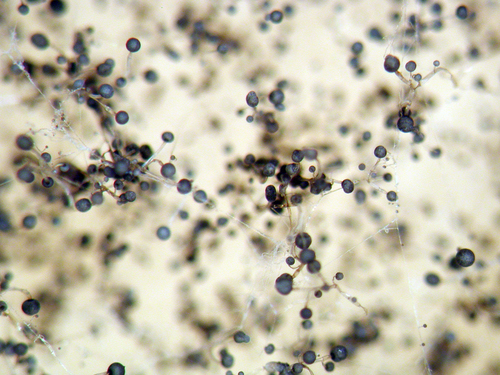
Verbatim
e0“Infestation with WCR affected specific microbial taxa (Acinetobacter, Smaragdicoccus, Aeromicrobium, Actinomucor).”
Claim · model-written summary
F. graminearum affected Trichoderma endophytes.
- Taxon
- Trichoderma
 Trichodermae0
- Treatment
- F. graminearume0
- Interactor
- F. graminearumFusarium graminearume0pathogen
- Outcome
- fungal endophytese0
Not reportedComparatorDirection
Organisms pictured · Representative pictures of the matched species, not figures from the paper.

Verbatim
e0“F. graminearum affected fungal endophytes including Trichoderma and Endogone.”
Claim · model-written summary
F. graminearum affected Endogone endophytes.
- Treatment
- F. graminearume0
- Interactor
- F. graminearumFusarium graminearume0pathogen
- Outcome
- fungal endophytese0
 Endogone
Not reportedComparatorDirection
Organisms pictured · Representative pictures of the matched species, not figures from the paper.

Verbatim
e0“F. graminearum affected fungal endophytes including Trichoderma and Endogone.”
Claim · model-written summary
Rotation sequence affected rhizosphere microbiome composition more than biological stressors, particularly fungi relative to bacteria.
- Treatment
- rotation sequencee0
- Outcome
- rhizosphere microbiome compositione0
- Qualifier
- larger effects observed for fungi compared to bacteriae0
- Comparator
- biological stressorse0
Not reportedDirection
Organisms pictured · Representative pictures of the matched species, not figures from the paper.
Verbatim
e0“In contrast to the biological stressors, rotation sequence had a greater effect on rhizosphere microbiome composition, with larger effects observed for fungi compared to bacteria.”
t0“maize”
Claim · model-written summary
Glomeromycota relative abundance was significantly higher in soils preceded by sunflower.
- Taxon
- GlomeromycotaGlomeromycotae0
- Treatment
- soils preceded by sunflowere0
- Outcome
- relative abundance of Glomeromycotae0
- Direction
- highere0
Not reportedComparator
Verbatim
e0“relative abundance of Glomeromycota was significantly higher in soils preceded by sunflower or maize.”
Claim · model-written summary
Glomeromycota relative abundance was significantly higher in soils preceded by maize.
- Taxon
- GlomeromycotaGlomeromycotae0
- Treatment
- maizee0
- Outcome
- relative abundance of Glomeromycotae0
- Direction
- highere0
Not reportedComparator
Verbatim
e0“relative abundance of Glomeromycota was significantly higher in soils preceded by sunflower or maize.”