Abstract
The impact of three till-plant and two weed management systems on weed seed reserves of soil, yearly weed problems, and corn production was assessed under center-pivot irrigation for 3 consecutive years. Annual weeds were controlled in disced, bedded, and strip rotary till-plant systems with a moderate or intensive level of herbicides. Weed seed of seven annual weed species were identified, with common lambsquarters and stinkgrass, comprising 45 and 41%, respectively, of the initial 305 million seed/ha in the upper 25 cm of the soil profile. After the third cropping year, overall decline in total seed number in soil was 45% when averaged over till-plant and weed management systems. Grain yields did not differ between weed management systems, but the disced till-plant system produced 16% less grain than the bedded and strip rotary till-plant systems over 2 yr.
Abstract from the paper’s OpenAlex record, shown for indexing and research. Copyright remains with the authors or the publisher. Read at the source ↗
The text the model read, with the source record’s inline markup (italics, sub- and superscripts) rendered and its character entities decoded; quote offsets refer to the raw text.
Claims 6
Claim · model-written summary
Moderate or intensive herbicide levels controlled annual weeds across disced, bedded and strip rotary systems.
- Taxon
- Corn
 Zea mays subsp. mayst0
- Treatment
- a moderate or intensive level of herbicidese0
- Interactor
- Annual weedse0weed
- Outcome
- Annual weedse0
- Direction
- controllede0
Not reportedComparator
Organisms pictured · Representative pictures of the matched species, not figures from the paper.

Verbatim
e0“Annual weeds were controlled in disced, bedded, and strip rotary till-plant systems with a moderate or intensive level of herbicides”
t0“Corn (Zea mays)”
Claim · model-written summary
Common lambsquarters made up 45% of initial soil weed seed reserves.
- Taxon
- common lambsquarters
 Chenopodium albume0
- Outcome
- initial 305 million seed/hae0
- Value
- 45e0
Organisms pictured · Representative pictures of the matched species, not figures from the paper.

Verbatim
e0“common lambsquarters and stinkgrass, comprising 45 and 41%, respectively, of the initial 305 million seed/ha in the upper 25 cm of the soil profile”
Claim · model-written summary
Stinkgrass made up 41% of initial soil weed seed reserves.
- Taxon
- stinkgrass
 Eragrostis cilianensise0
- Outcome
- initial 305 million seed/hae0
- Value
- 41%e0
Organisms pictured · Representative pictures of the matched species, not figures from the paper.
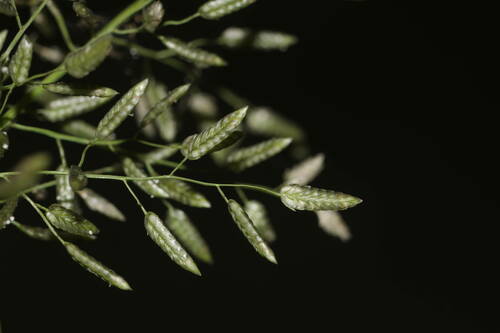
Verbatim
e0“common lambsquarters and stinkgrass, comprising 45 and 41%, respectively, of the initial 305 million seed/ha in the upper 25 cm of the soil profile”
Claim · model-written summary
Total soil weed seed number declined by 45% after three cropping years, averaged across systems.
Not reportedTaxon
Verbatim
e0“After the third cropping year, overall decline in total seed number in soil was 45% when averaged over till-plant and weed management systems”
Claim · model-written summary
Corn grain yield did not differ between weed-management systems.
- Taxon
- CornZea mays subsp. mayst0
- Treatment
- weed management systemse0
- Outcome
- Grain yieldse0
- Direction
- did not differe0
- Comparator
- weed management systemse0
Organisms pictured · Representative pictures of the matched species, not figures from the paper.
Verbatim
e0“Grain yields did not differ between weed management systems”
t0“Corn (Zea mays)”
Claim · model-written summary
The disced till-plant system yielded 16% less corn grain than bedded and strip rotary systems over two years.
- Taxon
- CornZea mays subsp. mayst0
- Treatment
- disced till-plant systeme0
- Outcome
- graine0
- Direction
- lesse0
- Value
- 16%e0
- Comparator
- bedded and strip rotary till-plant systemse0
Organisms pictured · Representative pictures of the matched species, not figures from the paper.
Verbatim
e0“the disced till-plant system produced 16% less grain than the bedded and strip rotary till-plant systems over 2 yr”
t0“Corn (Zea mays)”
The same questions in other papers
cultivation system · yield · Zea mays (maize)Positive and negative results
44 papers in the same direction as this paper · 110 reporting no difference from an alternative
- positive
- positive
- positive
151 papers more in this group
See all 155 papers →herbicide · weed · Zea mays (maize)Positive and negative results
359 papers in the same direction as this paper · 36 in the opposite direction · 10 reporting no difference from an alternative
- positive
- negative
- negative
402 papers more in this group
See all 406 papers →tillage · yield · Zea mays (maize)Positive and negative results
286 papers in the same direction as this paper · 812 in the opposite direction
- positive
- positive
- positive
1,095 papers more in this group
See all 1,099 papers →Claims are grouped by organism, treatment and what was measured or targeted. A paper counts as positive when any of its claims in the group is positive.