Abstract
White rot, an garlic disease caused by the soil-borne fungus S. cepivora, is a serious problem of garlic productions in Egypt. This study examines the potential of controlling the disease biologically by using three sclerotial mycoparasites i.e., Chaetomium globosum (Chg6), Clonostachys rosea (Cr12) and Penicillium oxalicum (Po9) employed either alone or in combinations. In in vitro assays, these sclerotial mycoparasites showed high antagonistic effect against S. cepivora isolate (Sc8). In greenhouse experiments, the chemical treatment of tebuconazole was the most effective, with the lowest incidence of white rot in garlic compared to the control. Sclerotial mycoparasites either alone or in combinations significantly reduced the incidence of white rot in garlic. In general, dual and triple combinations of the sclerotial mycoparasites were more effective than these isolates used individually. In field experiments, under low (40 sclerotia/kg of soil) and high (600 sclerotia/kg of soil) inoculum levels, the standard fungicide programme gave statistically significant white rot control, decreasing disease incidence by 67.7 & 32.4% in 2016/2017 season and 72.6 & 31.1 % in 2017/2018 season, respectively. Under low inoculum levels, significant control, equal to the fungicide treatment, was achieved with the triple combination of three sclerotial mycoparasites. However, no sclerotial mycoparasites employed alone give significant control of garlic white rot under high inoculum levels. The triple combination of three sclerotial mycoparasites decreasing disease incidence by 70.8 & 25.9 % in 2016/2017 season and 73.7 &27.6 % in 2017/2018 season, under low and high inoculum levels, respectively. The activities of defense enzymes, i.e. peroxidase, polyphenoloxidase and chitinase due to application of sclerotial mycoparasites were enhanced in garlic plants either grown under low or high inoculum levels. Reduction of white rot disease incidence was accompanied by increasing growth parameters and bulbs yield of garlic plants grown under field conditions. These results concluded that the performance of sclerotial mycoparasites may be influenced as much by the absolute disease pressure. At the low disease pressure site, the low level of S. cepivora inoculum enabled sclerotial mycoparasites to bring about disease control.
Abstract from the paper’s OpenAlex record; open copy licensed cc-by. Read at the source ↗
The text the model read, with the source record’s inline markup (italics, sub- and superscripts) rendered and its character entities decoded; quote offsets refer to the raw text.
Claims 18
Claim · model-written summary
Chaetomium globosum antagonized S. cepivora in vitro.
- Taxon
- garlic
 Allium sativumt0
- Interactor
- S. cepivora isolate (Sc8)Stromatinia cepivorae0pathogen
- Second interactor
- Chaetomium globosum (Chg6)
 Chaetomium globosumt1biocontrol_agent
- Outcome
- high antagonistic effect against S. cepivora isolate (Sc8)e0
Organisms pictured · Representative pictures of the matched species, not figures from the paper.


Verbatim
e0“these sclerotial mycoparasites showed high antagonistic effect against S. cepivora isolate (Sc8)”
t0“White rot, an garlic disease”
t1“Chaetomium globosum (Chg6)”
Claim · model-written summary
Clonostachys rosea antagonized S. cepivora in vitro.
- Taxon
- garlicAllium sativumt0
- Interactor
- S. cepivora isolate (Sc8)Stromatinia cepivorae0pathogen
- Second interactor
- Clonostachys rosea (Cr12)
 Clonostachys roseat1biocontrol_agent
- Outcome
- high antagonistic effect against S. cepivora isolate (Sc8)e0
Organisms pictured · Representative pictures of the matched species, not figures from the paper.

Verbatim
e0“these sclerotial mycoparasites showed high antagonistic effect against S. cepivora isolate (Sc8)”
t0“White rot, an garlic disease”
t1“Clonostachys rosea (Cr12)”
Claim · model-written summary
Penicillium oxalicum antagonized S. cepivora in vitro.
- Taxon
- garlicAllium sativumt0
- Interactor
- S. cepivora isolate (Sc8)Stromatinia cepivorae0pathogen
- Second interactor
- Penicillium oxalicum (Po9)
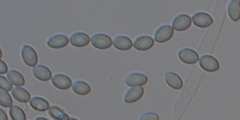 Penicillium oxalicumt1biocontrol_agent
- Outcome
- high antagonistic effect against S. cepivora isolate (Sc8)e0
Organisms pictured · Representative pictures of the matched species, not figures from the paper.

Verbatim
e0“these sclerotial mycoparasites showed high antagonistic effect against S. cepivora isolate (Sc8)”
t0“White rot, an garlic disease”
t1“Penicillium oxalicum (Po9)”
Claim · model-written summary
Tebuconazole gave the lowest greenhouse white rot incidence.
- Taxon
- garlicAllium sativume0
- Treatment
- tebuconazolee0
- Interactor
- S. cepivoraStromatinia cepivorat1pathogen
- Outcome
- incidence of white rot in garlice0
- Direction
- loweste0
- Comparator
- the controle0
- Setting
- greenhouset0
Organisms pictured · Representative pictures of the matched species, not figures from the paper.
Verbatim
e0“the chemical treatment of tebuconazole was the most effective, with the lowest incidence of white rot in garlic compared to the control”
t0“greenhouse experiments”
t1“soil-borne fungus S. cepivora”
Claim · model-written summary
Sclerotial mycoparasites alone significantly reduced garlic white rot incidence.
- Taxon
- garlicAllium sativume0
- Treatment
- Sclerotial mycoparasites either alonee0
- Interactor
- S. cepivoraStromatinia cepivorat1pathogen
- Outcome
- incidence of white rot in garlice0
- Direction
- reducede0
Not reportedComparator
Organisms pictured · Representative pictures of the matched species, not figures from the paper.
Verbatim
e0“Sclerotial mycoparasites either alone or in combinations significantly reduced the incidence of white rot in garlic”
t1“soil-borne fungus S. cepivora”
Claim · model-written summary
Combinations of sclerotial mycoparasites significantly reduced garlic white rot incidence.
- Taxon
- garlicAllium sativume0
- Treatment
- Sclerotial mycoparasites either alone or in combinationse0
- Interactor
- S. cepivoraStromatinia cepivorat1pathogen
- Outcome
- incidence of white rot in garlice0
- Direction
- reducede0
Not reportedComparator
Organisms pictured · Representative pictures of the matched species, not figures from the paper.
Verbatim
e0“Sclerotial mycoparasites either alone or in combinations significantly reduced the incidence of white rot in garlic”
t1“soil-borne fungus S. cepivora”
Claim · model-written summary
Dual and triple mycoparasite combinations were more effective than individual isolates.
- Taxon
- garlicAllium sativumt0
- Treatment
- dual and triple combinations of the sclerotial mycoparasitese0
- Interactor
- S. cepivoraStromatinia cepivorat1pathogen
- Outcome
- more effectivee0
- Direction
- more effectivee0
- Comparator
- these isolates used individuallye0
Organisms pictured · Representative pictures of the matched species, not figures from the paper.
Verbatim
e0“dual and triple combinations of the sclerotial mycoparasites were more effective than these isolates used individually”
t0“White rot, an garlic disease”
t1“soil-borne fungus S. cepivora”
Claim · model-written summary
Fungicide reduced white rot incidence by 67.7% under low inoculum in 2016/2017.
- Taxon
- garlicAllium sativumt0
- Treatment
- standard fungicide programmet1
- Outcome
- disease incidencee0
- Direction
- decreasinge0
- Value
- 67.7e0
- Qualifier
- 40 sclerotia/kg of soile2
Not reportedComparator
Organisms pictured · Representative pictures of the matched species, not figures from the paper.
Verbatim
e0“decreasing disease incidence by 67.7 & 32.4% in 2016/2017 season”
t0“White rot, an garlic disease”
t1“standard fungicide programme”
e2“40 sclerotia/kg of soil”
Claim · model-written summary
Fungicide reduced white rot incidence by 32.4% under high inoculum in 2016/2017.
- Taxon
- garlicAllium sativumt0
- Treatment
- standard fungicide programmet1
- Outcome
- disease incidencee0
- Direction
- decreasinge0
- Value
- 32.4%e0
- Qualifier
- 600 sclerotia/kg of soile2
Not reportedComparator
Organisms pictured · Representative pictures of the matched species, not figures from the paper.
Verbatim
e0“decreasing disease incidence by 67.7 & 32.4% in 2016/2017 season”
t0“White rot, an garlic disease”
t1“standard fungicide programme”
e2“600 sclerotia/kg of soil”
Claim · model-written summary
Fungicide reduced white rot incidence by 72.6% under low inoculum in 2017/2018.
- Taxon
- garlicAllium sativumt0
- Treatment
- standard fungicide programmet1
- Outcome
- disease incidencee2
- Direction
- decreasinge2
- Value
- 72.6e0
- Qualifier
- 40 sclerotia/kg of soile3
Not reportedComparator
Organisms pictured · Representative pictures of the matched species, not figures from the paper.
Verbatim
e0“72.6 & 31.1 % in 2017/2018 season”
t0“White rot, an garlic disease”
t1“standard fungicide programme”
e2“programme gave statistically significant white rot control, decreasing disease incidence”
e3“40 sclerotia/kg of soil”
Claim · model-written summary
Fungicide reduced white rot incidence by 31.1% under high inoculum in 2017/2018.
- Taxon
- garlicAllium sativumt0
- Treatment
- standard fungicide programmet1
- Outcome
- disease incidencee2
- Direction
- decreasinge2
- Value
- 31.1 %e0
- Qualifier
- 600 sclerotia/kg of soile3
Not reportedComparator
Organisms pictured · Representative pictures of the matched species, not figures from the paper.
Verbatim
e0“72.6 & 31.1 % in 2017/2018 season”
t0“White rot, an garlic disease”
t1“standard fungicide programme”
e2“programme gave statistically significant white rot control, decreasing disease incidence”
e3“600 sclerotia/kg of soil”
Claim · model-written summary
Triple mycoparasite combination equaled fungicide control under low inoculum.
- Taxon
- garlicAllium sativumt0
- Treatment
- triple combination of three sclerotial mycoparasitese0
- Outcome
- controle0
- Direction
- equale0
- Qualifier
- low inoculum levelse0
- Comparator
- fungicide treatmente0
Organisms pictured · Representative pictures of the matched species, not figures from the paper.
Verbatim
e0“Under low inoculum levels, significant control, equal to the fungicide treatment, was achieved with the triple combination of three sclerotial mycoparasites”
t0“White rot, an garlic disease”
Claim · model-written summary
Individual mycoparasites did not significantly control white rot under high inoculum.
- Taxon
- garlicAllium sativume0
- Treatment
- sclerotial mycoparasites employed alonee0
- Outcome
- control of garlic white rote0
- Qualifier
- high inoculum levelse0
Not reportedComparatorDirection
Organisms pictured · Representative pictures of the matched species, not figures from the paper.
Verbatim
e0“no sclerotial mycoparasites employed alone give significant control of garlic white rot under high inoculum levels”
Claim · model-written summary
Triple mycoparasites decreased incidence by 70.8% at low inoculum in 2016/2017.
- Taxon
- garlicAllium sativumt0
- Treatment
- triple combination of three sclerotial mycoparasitese0
- Outcome
- disease incidencee0
- Direction
- decreasinge0
- Value
- 70.8e0
- Qualifier
- lowt1
Not reportedComparator
Organisms pictured · Representative pictures of the matched species, not figures from the paper.
Verbatim
e0“The triple combination of three sclerotial mycoparasites decreasing disease incidence by 70.8 & 25.9 % in 2016/2017 season”
t0“White rot, an garlic disease”
t1“under low and high inoculum levels”
Claim · model-written summary
Triple mycoparasites decreased incidence by 25.9% at high inoculum in 2016/2017.
- Taxon
- garlicAllium sativumt0
- Treatment
- triple combination of three sclerotial mycoparasitese0
- Outcome
- disease incidencee0
- Direction
- decreasinge0
- Value
- 25.9 %e0
- Qualifier
- hight1
Not reportedComparator
Organisms pictured · Representative pictures of the matched species, not figures from the paper.
Verbatim
e0“The triple combination of three sclerotial mycoparasites decreasing disease incidence by 70.8 & 25.9 % in 2016/2017 season”
t0“White rot, an garlic disease”
t1“under low and high inoculum levels”
Claim · model-written summary
Triple mycoparasites decreased incidence by 73.7% at low inoculum in 2017/2018.
- Taxon
- garlicAllium sativumt0
- Treatment
- triple combination of three sclerotial mycoparasitest1
- Outcome
- disease incidencee2
- Direction
- decreasinge2
- Value
- 73.7e0
- Qualifier
- lowe3
Not reportedComparator
Organisms pictured · Representative pictures of the matched species, not figures from the paper.
Verbatim
e0“73.7 &27.6 % in 2017/2018 season”
t0“White rot, an garlic disease”
t1“The triple combination of three sclerotial mycoparasites decreasing”
e2“mycoparasites decreasing disease incidence”
e3“under low and high inoculum levels”
Claim · model-written summary
Triple mycoparasites decreased incidence by 27.6% at high inoculum in 2017/2018.
- Taxon
- garlicAllium sativumt0
- Treatment
- triple combination of three sclerotial mycoparasitest1
- Outcome
- disease incidencee2
- Direction
- decreasinge2
- Value
- 27.6 %e0
- Qualifier
- highe3
Not reportedComparator
Organisms pictured · Representative pictures of the matched species, not figures from the paper.
Verbatim
e0“73.7 &27.6 % in 2017/2018 season”
t0“White rot, an garlic disease”
t1“The triple combination of three sclerotial mycoparasites decreasing”
e2“mycoparasites decreasing disease incidence”
e3“under low and high inoculum levels”
Claim · model-written summary
Mycoparasite application enhanced garlic peroxidase, polyphenoloxidase and chitinase under both inoculum levels.
- Taxon
- garlicAllium sativume0
- Treatment
- application of sclerotial mycoparasitese0
- Outcome
- activities of defense enzymes, i.e. peroxidase, polyphenoloxidase and chitinasee0
- Direction
- enhancede0
- Qualifier
- under low or high inoculum levelse0
Not reportedComparator
Organisms pictured · Representative pictures of the matched species, not figures from the paper.
Verbatim
e0“The activities of defense enzymes, i.e. peroxidase, polyphenoloxidase and chitinase due to application of sclerotial mycoparasites were enhanced in garlic plants either grown under low or high inoculum levels”
The same questions in other papers
tebuconazole · Stromatinia cepivora · Allium sativum (garlic)Results agree
2 papers in the same direction as this paper
- positive
- positive
fungicide · disease · Allium sativum (garlic)Results agree
4 papers in the same direction as this paper
- positive
- positive
- positive
1 paper more in this group
See all 5 papers →Claims are grouped by organism, treatment and what was measured or targeted. A paper counts as positive when any of its claims in the group is positive.