Abstract
Rice blast caused by Pyricularia oryzae, Cav. is one of the major disease of rice and cause approximately 45-50 % yield losses. The present study was conducted at the experimental field of Krishi Vigyan Kendra Majhgawan, Satna (M.P.) during Kharif season of 2017-18 to know the efficacy of different foliar fungicides against blast disease of rice. Seven treatments including control with three replications were taken up by using RBD. The fungicides viz., azoxystrobin 18.2 % + difenoconazole 11.4 % (Amistar top 29.6 % SC) @ 0.13 % (T1), tebuconazole 50 % + trifloxystrobin 25 % (Nativo 75 % WG) @ 0.07 % (T2), carbendazim 12 % + mancozeb 63 % (Saaf 75 % WP) @ 0.2 % (T3), tebuconazole 25.9 % (Folicur 250 % EC) @ 0.2 % (T4), hexaconazole 5 % (Contaf plus 5 % SC) @ 0.2 % (T5), difenoconazole (Score 250 % EC) @ 0.06 % (T6) and control (Spray of plain water)- T7, were applied first at just after occurrence of disease symptoms and second at 15 days after the first spray. Observations were recorded at 10 days after the second spray. Analysis of the data showed that among the six fungicides, the minimum disease per cent intensity was recorded in T2 i.e. tebuconazole 50 % + trifloxystrobin 25 % (WG) 11.46 per cent, followed by T1 i.e. azoxystrobin 18.2 % + difenoconazole 11.4 % (SC) with 12.85 per cent, respectively. The highest per cent disease intensity of 69.40 per cent was observed in Control (Spray of normal water) treatment. Significantly highest grain yield was recorded in tebuconazole + trifloxystrobin 75 % (WG) sprayed treatment i.e. (4102.11 kg/ha), followed by azoxystrobin + difenoconazole 29.6 % (SC) (3967.28 kg/ha) and the lowest yield of 2116.23 kg/ha was recorded with untreated control.
Abstract from the paper’s OpenAlex record; open copy licensed cc-by-nc-sa. Read at the source ↗
The text the model read, with the source record’s inline markup (italics, sub- and superscripts) rendered and its character entities decoded; quote offsets refer to the raw text.
Claims 6
Claim · model-written summary
Tebuconazole plus trifloxystrobin had minimum rice blast disease intensity of 11.46 per cent.
- Taxon
- rice
 Oryza sativat0
- Treatment
- tebuconazole 50 % + trifloxystrobin 25 %e0
- Interactor
- Pyricularia oryzae
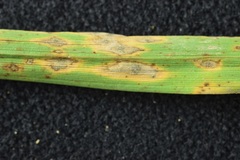 Pyricularia oryzaet0pathogen
- Outcome
- disease per cent intensitye0
- Direction
- minimume0
- Value
- 11.46 per cente0
Not reportedComparator
Organisms pictured · Representative pictures of the matched species, not figures from the paper.

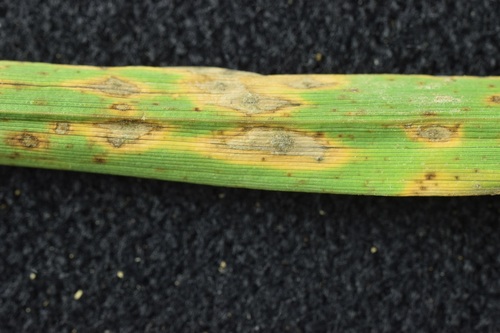
Verbatim
e0“minimum disease per cent intensity was recorded in T2 i.e. tebuconazole 50 % + trifloxystrobin 25 % (WG) 11.46 per cent”
t0“Efficacy of Different Fungicides against Rice Blast caused by Pyricularia oryzae (Cav.) under Field Condition in Satna District of Madhya Pradesh”
Claim · model-written summary
Azoxystrobin plus difenoconazole followed with rice blast disease intensity of 12.85 per cent.
- Taxon
- riceOryza sativat0
- Treatment
- azoxystrobin 18.2 % + difenoconazole 11.4 %e0
- Interactor
- Pyricularia oryzaePyricularia oryzaet0pathogen
- Outcome
- disease per cent intensitye1
- Direction
- followed bye0
- Value
- 12.85 per cente0
Not reportedComparator
Organisms pictured · Representative pictures of the matched species, not figures from the paper.
Verbatim
e0“followed by T1 i.e. azoxystrobin 18.2 % + difenoconazole 11.4 % (SC) with 12.85 per cent”
t0“Efficacy of Different Fungicides against Rice Blast caused by Pyricularia oryzae (Cav.) under Field Condition in Satna District of Madhya Pradesh”
e1“minimum disease per cent intensity was recorded in T2 i.e. tebuconazole 50 % + trifloxystrobin 25 % (WG) 11.46 per cent, followed by T1 i.e. azoxystrobin 18.2 % + difenoconazole 11.4 % (SC) with 12.85 per cent, respectively. The highest per cent disease intensity of 69.40 per cent was observed in Control (Spray of normal water) treatment. Significantly highest grain yield was recorded in tebuconazole + trifloxystrobin 75 % (WG) sprayed treatment i.e. (4102.11 kg/ha), followed by azoxystrobin + difenoconazole 29.6 % (SC) (3967.28 kg/ha)”
Claim · model-written summary
The water control had the highest rice blast disease intensity, 69.40 per cent.
- Taxon
- riceOryza sativat0
- Treatment
- Spray of normal watere0
- Interactor
- Pyricularia oryzaePyricularia oryzaet0pathogen
- Outcome
- per cent disease intensitye0
- Direction
- higheste0
- Value
- 69.40 per cente0
Organisms pictured · Representative pictures of the matched species, not figures from the paper.
Verbatim
e0“The highest per cent disease intensity of 69.40 per cent was observed in Control (Spray of normal water) treatment”
t0“Efficacy of Different Fungicides against Rice Blast caused by Pyricularia oryzae (Cav.) under Field Condition in Satna District of Madhya Pradesh”
Claim · model-written summary
Tebuconazole plus trifloxystrobin produced the significantly highest rice grain yield, 4102.11 kg/ha.
- Taxon
- riceOryza sativat0
- Treatment
- tebuconazole + trifloxystrobin 75 % (WG) sprayed treatmente0
- Outcome
- grain yielde0
- Direction
- higheste0
- Value
- 4102.11 kg/hae0
Not reportedComparator
Organisms pictured · Representative pictures of the matched species, not figures from the paper.
Verbatim
e0“Significantly highest grain yield was recorded in tebuconazole + trifloxystrobin 75 % (WG) sprayed treatment i.e. (4102.11 kg/ha)”
t0“Efficacy of Different Fungicides against Rice Blast caused by Pyricularia oryzae (Cav.) under Field Condition in Satna District of Madhya Pradesh”
Claim · model-written summary
Azoxystrobin plus difenoconazole produced the next highest rice grain yield, 3967.28 kg/ha.
- Taxon
- riceOryza sativat0
- Treatment
- azoxystrobin + difenoconazole 29.6 % (SC)e0
- Outcome
- grain yielde1
- Direction
- followed bye0
- Value
- 3967.28 kg/hae0
Not reportedComparator
Organisms pictured · Representative pictures of the matched species, not figures from the paper.
Verbatim
e0“followed by azoxystrobin + difenoconazole 29.6 % (SC) (3967.28 kg/ha)”
t0“Efficacy of Different Fungicides against Rice Blast caused by Pyricularia oryzae (Cav.) under Field Condition in Satna District of Madhya Pradesh”
e1“minimum disease per cent intensity was recorded in T2 i.e. tebuconazole 50 % + trifloxystrobin 25 % (WG) 11.46 per cent, followed by T1 i.e. azoxystrobin 18.2 % + difenoconazole 11.4 % (SC) with 12.85 per cent, respectively. The highest per cent disease intensity of 69.40 per cent was observed in Control (Spray of normal water) treatment. Significantly highest grain yield was recorded in tebuconazole + trifloxystrobin 75 % (WG) sprayed treatment i.e. (4102.11 kg/ha), followed by azoxystrobin + difenoconazole 29.6 % (SC) (3967.28 kg/ha)”
Claim · model-written summary
Untreated control had the lowest rice grain yield, 2116.23 kg/ha.
- Taxon
- riceOryza sativat0
- Treatment
- untreated controle0
- Outcome
- yielde0
- Direction
- loweste0
- Value
- 2116.23 kg/hae0
Organisms pictured · Representative pictures of the matched species, not figures from the paper.
Verbatim
e0“the lowest yield of 2116.23 kg/ha was recorded with untreated control”
t0“Efficacy of Different Fungicides against Rice Blast caused by Pyricularia oryzae (Cav.) under Field Condition in Satna District of Madhya Pradesh”
The same questions in other papers
tebuconazole · Pyricularia oryzae · Oryza sativa (rice)Results agree
1 paper in the same direction as this paper
- positive
trifloxystrobin · Pyricularia oryzae · Oryza sativa (rice)Results agree
1 paper in the same direction as this paper
- positive
difenoconazole · Pyricularia oryzae · Oryza sativa (rice)Results agree
2 papers in the same direction as this paper
- positive
- positive
difenoconazole · yield · Oryza sativa (rice)Results agree
6 papers in the same direction as this paper
- positive
- positive
- positive
3 papers more in this group
See all 7 papers →trifloxystrobin · yield · Oryza sativa (rice)Results agree
11 papers in the same direction as this paper
- positive
- positive
- positive
8 papers more in this group
See all 12 papers →azoxystrobin · yield · Oryza sativa (rice)Results agree
19 papers in the same direction as this paper
- positive
- positive
- positive
16 papers more in this group
See all 20 papers →tebuconazole · yield · Oryza sativa (rice)Results agree
22 papers in the same direction as this paper
- positive
- positive
- positive
19 papers more in this group
See all 23 papers →application · yield · Oryza sativa (rice)Positive and negative results
644 papers in the same direction as this paper · 37 in the opposite direction · 9 reporting no difference from an alternative
- positive
- negative
- no effect
687 papers more in this group
See all 691 papers →Claims are grouped by organism, treatment and what was measured or targeted. A paper counts as positive when any of its claims in the group is positive.