Abstract
Although not considered an essential nutrient, silicon (Si) can be beneficial to plants. Si accumulator species such as pumpkin ( Cucurbita pepo var. pepo ) can absorb Si from soil. Si uptake may reduce plant susceptibility to fungal diseases such as cucurbit powdery mildew ( Podosphaera xanthii and Erysiphe cichoracearum ). We previously reported that wollastonite, an Organic Materials Reviews Institute–approved natural mineral, can increase soil Si level, increase soil pH, provide pumpkin plants with Si, and increase their resistance to powdery mildew. In this study, we examined the optimum application rate of wollastonite for pumpkins grown in pots and exposed to cucurbit powdery mildew. We confirmed that wollastonite has liming capabilities similar to regular limestone. Regardless of the application rates, wollastonite and limestone showed similar effects on soil chemistry and plant mineral composition. Pumpkin plants grown with the lower doses of wollastonite amendments (3.13 and 6.25 tons/acre) had the greatest tissue Si concentrations and demonstrated the greatest disease resistance. We conclude that wollastonite is a useful material for organic cucurbit (Cucurbitaceae) growers who want to increase soil pH and improve plant resistance to powdery mildew at the same time. Applying wollastonite at rates beyond the amount required to achieve a desirable soil pH for pumpkin production did not further increase Si uptake, nor did it further suppress powdery mildew development.
Abstract from the paper’s OpenAlex record; open copy licensed cc-by-nc-nd. Read at the source ↗
The text the model read, with the source record’s inline markup (italics, sub- and superscripts) rendered and its character entities decoded; quote offsets refer to the raw text.
Claims 7
Claim · model-written summary
Wollastonite had liming capability similar to limestone.
Verbatim
e0“wollastonite has liming capabilities similar to regular limestone”
t0“Pumpkin”
Claim · model-written summary
Wollastonite and limestone similarly affected soil chemistry and pumpkin mineral composition at all rates.
Verbatim
e0“Regardless of the application rates, wollastonite and limestone showed similar effects on soil chemistry and plant mineral composition.”
t0“Pumpkin”
Claim · model-written summary
Lower wollastonite doses yielded the greatest pumpkin tissue silicon concentrations.
- Taxon
- Pumpkine0
- Treatment
- lower doses of wollastonite amendments (3.13 and 6.25 tons/acre)e0
- Outcome
- tissue Si concentrationse0
- Direction
- greateste0
Not reportedComparator
Verbatim
e0“Pumpkin plants grown with the lower doses of wollastonite amendments (3.13 and 6.25 tons/acre) had the greatest tissue Si concentrations”
Claim · model-written summary
Lower wollastonite doses yielded the greatest pumpkin disease resistance.
- Taxon
- Pumpkine0
- Treatment
- lower doses of wollastonite amendments (3.13 and 6.25 tons/acre)e0
- Interactor
- Podosphaera xanthii
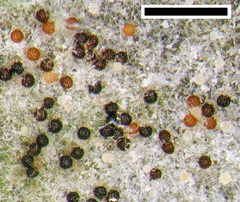 Podosphaera xanthiie1pathogen
- Second interactor
- Erysiphe cichoracearum
 Golovinomyces cichoracearume1pathogen
- Outcome
- disease resistancee0
- Direction
- greateste0
Not reportedComparator
Organisms pictured · Representative pictures of the matched species, not figures from the paper.


Verbatim
e0“Pumpkin plants grown with the lower doses of wollastonite amendments (3.13 and 6.25 tons/acre) had the greatest tissue Si concentrations and demonstrated the greatest disease resistance.”
e1“powdery mildew ( Podosphaera xanthii and Erysiphe cichoracearum )”
Claim · model-written summary
Wollastonite beyond the pH target did not further increase pumpkin silicon uptake.
- Taxon
- pumpkine0
- Treatment
- wollastonite at rates beyond the amount required to achieve a desirable soil pHe0
- Outcome
- Si uptakee0
- Direction
- did not further increasee0
Not reportedComparator
Verbatim
e0“Applying wollastonite at rates beyond the amount required to achieve a desirable soil pH for pumpkin production did not further increase Si uptake”
Claim · model-written summary
Wollastonite beyond the pH target did not further suppress powdery mildew.
- Taxon
- pumpkine0
- Treatment
- wollastonite at rates beyond the amount required to achieve a desirable soil pHe0
- Interactor
- Podosphaera xanthiiPodosphaera xanthiie1pathogen
- Second interactor
- Erysiphe cichoracearumGolovinomyces cichoracearume1pathogen
- Outcome
- powdery mildew developmente0
- Direction
- nor did it further suppresse0
Not reportedComparator
Organisms pictured · Representative pictures of the matched species, not figures from the paper.
Verbatim
e0“Applying wollastonite at rates beyond the amount required to achieve a desirable soil pH for pumpkin production did not further increase Si uptake, nor did it further suppress powdery mildew development.”
e1“Podosphaera xanthii and Erysiphe cichoracearum”
Claim · model-written summary
The authors recommend wollastonite to raise pH and improve mildew resistance in organic cucurbits.
Verbatim
e0“wollastonite is a useful material for organic cucurbit (Cucurbitaceae) growers who want to increase soil pH and improve plant resistance to powdery mildew at the same time.”
t0“Pumpkin”
The same questions in other papers
Wollastonite · nutrient: content · Cucurbita (pumpkins)Results agree
1 paper in the same direction as this paper
- positive
Wollastonite · Podosphaera xanthii · Cucurbita (pumpkins)Results agree
1 paper in the same direction as this paper
- positive
other · nutrient: content · Cucurbita (pumpkins)Results agree
4 papers in the same direction as this paper
- positive
- positive
- positive
1 paper more in this group
See all 5 papers →Claims are grouped by organism, treatment and what was measured or targeted. A paper counts as positive when any of its claims in the group is positive.