Abstract
Early blight (Alternaria solani) is a potential disease of potato that reduces its production globally both in conventional and tunnel cultivations. Due to variability in pathogenic isolates, prolonged active disease cycle phase and broad host range early blight is very difficult to manage. 8 microorganisms as a bioagent exhibiting inhibitory affects against Alternaria solani, were screened for their activity towards A. solani by a dual culture in vitro assay and in vivo (whole plant) test.in vitro studies indicated that the microorganism’s strains strongly inhibited the mycelial growth of the pathogen. The effect of microorganism’s strains on the mycelial growth (mm) of the pathogen proved to be highest with Trichoderma sp. (0.55) followed by Pseudomonas brassica cearum (0.74) and Pseudomonas jessenii (0.81) on the high concentration (106 cells ml-1) compared to the control (2.30). On the other hand, Bacillus mycoides (2.14) in vivo studies 9 microorganism’s strains were applied in two different application (foliar – soil) and two different varieties (Labella – Romano). The results showed significant reductions in the disease severity (%) with the treatment by Trichoderma sp (2%) followed by Bacillus thuringiensis (3%) and Bacillus mycoides (5%) compared with the control (46%) of Romano variety, while there were a less significant reductions in the disease severity (%)with the treatments compared with the control (16%) of Labella variety . The efficacy of antagonists to suppress the early blight disease varied in respect to the time and type of application.
Abstract from the paper’s OpenAlex record, shown for indexing and research. Copyright remains with the authors or the publisher. Read at the source ↗
The text the model read, with the source record’s inline markup (italics, sub- and superscripts) rendered and its character entities decoded; quote offsets refer to the raw text.
Claims 8
Claim · model-written summary
Trichoderma sp. gave the lowest pathogen mycelial growth, 0.55 mm, at high concentration versus control 2.30.
- Taxon
- potato
 Solanum tuberosumt0
- Treatment
- Trichoderma sp.e0
- Interactor
- Altrnaria solanit0pathogen
- Second interactor
- Trichoderma sp.
 Trichodermae0biocontrol_agent
- Outcome
- mycelial growth (mm) of the pathogene1
- Direction
- higheste0
- Value
- 0.55e0
- Qualifier
- 106 cells ml-1e0
- Comparator
- controle0
Organisms pictured · Representative pictures of the matched species, not figures from the paper.


Verbatim
e0“highest with Trichoderma sp. (0.55) followed by Pseudomonas brassica cearum (0.74) and Pseudomonas jessenii (0.81) on the high concentration (106 cells ml-1) compared to the control (2.30)”
e1“mycelial growth (mm) of the pathogen”
t0“potato caused by Altrnaria solani”
Claim · model-written summary
Pseudomonas brassica cearum yielded pathogen mycelial growth of 0.74 mm at high concentration, versus control 2.30.
- Taxon
- potatoSolanum tuberosumt0
- Treatment
- Pseudomonas brassica cearume0
- Interactor
- Altrnaria solanit0pathogen
- Second interactor
- Pseudomonas brassica cearume0biocontrol_agent
- Outcome
- mycelial growth (mm) of the pathogene1
- Value
- 0.74e0
- Comparator
- controle0
Not reportedDirection
Organisms pictured · Representative pictures of the matched species, not figures from the paper.
Verbatim
e0“Pseudomonas brassica cearum (0.74) and Pseudomonas jessenii (0.81) on the high concentration (106 cells ml-1) compared to the control (2.30)”
e1“mycelial growth (mm) of the pathogen”
t0“potato caused by Altrnaria solani”
Claim · model-written summary
Pseudomonas jessenii yielded pathogen mycelial growth of 0.81 mm at high concentration, versus control 2.30.
- Taxon
- potatoSolanum tuberosumt0
- Treatment
- Pseudomonas jesseniie0
- Interactor
- Altrnaria solanit0pathogen
- Second interactor
- Pseudomonas jesseniiPseudomonas jesseniie0biocontrol_agent
- Outcome
- mycelial growth (mm) of the pathogene1
- Value
- 0.81e0
- Comparator
- controle0
Not reportedDirection
Organisms pictured · Representative pictures of the matched species, not figures from the paper.
Verbatim
e0“Pseudomonas jessenii (0.81) on the high concentration (106 cells ml-1) compared to the control (2.30)”
e1“mycelial growth (mm) of the pathogen”
t0“potato caused by Altrnaria solani”
Claim · model-written summary
Trichoderma sp. reduced early blight severity to 2% in Romano potato versus 46% control.
- Taxon
- potatoSolanum tuberosumt0
- Material
- Romanoe0
- Treatment
- Trichoderma spe0
- Interactor
- Altrnaria solanit0pathogen
- Second interactor
- Trichoderma spTrichodermae0biocontrol_agent
- Outcome
- disease severity (%)e0
- Direction
- reductionse0
- Value
- 2%e0
- Comparator
- controle0
Organisms pictured · Representative pictures of the matched species, not figures from the paper.
Verbatim
e0“significant reductions in the disease severity (%) with the treatment by Trichoderma sp (2%) followed by Bacillus thuringiensis (3%) and Bacillus mycoides (5%) compared with the control (46%) of Romano variety”
t0“potato caused by Altrnaria solani”
Claim · model-written summary
Bacillus thuringiensis reduced early blight severity to 3% in Romano potato versus 46% control.
- Taxon
- potatoSolanum tuberosumt0
- Material
- Romanoe0
- Treatment
- Bacillus thuringiensise0
- Interactor
- Altrnaria solanit0pathogen
- Second interactor
- Bacillus thuringiensis
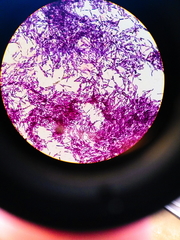 Bacillus thuringiensise0biocontrol_agent
- Outcome
- disease severity (%)e0
- Direction
- reductionse0
- Value
- 3%e0
- Comparator
- controle0
Organisms pictured · Representative pictures of the matched species, not figures from the paper.
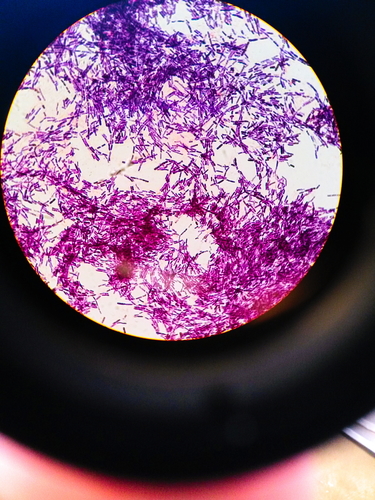
Verbatim
e0“significant reductions in the disease severity (%) with the treatment by Trichoderma sp (2%) followed by Bacillus thuringiensis (3%) and Bacillus mycoides (5%) compared with the control (46%) of Romano variety”
t0“potato caused by Altrnaria solani”
Claim · model-written summary
Bacillus mycoides reduced early blight severity to 5% in Romano potato versus 46% control.
- Taxon
- potatoSolanum tuberosumt0
- Material
- Romanoe0
- Treatment
- Bacillus mycoidese0
- Interactor
- Altrnaria solanit0pathogen
- Second interactor
- Bacillus mycoides
 Bacillus mycoidese0biocontrol_agent
- Outcome
- disease severity (%)e0
- Direction
- reductionse0
- Value
- 5%e0
- Comparator
- controle0
Organisms pictured · Representative pictures of the matched species, not figures from the paper.

Verbatim
e0“significant reductions in the disease severity (%) with the treatment by Trichoderma sp (2%) followed by Bacillus thuringiensis (3%) and Bacillus mycoides (5%) compared with the control (46%) of Romano variety”
t0“potato caused by Altrnaria solani”
Claim · model-written summary
Antagonist treatments produced smaller reductions of early blight severity in Labella potato than in Romano, relative to the Labella control at 16%.
- Taxon
- potatoSolanum tuberosumt0
- Material
- Labellae0
- Treatment
- treatmentse0
- Interactor
- Altrnaria solanit0pathogen
- Outcome
- disease severity (%)e0
- Direction
- reductionse0
- Value
- 16%e0
- Comparator
- controle0
Organisms pictured · Representative pictures of the matched species, not figures from the paper.
Verbatim
e0“there were a less significant reductions in the disease severity (%)with the treatments compared with the control (16%) of Labella variety”
t0“potato caused by Altrnaria solani”
Claim · model-written summary
Antagonist efficacy against potato early blight varied by application time and type.
- Taxon
- potatoSolanum tuberosumt0
- Treatment
- time and type of applicatione0
- Interactor
- Altrnaria solanit0pathogen
- Outcome
- efficacy of antagonists to suppress the early blight diseasee0
Not reportedDirection
Organisms pictured · Representative pictures of the matched species, not figures from the paper.
Verbatim
e0“The efficacy of antagonists to suppress the early blight disease varied in respect to the time and type of application”
t0“potato caused by Altrnaria solani”
The same questions in other papers
Trichoderma · disease · Solanum tuberosum (potato)Positive and negative results
2 papers in the same direction as this paper · 1 in the opposite direction
- no effect
- positive
- positive
Bacillus thuringiensis · disease · Solanum tuberosum (potato)Results agree
3 papers in the same direction as this paper
- positive
- positive
- positive
Pseudomonas · disease · Solanum tuberosum (potato)Results agree
4 papers in the same direction as this paper
- positive
- positive
- positive
1 paper more in this group
See all 5 papers →Claims are grouped by organism, treatment and what was measured or targeted. A paper counts as positive when any of its claims in the group is positive.