Abstract
Abstract The potential of the active ingredient of a commercial bioinsecticide, XenTari ® ( Bacillus thuringiensis [ BT ] serovar aizawai strain ABTS‐1857), to suppress gray mold in tomato plants was elucidated. First, a suspension of the active ingredient of XenTari ® and a liquid culture of the bacterial strain as BT inocula were sprayed onto detached leaves or drenched into pots of tomato seedlings, and then, propagules of the gray mold fungus, Botrytis cinerea, were inoculated onto the leaves. The gray mold disease was significantly suppressed when rhizospheres were drenched with either inoculum, but not when inocula were sprayed onto detached leaves of seedlings. Both BT inocula were verified not to directly inhibit the mycelial growth of B. cinerea based on in vitro culture plate assays. Additionally, real‐time RT‐PCR analysis verified that the active ingredient increased the expression levels of defence‐related genes, such as PR‐1 ( P6 ) and P4 , in the leaves of tomato seedlings. These results suggest that the active ingredient has the potential to suppress gray mold disease in tomato, not through direct antagonistic interactions with B. cinerea , but rather through systemic activation of the plant defence system by increased expression of several defence‐related genes.
Abstract from the paper’s OpenAlex record, shown for indexing and research. Copyright remains with the authors or the publisher. Read at the source ↗
The text the model read, with the source record’s inline markup (italics, sub- and superscripts) rendered and its character entities decoded; quote offsets refer to the raw text.
Claims 5
Claim · model-written summary
Drenching tomato rhizospheres with Bacillus thuringiensis inoculum significantly suppressed gray mold disease caused by Botrytis cinerea.
- Taxon
- tomato
 Solanum lycopersicume0
- Treatment
- rhizospheres were drenched with either inoculume1
- Interactor
- Botrytis cinerea
 Botrytis cinereae2pathogen
- Second interactor
- Bacillus thuringiensis
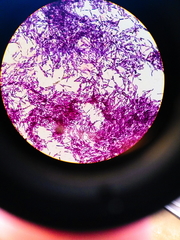 Bacillus thuringiensise0biocontrol_agent
- Outcome
- gray mold diseasee1
- Direction
- suppressede1
Not reportedComparator
Organisms pictured · Representative pictures of the matched species, not figures from the paper.


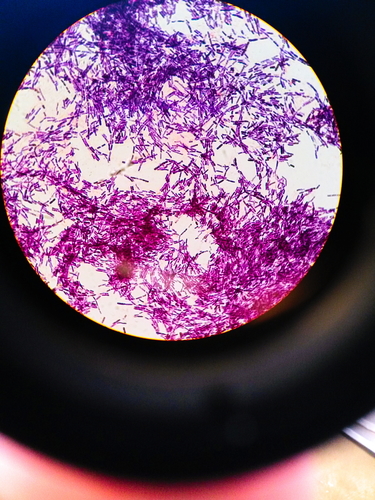
Verbatim
e0“The potential of the active ingredient of a commercial bioinsecticide, XenTari ® ( Bacillus thuringiensis [ BT ] serovar aizawai strain ABTS‐1857), to suppress gray mold in tomato plants was elucidated”
e1“The gray mold disease was significantly suppressed when rhizospheres were drenched with either inoculum, but not when inocula were sprayed onto detached leaves of seedlings”
e2“propagules of the gray mold fungus, Botrytis cinerea, were inoculated onto the leaves”
Claim · model-written summary
Spraying Bacillus thuringiensis inocula onto detached tomato leaves did not suppress gray mold.
- Taxon
- tomatoSolanum lycopersicume0
- Treatment
- inocula were sprayed onto detached leaves of seedlingse1
- Interactor
- Botrytis cinereaBotrytis cinereae2pathogen
- Outcome
- gray mold diseasee1
- Direction
- no_changeinferrede1
Not reportedComparator
Organisms pictured · Representative pictures of the matched species, not figures from the paper.
Verbatim
e0“The potential of the active ingredient of a commercial bioinsecticide, XenTari ® ( Bacillus thuringiensis [ BT ] serovar aizawai strain ABTS‐1857), to suppress gray mold in tomato plants was elucidated”
e1“The gray mold disease was significantly suppressed when rhizospheres were drenched with either inoculum, but not when inocula were sprayed onto detached leaves of seedlings”
e2“propagules of the gray mold fungus, Botrytis cinerea, were inoculated onto the leaves”
Claim · model-written summary
Both Bacillus thuringiensis inocula did not directly inhibit mycelial growth of Botrytis cinerea in vitro.
- Taxon
- tomatoSolanum lycopersicume0
- Treatment
- BT inoculae3
- Interactor
- B. cinereaBotrytis cinereae3pathogen
- Outcome
- mycelial growthe3
- Direction
- no_changeinferrede3
- Setting
- in vitro culture plate assayse3
Not reportedComparator
Organisms pictured · Representative pictures of the matched species, not figures from the paper.
Verbatim
e0“The potential of the active ingredient of a commercial bioinsecticide, XenTari ® ( Bacillus thuringiensis [ BT ] serovar aizawai strain ABTS‐1857), to suppress gray mold in tomato plants was elucidated”
e3“Both BT inocula were verified not to directly inhibit the mycelial growth of B. cinerea based on in vitro culture plate assays”
Claim · model-written summary
The active ingredient increased the expression of defence-related genes PR-1 (P6) and P4 in tomato seedling leaves.
- Taxon
- tomatoSolanum lycopersicume4
- Organ / stage
- leaves of tomato seedlingse4
- Treatment
- active ingrediente4
- Gene
- PR‐1 ( P6 ) and P4e4
- Outcome
- expression levels of defence‐related genese4
- Direction
- increasede4
Not reportedComparator
Organisms pictured · Representative pictures of the matched species, not figures from the paper.
Verbatim
e4“real‐time RT‐PCR analysis verified that the active ingredient increased the expression levels of defence‐related genes, such as PR‐1 ( P6 ) and P4 , in the leaves of tomato seedlings”
Claim · model-written summary
Bacillus thuringiensis inoculum suppresses tomato gray mold through systemic activation of the plant defence system rather than direct antagonism of Botrytis cinerea.
- Taxon
- tomatoSolanum lycopersicume5
- Outcome
- suppress gray mold diseasee5
- Qualifier
- systemic activation of the plant defence systeme5
Organisms pictured · Representative pictures of the matched species, not figures from the paper.
Verbatim
e5“These results suggest that the active ingredient has the potential to suppress gray mold disease in tomato, not through direct antagonistic interactions with B. cinerea , but rather through systemic activation of the plant defence system by increased expression of several defence‐related genes”
The same questions in other papers
transgenic · Botrytis cinerea · Solanum lycopersicum (tomato)Positive and negative results
2 papers in the same direction as this paper · 1 in the opposite direction
- positive
- negative
- negative
application · Botrytis cinerea · Solanum lycopersicum (tomato)Positive and negative results
20 papers in the same direction as this paper · 2 in the opposite direction
- no effect
- negative
- positive
19 papers more in this group
See all 23 papers →inoculation · Botrytis cinerea · Solanum lycopersicum (tomato)Positive and negative results
20 papers in the same direction as this paper · 4 in the opposite direction
- negative
- negative
- no effect
21 papers more in this group
See all 25 papers →Claims are grouped by organism, treatment and what was measured or targeted. A paper counts as positive when any of its claims in the group is positive.