Abstract
The adaptive responses of 10-day-old seedlings of wheat varieties Novosibirskaya 44, Novosibirskaya 18, Sibirskaya 21, and Omskaya 18 were studied simultaneously to several stress factors of the environment in model laboratory vegetation experiments. Changes in growth indicators, accumulation of wet and dry biomass, permeability of cell membranes according to the specific electric conductivity of leaves and the index of disease development were studied under separate and combined action of the pathogen of common root rot Bipolaris sorokiniana (5000 conidia per grain), chloride salinity (1.3%), and hyperthermia of seeds (43 ºС). Separate action of B. sorokiniana and chloride salinity on wheat seedlings mainly caused a decrease in adaptive capacity and loss of cultivar resistance: a decrease in growth to 57.2%, a decrease in biomass to 37.2%, an increase in electric conductivity up to 5.7 times and an index of disease development up to 180.7%. Sibirskaya 21 variety is the most resistant to the pathogen, and Omskaya 18 is the most resistant to chloride salinity. Two types of adaptive reactions were formed with the simultaneous action of stressors. An increase in the negative effect of stressors (loss of resistance, susceptibility) was found in Novosibirskaya 18 variety, and the compensation of the negative effect of stressors (the acquisition of resistance, tolerance) was found in the Sibirskaya 21 variety. Preliminary hyperthermia of seeds increased the resistance of seedlings (in the form of cross-adaptation) to the subsequent separate and combined action of chloride salinity and B. sorokiniana : a decrease in the specific electric conductivity to 56.2%, the index of disease development to 1.6 times, inhibition of biomass accumulation and growth up to 5.2 times. The varietal specificity of the formation of adaptive reactions under the combined action of stressors was revealed. The protective effect of hyperthermia during the subsequent action of salinity and pathogen is most evident in Novosibirskaya 44 and Sibirskaya 21 varieties.
Abstract from the paper’s OpenAlex record; open copy licensed cc-by. Read at the source ↗
The text the model read, with the source record’s inline markup (italics, sub- and superscripts) rendered and its character entities decoded; quote offsets refer to the raw text.
Claims 14
Claim · model-written summary
Separate B. sorokiniana and salinity action decreased wheat seedling growth to 57.2%
- Taxon
- wheat seedlings
 Triticum aestivume0
- Treatment
- B. sorokiniana and chloride salinitye0
- Interactor
- B. sorokiniana
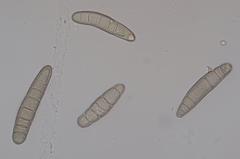 Bipolaris sorokinianae0pathogen
- Outcome
- growthe0
- Direction
- decreasee0
- Value
- 57.2%e0
Not reportedComparator
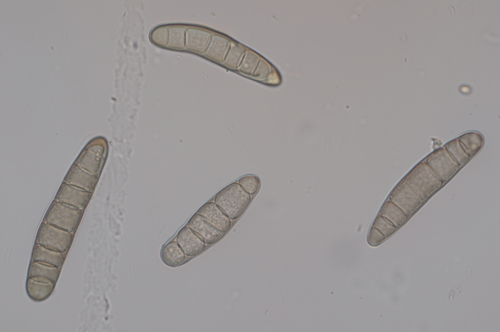
Organisms pictured · Representative pictures of the matched species, not figures from the paper.

Verbatim
e0“Separate action of B. sorokiniana and chloride salinity on wheat seedlings mainly caused a decrease in adaptive capacity and loss of cultivar resistance: a decrease in growth to 57.2%, a decrease in biomass to 37.2%, an increase in electric conductivity up to 5.7 times and an index of disease development up to 180.7%”
t0“wheat varieties”
Claim · model-written summary
Separate B. sorokiniana and salinity action decreased wheat seedling biomass to 37.2%
- Taxon
- wheat seedlingsTriticum aestivume0
- Treatment
- B. sorokiniana and chloride salinitye0
- Interactor
- B. sorokinianaBipolaris sorokinianae0pathogen
- Outcome
- biomasse0
- Direction
- decreasee0
- Value
- 37.2%e0
Not reportedComparator
Organisms pictured · Representative pictures of the matched species, not figures from the paper.
Verbatim
e0“Separate action of B. sorokiniana and chloride salinity on wheat seedlings mainly caused a decrease in adaptive capacity and loss of cultivar resistance: a decrease in growth to 57.2%, a decrease in biomass to 37.2%, an increase in electric conductivity up to 5.7 times and an index of disease development up to 180.7%”
t0“wheat varieties”
Claim · model-written summary
Separate B. sorokiniana and salinity action increased electric conductivity up to 5.7 times in wheat seedlings
- Taxon
- wheat seedlingsTriticum aestivume0
- Treatment
- B. sorokiniana and chloride salinitye0
- Interactor
- B. sorokinianaBipolaris sorokinianae0pathogen
- Outcome
- electric conductivitye0
- Direction
- increasee0
- Value
- 5.7 timese0
Not reportedComparator
Organisms pictured · Representative pictures of the matched species, not figures from the paper.
Verbatim
e0“Separate action of B. sorokiniana and chloride salinity on wheat seedlings mainly caused a decrease in adaptive capacity and loss of cultivar resistance: a decrease in growth to 57.2%, a decrease in biomass to 37.2%, an increase in electric conductivity up to 5.7 times and an index of disease development up to 180.7%”
t0“wheat varieties”
Claim · model-written summary
Separate B. sorokiniana and salinity action increased the disease development index up to 180.7% in wheat seedlings
- Taxon
- wheat seedlingsTriticum aestivume0
- Treatment
- B. sorokiniana and chloride salinitye0
- Interactor
- B. sorokinianaBipolaris sorokinianae0pathogen
- Outcome
- index of disease developmente0
- Direction
- increasee0
- Value
- 180.7%e0
Not reportedComparator
Organisms pictured · Representative pictures of the matched species, not figures from the paper.
Verbatim
e0“Separate action of B. sorokiniana and chloride salinity on wheat seedlings mainly caused a decrease in adaptive capacity and loss of cultivar resistance: a decrease in growth to 57.2%, a decrease in biomass to 37.2%, an increase in electric conductivity up to 5.7 times and an index of disease development up to 180.7%”
t0“wheat varieties”
Claim · model-written summary
Sibirskaya 21 is the most resistant wheat variety to the pathogen
- Taxon
- wheatTriticum aestivumt0
- Material
- Sibirskaya 21e0
- Outcome
- resistant to the pathogene0
- Direction
- most resistante0
Organisms pictured · Representative pictures of the matched species, not figures from the paper.
Verbatim
e0“Sibirskaya 21 variety is the most resistant to the pathogen, and Omskaya 18 is the most resistant to chloride salinity”
t0“wheat varieties”
Claim · model-written summary
Omskaya 18 is the most resistant wheat variety to chloride salinity
- Taxon
- wheatTriticum aestivumt0
- Material
- Omskaya 18e0
- Outcome
- resistant to chloride salinitye0
- Direction
- most resistante0
Organisms pictured · Representative pictures of the matched species, not figures from the paper.
Verbatim
e0“Sibirskaya 21 variety is the most resistant to the pathogen, and Omskaya 18 is the most resistant to chloride salinity”
t0“wheat varieties”
Claim · model-written summary
Novosibirskaya 18 showed an increase in the negative effect of combined stressors
- Taxon
- wheatTriticum aestivumt0
- Material
- Novosibirskaya 18e0
- Outcome
- negative effect of stressorse0
- Direction
- increasee0
Organisms pictured · Representative pictures of the matched species, not figures from the paper.
Verbatim
e0“An increase in the negative effect of stressors (loss of resistance, susceptibility) was found in Novosibirskaya 18 variety, and the compensation of the negative effect of stressors (the acquisition of resistance, tolerance) was found in the Sibirskaya 21 variety”
t0“wheat varieties”
Claim · model-written summary
Sibirskaya 21 compensated the negative effect of combined stressors
- Taxon
- wheatTriticum aestivumt0
- Material
- Sibirskaya 21e0
- Outcome
- negative effect of stressorse0
- Direction
- compensatione0
Organisms pictured · Representative pictures of the matched species, not figures from the paper.
Verbatim
e0“An increase in the negative effect of stressors (loss of resistance, susceptibility) was found in Novosibirskaya 18 variety, and the compensation of the negative effect of stressors (the acquisition of resistance, tolerance) was found in the Sibirskaya 21 variety”
t0“wheat varieties”
Claim · model-written summary
Preliminary hyperthermia of seeds increased seedling resistance to later chloride salinity and B. sorokiniana
- Taxon
- wheatTriticum aestivumt0
- Treatment
- Preliminary hyperthermia of seedse0
- Interactor
- B. sorokinianaBipolaris sorokinianae0pathogen
- Outcome
- resistance of seedlingse0
- Direction
- increasede0
Not reportedComparator
Organisms pictured · Representative pictures of the matched species, not figures from the paper.
Verbatim
e0“Preliminary hyperthermia of seeds increased the resistance of seedlings (in the form of cross-adaptation) to the subsequent separate and combined action of chloride salinity and B. sorokiniana: a decrease in the specific electric conductivity to 56.2%, the index of disease development to 1.6 times, inhibition of biomass accumulation and growth up to 5.2 times”
t0“wheat varieties”
Claim · model-written summary
Preliminary hyperthermia of seeds decreased specific electric conductivity to 56.2% in seedlings
- Taxon
- wheatTriticum aestivumt0
- Treatment
- Preliminary hyperthermia of seedse0
- Outcome
- the specific electric conductivitye0
- Direction
- decreasee0
- Value
- 56.2%e0
Not reportedComparator
Organisms pictured · Representative pictures of the matched species, not figures from the paper.
Verbatim
e0“Preliminary hyperthermia of seeds increased the resistance of seedlings (in the form of cross-adaptation) to the subsequent separate and combined action of chloride salinity and B. sorokiniana: a decrease in the specific electric conductivity to 56.2%, the index of disease development to 1.6 times, inhibition of biomass accumulation and growth up to 5.2 times”
t0“wheat varieties”
Claim · model-written summary
Preliminary hyperthermia of seeds reduced the disease development index to 1.6 times in seedlings
- Taxon
- wheatTriticum aestivumt0
- Treatment
- Preliminary hyperthermia of seedse0
- Interactor
- B. sorokinianaBipolaris sorokinianae0pathogen
- Outcome
- the index of disease developmente0
- Direction
- decreasee0
- Value
- 1.6 timese0
Not reportedComparator
Organisms pictured · Representative pictures of the matched species, not figures from the paper.
Verbatim
e0“Preliminary hyperthermia of seeds increased the resistance of seedlings (in the form of cross-adaptation) to the subsequent separate and combined action of chloride salinity and B. sorokiniana: a decrease in the specific electric conductivity to 56.2%, the index of disease development to 1.6 times, inhibition of biomass accumulation and growth up to 5.2 times”
t0“wheat varieties”
Claim · model-written summary
Preliminary hyperthermia of seeds inhibited biomass accumulation and growth up to 5.2 times in seedlings
- Taxon
- wheatTriticum aestivumt0
- Treatment
- Preliminary hyperthermia of seedse0
- Outcome
- biomass accumulation and growthe0
- Direction
- inhibitione0
- Value
- 5.2 timese0
Not reportedComparator
Organisms pictured · Representative pictures of the matched species, not figures from the paper.
Verbatim
e0“Preliminary hyperthermia of seeds increased the resistance of seedlings (in the form of cross-adaptation) to the subsequent separate and combined action of chloride salinity and B. sorokiniana: a decrease in the specific electric conductivity to 56.2%, the index of disease development to 1.6 times, inhibition of biomass accumulation and growth up to 5.2 times”
t0“wheat varieties”
Claim · model-written summary
Adaptive reactions to combined stressors show varietal specificity in wheat
- Taxon
- wheatTriticum aestivumt0
- Outcome
- varietal specificity of the formation of adaptive reactionse0
Organisms pictured · Representative pictures of the matched species, not figures from the paper.
Verbatim
e0“The varietal specificity of the formation of adaptive reactions under the combined action of stressors was revealed”
t0“wheat varieties”
Claim · model-written summary
Protective effect of hyperthermia is most evident in Novosibirskaya 44 and Sibirskaya 21
- Taxon
- wheatTriticum aestivumt0
- Material
- Novosibirskaya 44 and Sibirskaya 21 varietiese0
- Treatment
- hyperthermiae0
- Outcome
- protective effect of hyperthermiae0
- Direction
- most evidente0
Organisms pictured · Representative pictures of the matched species, not figures from the paper.
Verbatim
e0“The protective effect of hyperthermia during the subsequent action of salinity and pathogen is most evident in Novosibirskaya 44 and Sibirskaya 21 varieties”
t0“wheat varieties”
The same questions in other papers
Bipolaris sorokiniana · disease · Triticum aestivum (wheat)Positive and negative results
1 paper in the same direction as this paper · 2 in the opposite direction
- positive
- positive
- negative
chloride · disease · Triticum aestivum (wheat)Positive and negative results
1 paper in the same direction as this paper · 3 in the opposite direction
- positive
- positive
- positive
1 paper more in this group
See all 5 papers →chloride · growth · Triticum aestivum (wheat)Positive and negative results
5 papers in the same direction as this paper · 11 in the opposite direction
- positive
- positive
- positive
13 papers more in this group
See all 17 papers →Claims are grouped by organism, treatment and what was measured or targeted. A paper counts as positive when any of its claims in the group is positive.