Abstract
Abstract Many phytopathogens secrete cell wall degradation enzymes (CWDEs) to damage host cells and facilitate colonization. As the major components of the plant cell wall, cellulose and hemicellulose are the targets of CWDEs. Damaged plant cells often release damage-associated molecular patterns (DAMPs) to trigger plant immune responses. Here, we establish that the fungal pathogen Magnaporthe oryzae secretes the endoglucanases MoCel12A and MoCel12B during infection of rice ( Oryza sativa ). These endoglucanases target hemicellulose of the rice cell wall and release two specific oligosaccharides, namely the trisaccharide 3 1 -β-D-Cellobiosyl-glucose and the tetrasaccharide 3 1 -β-D-Cellotriosyl-glucose. 3 1 -β-D-Cellobiosyl-glucose and 3 1 -β-D-Cellotriosyl-glucose bind the immune receptor OsCERK1 but not the chitin binding protein OsCEBiP. However, they induce the dimerization of OsCERK1 and OsCEBiP. In addition, these Poaceae cell wall-specific oligosaccharides trigger a burst of reactive oxygen species (ROS) that is largely compromised in oscerk1 and oscebip mutants. We conclude that 3 1 -β-D-Cellobiosyl-glucose and 3 1 -β-D-Cellotriosyl-glucose are specific DAMPs released from the hemicellulose of rice cell wall, which are perceived by an OsCERK1 and OsCEBiP immune complex during M. oryzae infection in rice.
Abstract from the paper’s OpenAlex record; open copy licensed cc-by. Read at the source ↗
The text the model read, with the source record’s inline markup (italics, sub- and superscripts) rendered and its character entities decoded; quote offsets refer to the raw text.
Claims 7
Claim · model-written summary
Magnaporthe oryzae secreted MoCel12A and MoCel12B during rice infection.
- Taxon
- rice
 Oryza sativae0
- Interactor
- Magnaporthe oryzae
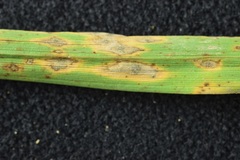 Pyricularia oryzaee0pathogen
- Gene
- MoCel12A and MoCel12Be0
- Outcome
- Magnaporthe oryzae secretes the endoglucanasese0
Organisms pictured · Representative pictures of the matched species, not figures from the paper.

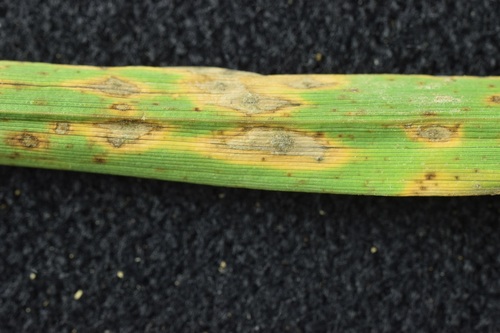
Verbatim
e0“Magnaporthe oryzae secretes the endoglucanases MoCel12A and MoCel12B during infection of rice ( Oryza sativa )”
Claim · model-written summary
The endoglucanases targeted rice wall hemicellulose and released two specific oligosaccharides.
- Taxon
- riceOryza sativae0
- Organ / stage
- cell walle0
- Gene
- MoCel12A and MoCel12Be1
- Outcome
- release two specific oligosaccharidese0
Organisms pictured · Representative pictures of the matched species, not figures from the paper.
Verbatim
e0“These endoglucanases target hemicellulose of the rice cell wall and release two specific oligosaccharides, namely the trisaccharide 3 1 -β-D-Cellobiosyl-glucose and the tetrasaccharide 3 1 -β-D-Cellotriosyl-glucose”
e1“endoglucanases MoCel12A and MoCel12B”
Claim · model-written summary
The trisaccharide bound OsCERK1 but not OsCEBiP.
- Taxon
- riceOryza sativae1
- Gene
- OsCERK1e0
- Outcome
- 3 1 -β-D-Cellobiosyl-glucose and 3 1 -β-D-Cellotriosyl-glucose bind the immune receptor OsCERK1 but not the chitin binding protein OsCEBiPe0
Organisms pictured · Representative pictures of the matched species, not figures from the paper.
Verbatim
e0“3 1 -β-D-Cellobiosyl-glucose and 3 1 -β-D-Cellotriosyl-glucose bind the immune receptor OsCERK1 but not the chitin binding protein OsCEBiP”
e1“rice ( Oryza sativa )”
Claim · model-written summary
The oligosaccharides induced OsCERK1 and OsCEBiP dimerization.
- Taxon
- riceOryza sativae1
- Gene
- OsCERK1 and OsCEBiPe0
- Outcome
- dimerizatione0
Organisms pictured · Representative pictures of the matched species, not figures from the paper.
Verbatim
e0“they induce the dimerization of OsCERK1 and OsCEBiP”
e1“rice ( Oryza sativa )”
Claim · model-written summary
The oligosaccharides triggered a reactive oxygen species burst.
- Taxon
- riceOryza sativae1
- Treatment
- Poaceae cell wall-specific oligosaccharidese0
- Outcome
- burst of reactive oxygen species (ROS)e0
Not reportedComparatorDirection
Organisms pictured · Representative pictures of the matched species, not figures from the paper.
Verbatim
e0“Poaceae cell wall-specific oligosaccharides trigger a burst of reactive oxygen species (ROS) that is largely compromised in oscerk1 and oscebip mutants”
e1“rice ( Oryza sativa )”
Claim · model-written summary
The ROS burst was largely compromised in oscerk1 and oscebip mutants.
- Taxon
- riceOryza sativae1
- Material
- oscerk1 and oscebip mutantse0
- Outcome
- burst of reactive oxygen species (ROS)e0
- Direction
- compromisede0
Organisms pictured · Representative pictures of the matched species, not figures from the paper.
Verbatim
e0“burst of reactive oxygen species (ROS) that is largely compromised in oscerk1 and oscebip mutants”
e1“rice ( Oryza sativa )”
Claim · model-written summary
The authors conclude that rice wall oligosaccharides are DAMPs perceived by the OsCERK1-OsCEBiP complex during infection.
- Taxon
- riceOryza sativae0
- Interactor
- M. oryzaePyricularia oryzaee0pathogen
- Gene
- OsCERK1 and OsCEBiPe0
- Outcome
- perceived by an OsCERK1 and OsCEBiP immune complexe0
Organisms pictured · Representative pictures of the matched species, not figures from the paper.
Verbatim
e0“specific DAMPs released from the hemicellulose of rice cell wall, which are perceived by an OsCERK1 and OsCEBiP immune complex during M. oryzae infection in rice”
The same questions in other papers
oligosaccharide · physiology: oxidative · Oryza sativa (rice)Results agree
2 papers in the same direction as this paper
- positive
- positive
Claims are grouped by organism, treatment and what was measured or targeted. A paper counts as positive when any of its claims in the group is positive.