Abstract
Brassica crops include important vegetables known as “superfoods” due to the content of phytochemicals of great interest to human health, such as glucosinolates (GSLs) and antioxidant compounds. On the other hand, Trichoderma is a genus of filamentous fungi that includes several species described as biostimulants and/or biological control agents in agriculture. In a previous work, an endophytic strain of Trichoderma hamatum was isolated from kale roots (Brassica oleracea var. acephala), describing its ability to induce systemic resistance in its host plant. In the present work, some of the main leafy Brassica crops (kale, cabbage, leaf rape and turnip greens) have been root-inoculated with T. hamatum, having the aim to verify the possible capacity of the fungus as a biostimulant in productivity as well as the foliar content of GSLs and its antioxidant potential, in order to improve these “superfoods”. The results reported, for the first time, an increase in the productivity of kale (55%), cabbage (36%) and turnip greens (46%) by T. hamatum root inoculation. Furthermore, fungal inoculation reported a significant increase in the content of total GSLs in cabbage and turnip greens, mainly of the GSLs sinigrin and gluconapin, respectively, along with an increase in their antioxidant capacity. Therefore, T. hamatum could be a good agricultural biostimulant in leafy Brassica crops, increasing the content of GSLs and antioxidant potential of great food and health interest.
Abstract from the paper’s OpenAlex record; open copy licensed cc-by. Read at the source ↗
The text the model read, with the source record’s inline markup (italics, sub- and superscripts) rendered and its character entities decoded; quote offsets refer to the raw text.
Claims 7
Claim · model-written summary
Root inoculation with T. hamatum increased kale productivity by 55%.
- Taxon
- kale
 Brassica oleracea var. viridise1
- Treatment
- T. hamatum root inoculatione1
- Interactor
- T. hamatum
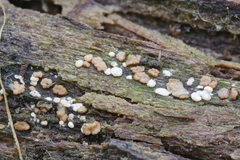 Trichoderma hamatume1symbiont
- Outcome
- productivitye1
- Direction
- increasee1
- Value
- 55%e1
Not reportedComparator
Organisms pictured · Representative pictures of the matched species, not figures from the paper.

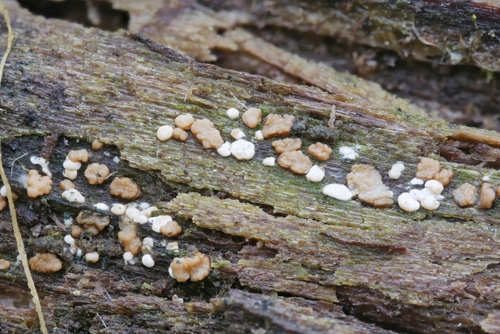
Verbatim
e1“The results reported, for the first time, an increase in the productivity of kale (55%), cabbage (36%) and turnip greens (46%) by T. hamatum root inoculation”
Claim · model-written summary
Root inoculation with T. hamatum increased cabbage productivity by 36%.
- Taxon
- cabbage
 Brassica oleracea var. capitatae1
- Treatment
- T. hamatum root inoculatione1
- Interactor
- T. hamatumTrichoderma hamatume1symbiont
- Outcome
- productivitye1
- Direction
- increasee1
- Value
- 36%e1
Not reportedComparator
Organisms pictured · Representative pictures of the matched species, not figures from the paper.

Verbatim
e1“The results reported, for the first time, an increase in the productivity of kale (55%), cabbage (36%) and turnip greens (46%) by T. hamatum root inoculation”
Claim · model-written summary
Root inoculation with T. hamatum increased turnip greens productivity by 46%.
- Taxon
- turnip greense1
- Treatment
- T. hamatum root inoculatione1
- Interactor
- T. hamatumTrichoderma hamatume1symbiont
- Outcome
- productivitye1
- Direction
- increasee1
- Value
- 46%e1
Not reportedComparator
Organisms pictured · Representative pictures of the matched species, not figures from the paper.
Verbatim
e1“The results reported, for the first time, an increase in the productivity of kale (55%), cabbage (36%) and turnip greens (46%) by T. hamatum root inoculation”
Claim · model-written summary
Fungal inoculation significantly increased total glucosinolate content in cabbage, mainly sinigrin.
- Taxon
- cabbageBrassica oleracea var. capitatae2
- Treatment
- fungal inoculatione2
- Compound
- sinigrine2
- Outcome
- content of total GSLse2
- Direction
- increasee2
Not reportedComparator
Organisms pictured · Representative pictures of the matched species, not figures from the paper.
Verbatim
e2“Furthermore, fungal inoculation reported a significant increase in the content of total GSLs in cabbage and turnip greens, mainly of the GSLs sinigrin and gluconapin, respectively, along with an increase in their antioxidant capacity”
Claim · model-written summary
Fungal inoculation significantly increased total glucosinolate content in turnip greens, mainly gluconapin.
- Taxon
- turnip greense2
- Treatment
- fungal inoculatione2
- Compound
- gluconapine2
- Outcome
- content of total GSLse2
- Direction
- increasee2
Not reportedComparator
Verbatim
e2“Furthermore, fungal inoculation reported a significant increase in the content of total GSLs in cabbage and turnip greens, mainly of the GSLs sinigrin and gluconapin, respectively, along with an increase in their antioxidant capacity”
Claim · model-written summary
Fungal inoculation increased the antioxidant capacity of cabbage and turnip greens.
- Taxon
- cabbage and turnip greense2
- Treatment
- fungal inoculatione2
- Outcome
- antioxidant capacitye2
- Direction
- increasee2
Not reportedComparator
Verbatim
e2“Furthermore, fungal inoculation reported a significant increase in the content of total GSLs in cabbage and turnip greens, mainly of the GSLs sinigrin and gluconapin, respectively, along with an increase in their antioxidant capacity”
Claim · model-written summary
T. hamatum could be a good agricultural biostimulant in leafy Brassica crops.
Verbatim
e3“Therefore, T. hamatum could be a good agricultural biostimulant in leafy Brassica crops”
The same questions in other papers
inoculation · quality: phytochemicals · Brassica oleracea (wild cabbage)Positive and negative results
13 papers in the same direction as this paper · 1 in the opposite direction
- negative
- positive
- positive
11 papers more in this group
See all 15 papers →inoculation · yield · Brassica oleracea (wild cabbage)Positive and negative results
61 papers in the same direction as this paper · 1 in the opposite direction · 3 reporting no difference from an alternative
- positive
- negative
- no effect
62 papers more in this group
See all 66 papers →Claims are grouped by organism, treatment and what was measured or targeted. A paper counts as positive when any of its claims in the group is positive.