Abstract
BACKGROUND: The corn leafhopper, Dalbulus maidis (Hemiptera: Cicadellidae), spreads maize stunt pathogens and requires timely and effective crop protection. We determined the interaction between maize phenology and the vector feeding/infection period by stunt pathogens with the residual efficacy of neonicotinoid insecticidal seed treatments. Greenhouse- and field-grown maize plants, seed-treated with clothianidin or imidacloprid insecticides, were infested during seven growth stages with corn leafhoppers reared under controlled conditions on maize plants displaying infection symptoms by both spiroplasma (corn stunt spiroplasma, Spiroplasma kunkelii) and phytoplasma (maize bushy phytoplasma) pathogens. RESULTS: In the greenhouse and field settings, seed treatment reduced the stunt disease symptoms and corn yield loss during the VE-V4 maize growth stages and caused no phytotoxicity. The neonicotinoid seed treatment reduced 20-60% of the yield losses from the corn stunt disease until the V4 growth stage. Infestation by infective corn leafhoppers in the V12 maize growth stage caused a 25-30% yield loss irrespective of seed treatment, yet no stunt disease symptom was evident. Nonetheless, corn yield losses and visual stunt symptoms as rated by a nine-category ordinal scale were strongly correlated (r = 0.79, P < 0.01). CONCLUSION: These results reinforce that maize plants are more susceptible to leafhopper stunt disease during the VE-V4 growth stages (emergence to the fourth-leaf stage). Seed treatment helps reduce the damage in the early growth stages (VE-V2), although supplemental control measures depending on leafhopper population density may be needed from VE-V12 to protect yield losses from the maize stunt condition. © 2021 Society of Chemical Industry.
Abstract from the paper’s OpenAlex record, shown for indexing and research. Copyright remains with the authors or the publisher. Read at the source ↗
The text the model read, with the source record’s inline markup (italics, sub- and superscripts) rendered and its character entities decoded; quote offsets refer to the raw text.
Claims 9
Claim · model-written summary
Seed treatment reduced stunt symptoms during VE-V4 in greenhouse and field.
- Organ / stage
- VE-V4 maize growth stagese0
- Treatment
- seed treatmente0
- Outcome
- stunt disease symptomse0
- Direction
- reducede0
- Setting
- greenhouse and field settingse0
 Zea mays
Not reportedComparator
Organisms pictured · Representative pictures of the matched species, not figures from the paper.

Verbatim
e0“In the greenhouse and field settings, seed treatment reduced the stunt disease symptoms and corn yield loss during the VE-V4 maize growth stages and caused no phytotoxicity”
Claim · model-written summary
Seed treatment reduced corn yield loss during VE-V4.
- Organ / stage
- VE-V4 maize growth stagese0
- Treatment
- seed treatmente0
- Outcome
- corn yield losse0
- Direction
- reducede0
Not reportedComparator
Organisms pictured · Representative pictures of the matched species, not figures from the paper.
Verbatim
e0“seed treatment reduced the stunt disease symptoms and corn yield loss during the VE-V4 maize growth stages”
Claim · model-written summary
Seed treatment caused no phytotoxicity.
- Organ / stage
- VE-V4 maize growth stagese0
- Treatment
- seed treatmente0
- Outcome
- phytotoxicitye0
- Direction
- noe0
Not reportedComparator
Organisms pictured · Representative pictures of the matched species, not figures from the paper.
Verbatim
e0“seed treatment reduced the stunt disease symptoms and corn yield loss during the VE-V4 maize growth stages and caused no phytotoxicity”
Claim · model-written summary
Neonicotinoid seed treatment reduced corn stunt yield losses by 20-60% until V4.
- Organ / stage
- V4 growth stagee0
- Treatment
- neonicotinoid seed treatmente0
- Outcome
- yield losses from the corn stunt diseasee0
- Direction
- reducede0
- Value
- 20-60%e0
Not reportedComparator
Organisms pictured · Representative pictures of the matched species, not figures from the paper.
Verbatim
e0“The neonicotinoid seed treatment reduced 20-60% of the yield losses from the corn stunt disease until the V4 growth stage”
e1“maize plants are more susceptible to leafhopper stunt disease during the VE-V4 growth stages”
Claim · model-written summary
Infective leafhoppers at V12 caused 25-30% yield loss irrespective of seed treatment.
- Organ / stage
- V12 maize growth stagee0
- Treatment
- Infestation by infective corn leafhopperse0
- Interactor
- corn leafhoppers
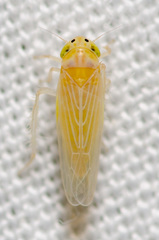 Dalbulus maidise0pest
- Outcome
- yield losse0
- Direction
- losse0
- Value
- 25-30%e0
Not reportedComparator
Organisms pictured · Representative pictures of the matched species, not figures from the paper.

Verbatim
e0“Infestation by infective corn leafhoppers in the V12 maize growth stage caused a 25-30% yield loss irrespective of seed treatment”
Claim · model-written summary
No stunt symptoms were evident after V12 infestation.
- Outcome
- no stunt disease symptom was evidente0
Not reportedDirection
Organisms pictured · Representative pictures of the matched species, not figures from the paper.
Verbatim
e0“yet no stunt disease symptom was evident”
e1“maize plants are more susceptible to leafhopper stunt disease during the VE-V4 growth stages”
Claim · model-written summary
Yield losses and visual stunt symptoms were strongly correlated.
Not reportedDirection
Organisms pictured · Representative pictures of the matched species, not figures from the paper.
Verbatim
e0“corn yield losses and visual stunt symptoms as rated by a nine-category ordinal scale were strongly correlated (r = 0.79, P < 0.01)”
e1“maize plants are more susceptible to leafhopper stunt disease during the VE-V4 growth stages”
Claim · model-written summary
Maize was more susceptible to leafhopper stunt disease at VE-V4.
- Organ / stage
- VE-V4 growth stagese0
- Interactor
- leafhoppere0pest
- Outcome
- susceptible to leafhopper stunt diseasee0
- Direction
- moree0
Organisms pictured · Representative pictures of the matched species, not figures from the paper.
Verbatim
e0“maize plants are more susceptible to leafhopper stunt disease during the VE-V4 growth stages”
Claim · model-written summary
The authors recommend supplemental control from VE-V12 depending on leafhopper density.
- Organ / stage
- VE-V12e0
- Interactor
- leafhoppere0pest
- Outcome
- supplemental control measurese0
- Qualifier
- depending on leafhopper population densitye0
Organisms pictured · Representative pictures of the matched species, not figures from the paper.
Verbatim
e0“supplemental control measures depending on leafhopper population density may be needed from VE-V12 to protect yield losses from the maize stunt condition”
The same questions in other papers
seed treatment · crop injury · Zea mays (maize)Positive and negative results
8 in the opposite direction
- positive
- positive
- positive
5 papers more in this group
See all 9 papers →seed treatment · disease · Zea mays (maize)Positive and negative results
43 papers in the same direction as this paper · 5 in the opposite direction
- negative
- no effect
- no effect
45 papers more in this group
See all 49 papers →seed treatment · yield · Zea mays (maize)Positive and negative results
149 papers in the same direction as this paper · 15 in the opposite direction
- no effect
- no effect
- no effect
161 papers more in this group
See all 165 papers →infection · Dalbulus maidis · Zea mays (maize)Results agree
1 paper in the same direction as this paper
- negative
Claims are grouped by organism, treatment and what was measured or targeted. A paper counts as positive when any of its claims in the group is positive.