Abstract
Abstract Stevia is a native crop of sub-tropical regions; its cultivation is extended to low land tropical regions, which might the growth is not good as in its origin growth areas. Bacteria as growth promoters are expected to enhance stevia growth in low-land tropical regions. This study aimed to determine the effect of bacteria on the growth and yield of stevia. The research was conducted at the Microbiology Laboratory and Greenhouse of the Indonesian Spices and Medicinal Crops Research Institute at 240 m above sea level and was arranged in a complete randomized block design with four replications. The treatments consisted of 1) control, 2) rhizosphere bacteria Brevibacillus parabrevis GF13, 3) endophytic bacteria Mesorhizobium soli NHI-8, 4) endophytic bacteria Bacillus pacificus EB422, 5) a combination B. parabrevis GF13 + M. soli NHI-8, and 6) a combination of Br. parabrevis GF13 + B. pacificus EB422. The highest increase in total production of fresh (32.8%) and dry (25.86%) herbs were found in treatment 4 (endophytic bacteria Bacillus pacificus EB422). The treatment caused the plant to have the highest nutrient uptake 0.124 N g/plant, 0.051 P 2 O 5 g/plant, and 0.172 K 2 O g/plant. The treatment increased soil chemical properties.
Abstract from the paper’s OpenAlex record; open copy licensed cc-by. Read at the source ↗
The text the model read, with the source record’s inline markup (italics, sub- and superscripts) rendered and its character entities decoded; quote offsets refer to the raw text.
Claims 6
Claim · model-written summary
Endophytic Bacillus pacificus EB422 gave the highest increase in fresh herb production of stevia, 32.8%.
- Treatment
- endophytic bacteria Bacillus pacificus EB422e1
- Interactor
- Bacillus pacificus EB422
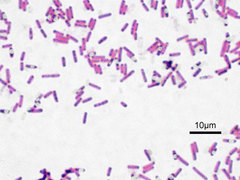 Bacillus pacificuse1symbiont
- Outcome
- total productione1
- Direction
- highest increasee1
- Value
- 32.8%e1
- Qualifier
- freshe1
- Comparator
- controle2
- Setting
- Greenhousee3
 Stevia
Organisms pictured · Representative pictures of the matched species, not figures from the paper.

Verbatim
e0“Stevia is a native crop of sub-tropical regions”
e1“The highest increase in total production of fresh (32.8%) and dry (25.86%) herbs were found in treatment 4 (endophytic bacteria Bacillus pacificus EB422)”
e2“The treatments consisted of 1) control, 2) rhizosphere bacteria Brevibacillus parabrevis GF13”
e3“The research was conducted at the Microbiology Laboratory and Greenhouse”
Claim · model-written summary
Endophytic Bacillus pacificus EB422 gave the highest increase in dry herb production of stevia, 25.86%.
- Treatment
- endophytic bacteria Bacillus pacificus EB422e1
- Interactor
- Bacillus pacificus EB422Bacillus pacificuse1symbiont
- Outcome
- total productione1
- Direction
- highest increasee1
- Value
- 25.86%e1
- Qualifier
- drye1
- Comparator
- controle2
- Setting
- Greenhousee3
Organisms pictured · Representative pictures of the matched species, not figures from the paper.
Verbatim
e0“Stevia is a native crop of sub-tropical regions”
e1“The highest increase in total production of fresh (32.8%) and dry (25.86%) herbs were found in treatment 4 (endophytic bacteria Bacillus pacificus EB422)”
e2“The treatments consisted of 1) control, 2) rhizosphere bacteria Brevibacillus parabrevis GF13”
e3“The research was conducted at the Microbiology Laboratory and Greenhouse”
Claim · model-written summary
The bacterial treatment gave the highest stevia nitrogen uptake, 0.124 N g per plant.
Not reportedTreatmentComparator
Organisms pictured · Representative pictures of the matched species, not figures from the paper.
Verbatim
e0“Stevia is a native crop of sub-tropical regions”
e4“The treatment caused the plant to have the highest nutrient uptake 0.124 N g/plant, 0.051 P 2 O 5 g/plant, and 0.172 K 2 O g/plant”
Claim · model-written summary
The bacterial treatment gave the highest stevia phosphorus uptake, 0.051 P2O5 g per plant.
Not reportedTreatmentComparator
Organisms pictured · Representative pictures of the matched species, not figures from the paper.
Verbatim
e0“Stevia is a native crop of sub-tropical regions”
e4“The treatment caused the plant to have the highest nutrient uptake 0.124 N g/plant, 0.051 P 2 O 5 g/plant, and 0.172 K 2 O g/plant”
Claim · model-written summary
The bacterial treatment gave the highest stevia potassium uptake, 0.172 K2O g per plant.
Not reportedTreatmentComparator
Organisms pictured · Representative pictures of the matched species, not figures from the paper.
Verbatim
e0“Stevia is a native crop of sub-tropical regions”
e4“The treatment caused the plant to have the highest nutrient uptake 0.124 N g/plant, 0.051 P 2 O 5 g/plant, and 0.172 K 2 O g/plant”
Claim · model-written summary
The bacterial treatment increased soil chemical properties.
Not reportedTreatmentComparator
Organisms pictured · Representative pictures of the matched species, not figures from the paper.
Verbatim
e0“Stevia is a native crop of sub-tropical regions”
e5“The treatment increased soil chemical properties”
The same questions in other papers
inoculation · yield · SteviaResults agree
3 papers in the same direction as this paper
- positive
- positive
- positive
Claims are grouped by organism, treatment and what was measured or targeted. A paper counts as positive when any of its claims in the group is positive.