Abstract
BACKGROUND: Salt stress threaten the growth of plants, and even aggravate plant disease. In this article, salt-tolerant Trichoderma strain was isolated, and its potential to alleviate salt stress and diminish cucumber root rot caused by Fusarium oxysporum was evaluated. RESULTS: Twenty-seven Trichoderma isolates were isolated from samples of sea muds and algae collected from the South Sea of China. Among these, the isolate HN082102.1 showed the most excellent salt tolerance and antagonistic activity against F. oxysporum causing root rot in cucumber and was identified as T. atroviride. Its antagonism ability may be due to mycoparasitism and inhibition effect of volatile substances. The application of Trichoderma mitigated the adverse effects of salt stress and promoted the growth of cucumber under 100 mM and 200 mM NaCl, especially for the root. When T. atroviride HN082102.1 was applied, root fresh weights increased by 92.55 and 84.86%, respectively, and root dry weights increased by 75.71 and 53.31%, respectively. Meanwhile, the application of HN082102.1 reduced the disease index of cucumber root rot by 63.64 and 71.01% under 100- and 0-mM saline conditions, respectively, indicating that this isolate could inhibit cucumber root rot under salt stress. CONCLUSIONS: This is the first report of salt-tolerant T. atroviride isolated from marine habitat showing antagonistic activity to F. oxysporum, and the results provide evidence for the novel strain T. atroviride HN082102.1 in alleviating salt stress and diminishing cucumber root rot, indicating that T. atroviride strain HN082102.1 can be used as biological control agent in saline alkali land.
Abstract from the paper’s OpenAlex record; open copy licensed cc-by. Read at the source ↗
The text the model read, with the source record’s inline markup (italics, sub- and superscripts) rendered and its character entities decoded; quote offsets refer to the raw text.
Claims 11
Claim · model-written summary
The marine isolate HN082102.1 showed the strongest salt tolerance among the Trichoderma isolates.
- Taxon
- Trichoderma
 Trichodermae1
- Material
- HN082102.1e0
- Outcome
- salt tolerancee0
- Direction
- most excellente0
Organisms pictured · Representative pictures of the matched species, not figures from the paper.

Verbatim
e0“Among these, the isolate HN082102.1 showed the most excellent salt tolerance”
e1“Trichoderma isolates”
Claim · model-written summary
HN082102.1 showed the strongest antagonism against the cucumber root-rot agent F. oxysporum.
- Taxon
- TrichodermaTrichodermae1
- Material
- HN082102.1e0
- Interactor
- F. oxysporum
 Fusarium oxysporume0pathogen
- Outcome
- antagonistic activitye0
- Direction
- most excellente0
Organisms pictured · Representative pictures of the matched species, not figures from the paper.

Verbatim
e0“the isolate HN082102.1 showed the most excellent salt tolerance and antagonistic activity against F. oxysporum causing root rot in cucumber”
e1“Trichoderma isolates”
Claim · model-written summary
The HN082102.1 isolate was identified as T. atroviride.
- Taxon
- T. atroviride
 Trichoderma atroviridee0
- Material
- HN082102.1e0
- Outcome
- identified as T. atroviridee0
Not reportedDirection
Organisms pictured · Representative pictures of the matched species, not figures from the paper.
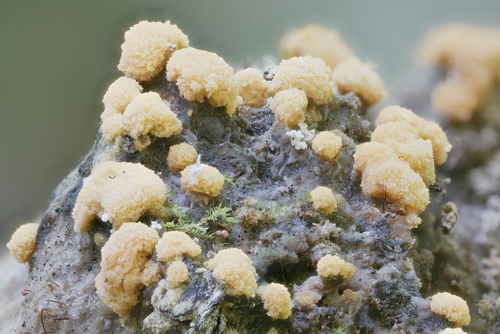
Verbatim
e0“the isolate HN082102.1 showed the most excellent salt tolerance and antagonistic activity against F. oxysporum causing root rot in cucumber and was identified as T. atroviride”
Claim · model-written summary
Trichoderma application promoted cucumber growth under 100 mM and 200 mM NaCl, especially root growth.
- Taxon
- cucumber
 Cucumis sativuse0
- Treatment
- application of Trichodermae0
- Interactor
- TrichodermaTrichodermae0symbiont
- Outcome
- growth of cucumbere0
- Direction
- promotede0
- Qualifier
- under 100 mM and 200 mM NaCle0
Not reportedComparator
Organisms pictured · Representative pictures of the matched species, not figures from the paper.

Verbatim
e0“The application of Trichoderma mitigated the adverse effects of salt stress and promoted the growth of cucumber under 100 mM and 200 mM NaCl, especially for the root”
Claim · model-written summary
HN082102.1 increased cucumber root fresh weight by 92.55% under 100 mM NaCl.
- Taxon
- cucumberCucumis sativust0
- Treatment
- T. atroviride HN082102.1e0
- Interactor
- T. atroviride HN082102.1Trichoderma atroviridee0symbiont
- Outcome
- root fresh weightse0
- Direction
- increasede0
- Value
- 92.55e0
- Qualifier
- 100 mMe1
Not reportedComparator
Organisms pictured · Representative pictures of the matched species, not figures from the paper.
Verbatim
e0“When T. atroviride HN082102.1 was applied, root fresh weights increased by 92.55 and 84.86%, respectively”
e1“under 100 mM and 200 mM NaCl”
t0“cucumber”
Claim · model-written summary
HN082102.1 increased cucumber root fresh weight by 84.86% under 200 mM NaCl.
- Taxon
- cucumberCucumis sativust0
- Treatment
- T. atroviride HN082102.1e0
- Interactor
- T. atroviride HN082102.1Trichoderma atroviridee0symbiont
- Outcome
- root fresh weightse0
- Direction
- increasede0
- Value
- 84.86%e0
- Qualifier
- 200 mMe1
Not reportedComparator
Organisms pictured · Representative pictures of the matched species, not figures from the paper.
Verbatim
e0“When T. atroviride HN082102.1 was applied, root fresh weights increased by 92.55 and 84.86%, respectively”
e1“under 100 mM and 200 mM NaCl”
t0“cucumber”
Claim · model-written summary
HN082102.1 increased cucumber root dry weight by 75.71% under 100 mM NaCl.
- Taxon
- cucumberCucumis sativust0
- Treatment
- T. atroviride HN082102.1e1
- Interactor
- T. atroviride HN082102.1Trichoderma atroviridee1symbiont
- Outcome
- root dry weightse0
- Direction
- increasede0
- Value
- 75.71e0
- Qualifier
- 100 mMe2
Not reportedComparator
Organisms pictured · Representative pictures of the matched species, not figures from the paper.
Verbatim
e0“root dry weights increased by 75.71 and 53.31%, respectively”
e1“When T. atroviride HN082102.1 was applied”
e2“under 100 mM and 200 mM NaCl”
t0“cucumber”
Claim · model-written summary
HN082102.1 increased cucumber root dry weight by 53.31% under 200 mM NaCl.
- Taxon
- cucumberCucumis sativust0
- Treatment
- T. atroviride HN082102.1e1
- Interactor
- T. atroviride HN082102.1Trichoderma atroviridee1symbiont
- Outcome
- root dry weightse0
- Direction
- increasede0
- Value
- 53.31%e0
- Qualifier
- 200 mMe2
Not reportedComparator
Organisms pictured · Representative pictures of the matched species, not figures from the paper.
Verbatim
e0“root dry weights increased by 75.71 and 53.31%, respectively”
e1“When T. atroviride HN082102.1 was applied”
e2“under 100 mM and 200 mM NaCl”
t0“cucumber”
Claim · model-written summary
HN082102.1 reduced cucumber root-rot disease index by 63.64% under 100 mM salt.
- Taxon
- cucumberCucumis sativuse0
- Treatment
- HN082102.1e0
- Interactor
- Fusarium oxysporumFusarium oxysporumt0pathogen
- Second interactor
- Trichoderma atroviride HN082102.1Trichoderma atroviridet1biocontrol_agent
- Outcome
- disease index of cucumber root rote0
- Direction
- reducede0
- Value
- 63.64e0
- Qualifier
- 100-e0
Not reportedComparator
Organisms pictured · Representative pictures of the matched species, not figures from the paper.
Verbatim
e0“the application of HN082102.1 reduced the disease index of cucumber root rot by 63.64 and 71.01% under 100- and 0-mM saline conditions, respectively”
t0“Fusarium oxysporum”
t1“Trichoderma atroviride HN082102.1”
Claim · model-written summary
HN082102.1 reduced cucumber root-rot disease index by 71.01% without added salt.
- Taxon
- cucumberCucumis sativuse0
- Treatment
- HN082102.1e0
- Interactor
- Fusarium oxysporumFusarium oxysporumt0pathogen
- Second interactor
- Trichoderma atroviride HN082102.1Trichoderma atroviridet1biocontrol_agent
- Outcome
- disease index of cucumber root rote0
- Direction
- reducede0
- Value
- 71.01%e0
- Qualifier
- 0-mM saline conditionse0
Not reportedComparator
Organisms pictured · Representative pictures of the matched species, not figures from the paper.
Verbatim
e0“the application of HN082102.1 reduced the disease index of cucumber root rot by 63.64 and 71.01% under 100- and 0-mM saline conditions, respectively”
t0“Fusarium oxysporum”
t1“Trichoderma atroviride HN082102.1”
Claim · model-written summary
The authors propose T. atroviride HN082102.1 as a biological control agent in saline alkali land.
- Taxon
- cucumberCucumis sativust0
- Interactor
- T. atroviride strain HN082102.1Trichoderma atroviridee0biocontrol_agent
- Outcome
- biological control agent in saline alkali lande0
Organisms pictured · Representative pictures of the matched species, not figures from the paper.
Verbatim
e0“T. atroviride strain HN082102.1 can be used as biological control agent in saline alkali land”
t0“cucumber”
The same questions in other papers
Trichoderma · growth · Cucumis sativus (cucumber)Positive and negative results
16 papers in the same direction as this paper · 1 in the opposite direction
- negative
- positive
- positive
14 papers more in this group
See all 18 papers →Trichoderma atroviride · growth · Cucumis sativus (cucumber)Results agree
2 papers in the same direction as this paper
- positive
- positive
Claims are grouped by organism, treatment and what was measured or targeted. A paper counts as positive when any of its claims in the group is positive.