Abstract
Abstract Seeds of onion ( Allium cepa L.), pepper ( Capsicum annum L.), and parsley [ Petroselinum crispum (Mill.) Nym. ex A.W. Hill] were freeze-dried to moisture levels of 2% to 5% and stored in desiccators over zeolite for 6 to 9 years at 21°, -12°, -70°C, during the entire period, or at 40° for 2 years followed by ambient temperatures. Freeze-drying improved storability of onion at 21°. A 2-year period at 40° killed the pepper seed and accelerated subsequent deterioration of onion and parsley at ambient temperatures. Freeze-drying prior to storage was effective in reducing the rate of deterioration of onion and pepper seeds during and after 40° exposure, but did not reduce deterioration of parsley seeds. Storage at —70° did not improve storability over that at —12° for any of the 3 species studied. Impregnation for 4 hours with 20 units/ml Vitamin E and 10 -l m butylated hydroxytoluene (BHT) [2,6-bis(l,l-dimethylethyl)-4-methylphenol] in acetone improved storability of parsley and onion seeds. Although these natural and synthetic anti-oxidants may be used alone or with freeze-drying to prolong seed storability, improvements over that obtained by freeze-drying alone were minimal. The data indicate that freeze-drying markedly improves the long-term storability of onion and pepper seeds, particularly when seeds are exposed to warm (40°) or moderate (21°) temperatures during part or all of the storage period. Potential applications of the freeze-drying technique are discussed.
Abstract from the paper’s OpenAlex record; open copy licensed cc-by-nc-nd. Read at the source ↗
The text the model read, with the source record’s inline markup (italics, sub- and superscripts) rendered and its character entities decoded; quote offsets refer to the raw text.
Claims 13
Claim · model-written summary
Freeze-drying improved onion storability at 21°.
- Taxon
- onion
 Allium cepae0
- Treatment
- Freeze-dryinge0
- Outcome
- storabilitye0
- Direction
- improvede0
- Qualifier
- at 21°e0
Not reportedComparator
Organisms pictured · Representative pictures of the matched species, not figures from the paper.

Verbatim
e0“Freeze-drying improved storability of onion at 21°.”
Claim · model-written summary
Two years at 40° killed pepper seed.
Not reportedComparatorDirection
Verbatim
e0“A 2-year period at 40° killed the pepper seed”
Claim · model-written summary
Two years at 40° accelerated subsequent onion deterioration at ambient temperatures.
- Taxon
- onionAllium cepae0
- Treatment
- 2-year period at 40°e0
- Outcome
- deterioratione0
- Direction
- acceleratede0
- Qualifier
- at ambient temperaturese0
Not reportedComparator
Organisms pictured · Representative pictures of the matched species, not figures from the paper.
Verbatim
e0“A 2-year period at 40° killed the pepper seed and accelerated subsequent deterioration of onion and parsley at ambient temperatures.”
Claim · model-written summary
Two years at 40° accelerated subsequent parsley deterioration at ambient temperatures.
- Taxon
- parsley
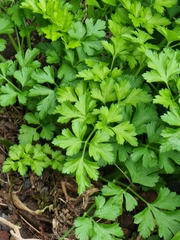 Petroselinum crispume0
- Treatment
- 2-year period at 40°e0
- Outcome
- deterioratione0
- Direction
- acceleratede0
- Qualifier
- at ambient temperaturese0
Not reportedComparator
Organisms pictured · Representative pictures of the matched species, not figures from the paper.
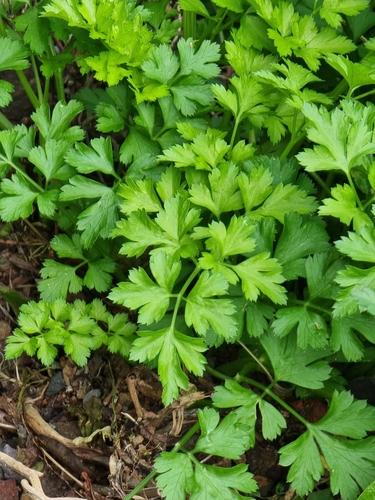
Verbatim
e0“A 2-year period at 40° killed the pepper seed and accelerated subsequent deterioration of onion and parsley at ambient temperatures.”
Claim · model-written summary
Freeze-drying reduced onion seed deterioration during and after 40° exposure.
- Taxon
- onionAllium cepae0
- Treatment
- Freeze-drying prior to storagee0
- Outcome
- rate of deterioratione0
- Direction
- reducinge0
- Qualifier
- during and after 40° exposuree0
Not reportedComparator
Organisms pictured · Representative pictures of the matched species, not figures from the paper.
Verbatim
e0“Freeze-drying prior to storage was effective in reducing the rate of deterioration of onion and pepper seeds during and after 40° exposure, but did not reduce deterioration of parsley seeds.”
Claim · model-written summary
Freeze-drying reduced pepper seed deterioration during and after 40° exposure.
- Taxon
- peppere0
- Treatment
- Freeze-drying prior to storagee0
- Outcome
- rate of deterioratione0
- Direction
- reducinge0
- Qualifier
- during and after 40° exposuree0
Not reportedComparator
Verbatim
e0“Freeze-drying prior to storage was effective in reducing the rate of deterioration of onion and pepper seeds during and after 40° exposure, but did not reduce deterioration of parsley seeds.”
Claim · model-written summary
Freeze-drying did not reduce parsley seed deterioration.
- Taxon
- parsleyPetroselinum crispume0
- Treatment
- Freeze-drying prior to storagee0
- Outcome
- deterioratione0
- Direction
- did not reducee0
Not reportedComparator
Organisms pictured · Representative pictures of the matched species, not figures from the paper.
Verbatim
e0“Freeze-drying prior to storage was effective in reducing the rate of deterioration of onion and pepper seeds during and after 40° exposure, but did not reduce deterioration of parsley seeds.”
Claim · model-written summary
Storage at —70° did not improve onion storability relative to —12°.
- Taxon
- OnionAllium cepat0
- Treatment
- Storage at —70°e0
- Outcome
- storabilitye0
- Direction
- did not improvee0
- Comparator
- —12°e0
Organisms pictured · Representative pictures of the matched species, not figures from the paper.
Verbatim
e0“Storage at —70° did not improve storability over that at —12° for any of the 3 species studied.”
t0“Onion”
Claim · model-written summary
Storage at —70° did not improve pepper storability relative to —12°.
Verbatim
e0“Storage at —70° did not improve storability over that at —12° for any of the 3 species studied.”
t0“Pepper”
Claim · model-written summary
Storage at —70° did not improve parsley storability relative to —12°.
- Taxon
- ParsleyPetroselinum crispumt0
- Treatment
- Storage at —70°e0
- Outcome
- storabilitye0
- Direction
- did not improvee0
- Comparator
- —12°e0
Organisms pictured · Representative pictures of the matched species, not figures from the paper.
Verbatim
e0“Storage at —70° did not improve storability over that at —12° for any of the 3 species studied.”
t0“Parsley”
Claim · model-written summary
Antioxidant impregnation improved parsley seed storability.
- Taxon
- parsleyPetroselinum crispume0
- Treatment
- Impregnation for 4 hours with 20 units/ml Vitamin E and 10 -l m butylated hydroxytoluene (BHT) [2,6-bis(l,l-dimethylethyl)-4-methylphenol] in acetonee0
- Outcome
- storabilitye0
- Direction
- improvede0
Not reportedComparator
Organisms pictured · Representative pictures of the matched species, not figures from the paper.
Verbatim
e0“Impregnation for 4 hours with 20 units/ml Vitamin E and 10 -l m butylated hydroxytoluene (BHT) [2,6-bis(l,l-dimethylethyl)-4-methylphenol] in acetone improved storability of parsley and onion seeds.”
Claim · model-written summary
Antioxidant impregnation improved onion seed storability.
- Taxon
- onionAllium cepae0
- Treatment
- Impregnation for 4 hours with 20 units/ml Vitamin E and 10 -l m butylated hydroxytoluene (BHT) [2,6-bis(l,l-dimethylethyl)-4-methylphenol] in acetonee0
- Outcome
- storabilitye0
- Direction
- improvede0
Not reportedComparator
Organisms pictured · Representative pictures of the matched species, not figures from the paper.
Verbatim
e0“Impregnation for 4 hours with 20 units/ml Vitamin E and 10 -l m butylated hydroxytoluene (BHT) [2,6-bis(l,l-dimethylethyl)-4-methylphenol] in acetone improved storability of parsley and onion seeds.”
Claim · model-written summary
Antioxidants provided minimal additional seed storability improvement over freeze-drying alone.
- Treatment
- natural and synthetic anti-oxidantse0
- Outcome
- seed storabilitye0
- Direction
- improvementse0
- Qualifier
- minimale0
- Comparator
- freeze-drying alonee0
Not reportedTaxon
Verbatim
e0“Although these natural and synthetic anti-oxidants may be used alone or with freeze-drying to prolong seed storability, improvements over that obtained by freeze-drying alone were minimal.”
The same questions in other papers
storage · quality: postharvest · Petroselinum crispum (parsley)Positive and negative results
1 reporting no difference from an alternative
- positive
cold · quality: postharvest · Allium cepa (onion)Positive and negative results
4 papers in the same direction as this paper · 2 in the opposite direction
- negative
- negative
- positive
3 papers more in this group
See all 7 papers →storage · quality: postharvest · Allium cepa (onion)Positive and negative results
9 papers in the same direction as this paper · 18 reporting no difference from an alternative
- positive
- positive
- positive
24 papers more in this group
See all 28 papers →Claims are grouped by organism, treatment and what was measured or targeted. A paper counts as positive when any of its claims in the group is positive.