Abstract
Pyrethroids are insecticides most commonly used for insect control to boost agricultural production. The aim of the present research was to determine the effect of permethrin and cypermethrin on cultured and non-cultivated bacteria and fungi and on the activity of soil enzymes, as well as to determine the usefulness of Zea mays in mitigating the adverse effects of the tested pyrethroids on the soil microbiome. The analyses were carried out in the samples of both soil not sown with any plant and soil sown with Zea mays. Permethrin and cypermethrin were found to stimulate the multiplication of cultured organotrophic bacteria (on average by 38.3%) and actinomycetes (on average by 80.2%), and to inhibit fungi growth (on average by 31.7%) and the enzymatic activity of the soil, reducing the soil biochemical fertility index (BA) by 27.7%. They also modified the number of operational taxonomic units (OTUs) of the Actinobacteria and Proteobacteria phyla and the Ascomycota and Basidiomycota phyla. The pressure of permethrin and cypermethrin was tolerated well by the bacteria Sphingomonas (clone 3214512, 1052559, 237613, 1048605) and Bacillus (clone New.ReferenceOTU111, 593219, 578257), and by the fungi Penicillium (SH1533734.08FU, SH1692798.08FU) and Trichocladium (SH1615601.08FU). Both insecticides disturbed the growth and yielding of Zea mays, as a result of which its yield and leaf greenness index decreased. The cultivation of Zea mays had a positive effect on both soil enzymes and soil microorganisms and mitigated the anomalies caused by the tested insecticides in the microbiome and activity of soil enzymes. Permethrin decreased the yield of its aerial parts by 37.9% and its roots by 33.9%, whereas respective decreases caused by cypermethrin reached 16.8% and 4.3%.
Abstract from the paper’s OpenAlex record; open copy licensed cc-by. Read at the source ↗
The text the model read, with the source record’s inline markup (italics, sub- and superscripts) rendered and its character entities decoded; quote offsets refer to the raw text.
Claims 16
Claim · model-written summary
Permethrin and cypermethrin stimulated cultured organotrophic bacteria multiplication by 38.3% on average.
- Taxon
- organotrophic bacteriae0
- Treatment
- Permethrin and cypermethrine0
- Outcome
- multiplication of cultured organotrophic bacteriae0
- Direction
- stimulatee0
- Value
- 38.3%e0
- Qualifier
- on averagee0
Not reportedComparator
Verbatim
e0“Permethrin and cypermethrin were found to stimulate the multiplication of cultured organotrophic bacteria (on average by 38.3%) and actinomycetes (on average by 80.2%)”
Claim · model-written summary
Permethrin and cypermethrin stimulated actinomycete multiplication by 80.2% on average.
- Taxon
- actinomycetesActinomycetese0
- Treatment
- Permethrin and cypermethrine0
- Outcome
- multiplicatione0
- Direction
- stimulatee0
- Value
- 80.2%e0
- Qualifier
- on averagee0
Not reportedComparator
Verbatim
e0“Permethrin and cypermethrin were found to stimulate the multiplication of cultured organotrophic bacteria (on average by 38.3%) and actinomycetes (on average by 80.2%)”
Claim · model-written summary
Permethrin and cypermethrin inhibited fungal growth by 31.7% on average.
Not reportedComparator
Verbatim
e0“Permethrin and cypermethrin were found to stimulate the multiplication of cultured organotrophic bacteria (on average by 38.3%) and actinomycetes (on average by 80.2%), and to inhibit fungi growth (on average by 31.7%)”
Claim · model-written summary
The insecticides inhibited soil enzymatic activity and reduced its biochemical fertility index by 27.7%.
- Treatment
- Permethrin and cypermethrine1
- Outcome
- soil biochemical fertility index (BA)e0
- Direction
- reducinge0
- Value
- 27.7%e0
Not reportedTaxonComparator
Verbatim
e0“and the enzymatic activity of the soil, reducing the soil biochemical fertility index (BA) by 27.7%.”
e1“Permethrin and cypermethrin”
Claim · model-written summary
The insecticides modified Actinobacteria and Proteobacteria OTU numbers.
- Taxon
- Actinobacteria and ProteobacteriaPseudomonadotaActinomycetotae0
- Treatment
- Permethrin and cypermethrine1
- Outcome
- number of operational taxonomic units (OTUs)e0
Not reportedComparatorDirection
Verbatim
e0“They also modified the number of operational taxonomic units (OTUs) of the Actinobacteria and Proteobacteria phyla and the Ascomycota and Basidiomycota phyla.”
e1“Permethrin and cypermethrin”
Claim · model-written summary
The insecticides modified Ascomycota and Basidiomycota OTU numbers.
- Taxon
- Ascomycota and BasidiomycotaAscomycotaBasidiomycotae0
- Treatment
- Permethrin and cypermethrine1
- Outcome
- number of operational taxonomic units (OTUs)e0
Not reportedComparatorDirection
Verbatim
e0“They also modified the number of operational taxonomic units (OTUs) of the Actinobacteria and Proteobacteria phyla and the Ascomycota and Basidiomycota phyla.”
e1“Permethrin and cypermethrin”
Claim · model-written summary
Sphingomonas clones tolerated insecticide pressure well.
- Taxon
- Sphingomonas
 Sphingomonase0
- Material
- clone 3214512, 1052559, 237613, 1048605e0
- Treatment
- permethrin and cypermethrine0
- Outcome
- tolerated welle0
Organisms pictured · Representative pictures of the matched species, not figures from the paper.

Verbatim
e0“The pressure of permethrin and cypermethrin was tolerated well by the bacteria Sphingomonas (clone 3214512, 1052559, 237613, 1048605)”
Claim · model-written summary
Bacillus clones tolerated insecticide pressure well.
Verbatim
e0“The pressure of permethrin and cypermethrin was tolerated well by the bacteria Sphingomonas (clone 3214512, 1052559, 237613, 1048605) and Bacillus (clone New.ReferenceOTU111, 593219, 578257)”
Claim · model-written summary
Penicillium tolerated insecticide pressure well.
- Taxon
- Penicillium
 Penicilliume0
- Material
- SH1533734.08FU, SH1692798.08FUe0
- Treatment
- permethrin and cypermethrine1
- Outcome
- tolerated welle1
Organisms pictured · Representative pictures of the matched species, not figures from the paper.

Verbatim
e0“and by the fungi Penicillium (SH1533734.08FU, SH1692798.08FU) and Trichocladium (SH1615601.08FU).”
e1“The pressure of permethrin and cypermethrin was tolerated well”
Claim · model-written summary
Trichocladium tolerated insecticide pressure well.
- Taxon
- Trichocladium
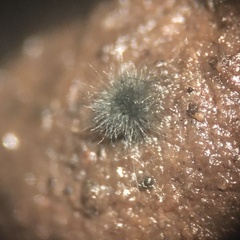 Trichocladiume0
- Material
- SH1615601.08FUe0
- Treatment
- permethrin and cypermethrine1
- Outcome
- tolerated welle1
Organisms pictured · Representative pictures of the matched species, not figures from the paper.

Verbatim
e0“and by the fungi Penicillium (SH1533734.08FU, SH1692798.08FU) and Trichocladium (SH1615601.08FU).”
e1“The pressure of permethrin and cypermethrin was tolerated well”
Claim · model-written summary
Both insecticides decreased maize leaf greenness.
 Zea mays
Not reportedComparator
Organisms pictured · Representative pictures of the matched species, not figures from the paper.

Verbatim
e0“Both insecticides disturbed the growth and yielding of Zea mays, as a result of which its yield and leaf greenness index decreased.”
e1“The pressure of permethrin and cypermethrin”
Claim · model-written summary
Maize cultivation benefited soil enzymes and microorganisms and mitigated insecticide-induced anomalies.
- Treatment
- cultivation of Zea mayse0
- Interactor
- soil microorganismse0other
- Outcome
- soil enzymes and soil microorganismse0
- Direction
- positive effecte0
- Qualifier
- mitigated the anomalies caused by the tested insecticides in the microbiome and activity of soil enzymese0
Not reportedComparator
Organisms pictured · Representative pictures of the matched species, not figures from the paper.
Verbatim
e0“The cultivation of Zea mays had a positive effect on both soil enzymes and soil microorganisms and mitigated the anomalies caused by the tested insecticides in the microbiome and activity of soil enzymes.”
Claim · model-written summary
Permethrin decreased maize aerial-part yield by 37.9%.
Not reportedComparator
Organisms pictured · Representative pictures of the matched species, not figures from the paper.
Verbatim
e0“Permethrin decreased the yield of its aerial parts by 37.9% and its roots by 33.9%, whereas respective decreases caused by cypermethrin reached 16.8% and 4.3%.”
e1“Both insecticides disturbed the growth and yielding of Zea mays”
Claim · model-written summary
Permethrin decreased maize root yield by 33.9%.
Not reportedComparator
Organisms pictured · Representative pictures of the matched species, not figures from the paper.
Verbatim
e0“Permethrin decreased the yield of its aerial parts by 37.9% and its roots by 33.9%, whereas respective decreases caused by cypermethrin reached 16.8% and 4.3%.”
e1“Both insecticides disturbed the growth and yielding of Zea mays”
Claim · model-written summary
Cypermethrin decreased maize aerial-part yield by 16.8%.
Not reportedComparator
Organisms pictured · Representative pictures of the matched species, not figures from the paper.
Verbatim
e0“Permethrin decreased the yield of its aerial parts by 37.9% and its roots by 33.9%, whereas respective decreases caused by cypermethrin reached 16.8% and 4.3%.”
e1“Both insecticides disturbed the growth and yielding of Zea mays”
Claim · model-written summary
Cypermethrin decreased maize root yield by 4.3%.
Not reportedComparator
Organisms pictured · Representative pictures of the matched species, not figures from the paper.
Verbatim
e0“Permethrin decreased the yield of its aerial parts by 37.9% and its roots by 33.9%, whereas respective decreases caused by cypermethrin reached 16.8% and 4.3%.”
e1“Both insecticides disturbed the growth and yielding of Zea mays”
The same questions in other papers
permethrin · yield · Zea mays (maize)Positive and negative results
1 in the opposite direction
- positive
permethrin · molecular: metabolites · Zea mays (maize)Positive and negative results
2 in the opposite direction
- positive
- positive
cypermethrin · yield · Zea mays (maize)Positive and negative results
3 in the opposite direction
- positive
- positive
- positive
Claims are grouped by organism, treatment and what was measured or targeted. A paper counts as positive when any of its claims in the group is positive.