Abstract
Total lipids levels and fatty acid composition of the marine macroalgae Laurencia “obtuse” (Hudson) J. V. Lamouroux (Rhodophyceae), Cystoseira tamariscifolia (Hudson) Papenfuss (Phaeophyceae) and Ulva compressa (Chlorophyceae) collected from the coastal area of Marsa Matruh, Egypt were evaluated for their biodiesel potential. Seawater parameters were measured. Ulva compressa recorded the highest total lipid content (57.52 mg/g DW), followed by C. tamariscifolia, “and L. obtuse was the lowest.” The fatty acid methyl ester profiles were analyzed by gas chromatography. The assessment of the biodiesel properties of the fatty acid methyl ester (FAME) of the three seaweed species was convenient with the European (EN 14214) and American (ASTM D6751-02) biodiesel standards. The mineral composition of the collected defatted residual seaweed biomass (DRSB) of the three seaweeds showed various macro- and microelements, including K, Ca, Mg and Fe. Applying aqueous DRSB extract as a foliar spray and/ or seed priming significantly enhanced growth criteria and photosynthetic pigments of 30-days old E. vesicaria plants. The mineral contents of the shoots were significantly elevated by DRSB extract foliar spray treatment compared to the non-treated control. Spraying with DRSB extract exhibited the most remarkable increase in total phenolics, flavonoids, and antioxidant activity. Therefore, foliar spray application with DRSB extract was highly effective and favored over priming as a simple biostimulant that enhanced E. vesicaria growth and nutritional value.
Abstract from the paper’s OpenAlex record; open copy licensed cc-by. Read at the source ↗
The text the model read, with the source record’s inline markup (italics, sub- and superscripts) rendered and its character entities decoded; quote offsets refer to the raw text.
Claims 5
Claim · model-written summary
DRSB foliar spray or seed priming enhanced growth criteria of 30-day-old E. vesicaria.
- Taxon
- E. vesicaria
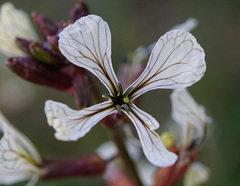 Eruca vesicariae0
- Organ / stage
- 30-days olde0
- Treatment
- aqueous DRSB extract as a foliar spray and/ or seed priminge0
- Outcome
- growth criteriae0
- Direction
- enhancede0
Not reportedComparator
Organisms pictured · Representative pictures of the matched species, not figures from the paper.

Verbatim
e0“Applying aqueous DRSB extract as a foliar spray and/ or seed priming significantly enhanced growth criteria and photosynthetic pigments of 30-days old E. vesicaria plants.”
Claim · model-written summary
DRSB foliar spray or seed priming enhanced photosynthetic pigments of 30-day-old E. vesicaria.
- Taxon
- E. vesicariaEruca vesicariae0
- Organ / stage
- 30-days olde0
- Treatment
- aqueous DRSB extract as a foliar spray and/ or seed priminge0
- Outcome
- photosynthetic pigmentse0
- Direction
- enhancede0
Not reportedComparator
Organisms pictured · Representative pictures of the matched species, not figures from the paper.
Verbatim
e0“Applying aqueous DRSB extract as a foliar spray and/ or seed priming significantly enhanced growth criteria and photosynthetic pigments of 30-days old E. vesicaria plants.”
Claim · model-written summary
DRSB extract foliar spray increased shoot mineral contents relative to untreated plants.
- Taxon
- Eruca vesicaria (L.) Cav.Eruca vesicariat0
- Organ / stage
- shootse0
- Treatment
- DRSB extract foliar spray treatmente0
- Outcome
- mineral contentse0
- Direction
- elevatede0
- Comparator
- non-treated controle0
Organisms pictured · Representative pictures of the matched species, not figures from the paper.
Verbatim
e0“The mineral contents of the shoots were significantly elevated by DRSB extract foliar spray treatment compared to the non-treated control.”
t0“Eruca vesicaria (L.) Cav.”
Claim · model-written summary
DRSB extract spray increased total phenolics, flavonoids, and antioxidant activity.
- Taxon
- Eruca vesicaria (L.) Cav.Eruca vesicariat0
- Treatment
- Spraying with DRSB extracte0
- Outcome
- total phenolics, flavonoids, and antioxidant activitye0
- Direction
- increasee0
Not reportedComparator
Organisms pictured · Representative pictures of the matched species, not figures from the paper.
Verbatim
e0“Spraying with DRSB extract exhibited the most remarkable increase in total phenolics, flavonoids, and antioxidant activity.”
t0“Eruca vesicaria (L.) Cav.”
Claim · model-written summary
The authors favored foliar DRSB extract spray over seed priming as a biostimulant for growth and nutritional value.
- Taxon
- E. vesicariaEruca vesicariae0
- Outcome
- foliar spray application with DRSB extracte0
- Comparator
- priminge0
Organisms pictured · Representative pictures of the matched species, not figures from the paper.
Verbatim
e0“foliar spray application with DRSB extract was highly effective and favored over priming as a simple biostimulant that enhanced E. vesicaria growth and nutritional value.”
The same questions in other papers
other · growth · Eruca vesicariaPositive and negative results
1 in the opposite direction
- no effect
other · nutrient: content · Eruca vesicariaPositive and negative results
1 paper in the same direction as this paper · 1 in the opposite direction
- no effect
- positive
botanical · nutrient: content · Eruca vesicariaPositive and negative results
2 in the opposite direction
- negative
- negative
application · growth · Eruca vesicariaPositive and negative results
2 in the opposite direction
- no effect
- no effect
application · nutrient: content · Eruca vesicariaPositive and negative results
2 papers in the same direction as this paper · 1 in the opposite direction
- no effect
- positive
- positive
botanical · physiology: photosynthesis · Eruca vesicariaPositive and negative results
2 papers in the same direction as this paper · 2 in the opposite direction
- positive
- positive
- negative
1 paper more in this group
See all 5 papers →botanical · quality: phytochemicals · Eruca vesicariaPositive and negative results
3 papers in the same direction as this paper · 1 in the opposite direction
- positive
- negative
- positive
1 paper more in this group
See all 5 papers →botanical · growth · Eruca vesicariaPositive and negative results
2 papers in the same direction as this paper · 5 in the opposite direction
- negative
- negative
- negative
4 papers more in this group
See all 8 papers →8 of 10 groups shown: named compounds and organisms first, then groups whose results differ (checked claim by claim), then those with positive and negative results, then the smaller groups.
Claims are grouped by organism, treatment and what was measured or targeted. A paper counts as positive when any of its claims in the group is positive.