Abstract
The effect of fast and slow cooling on germination of seeds from two Brassicaceae species (Eruca vesicaria (L.) Cav., Brassica napus L. var. oleifera (Moench) DC cv. Bingo) and cypselas from three Compositae species (Onopordum nervosum Boiss., Onopordum acanthium L., Helianthus annuus L. cv. Viky) at different moisture contents was studied. Seed lipid content (dry weight basis) ranged from 15% (O. nervosum) to 41% (H. annuus). For each species, seeds with four moisture contents were cryopreserved either by direct immersion in liquid nitrogen or by previous cooling at 10 degrees C/min from room temperature to -50 degrees C. In three species (E. vesicaria, B. napus, and H. annuus) germination of air-dried (6.2-8.9% moisture content) seeds cooled by direct immersion in liquid nitrogen was not significantly different from germination of control seeds (air-dried, non-cooled). In the two Onorpordum species the best response among cooling treatments was observed when air-dried seeds were slowly cooled.
Abstract from the paper’s OpenAlex record, shown for indexing and research. Copyright remains with the authors or the publisher. Read at the source ↗
The text the model read, with the source record’s inline markup (italics, sub- and superscripts) rendered and its character entities decoded; quote offsets refer to the raw text.
Claims 6
Claim · model-written summary
Seed lipid content ranged from 15% in O. nervosum to 41% in H. annuus.
- Taxon
- O. nervosum
 Onopordum nervosume0
- Outcome
- Seed lipid contente0
- Value
- 15%e0
- Qualifier
- 41% (H. annuus)e0
Organisms pictured · Representative pictures of the matched species, not figures from the paper.

Verbatim
e0“Seed lipid content (dry weight basis) ranged from 15% (O. nervosum) to 41% (H. annuus).”
Claim · model-written summary
Direct immersion in liquid nitrogen left germination of air-dried E. vesicaria seeds without a significant difference from non-cooled controls.
- Taxon
- E. vesicaria
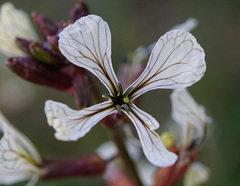 Eruca vesicariae0
- Treatment
- direct immersion in liquid nitrogene0
- Outcome
- germinatione0
- Direction
- not significantly differente0
- Qualifier
- 6.2-8.9% moisture contente0
- Comparator
- control seeds (air-dried, non-cooled)e0
Organisms pictured · Representative pictures of the matched species, not figures from the paper.

Verbatim
e0“In three species (E. vesicaria, B. napus, and H. annuus) germination of air-dried (6.2-8.9% moisture content) seeds cooled by direct immersion in liquid nitrogen was not significantly different from germination of control seeds (air-dried, non-cooled).”
Claim · model-written summary
Direct immersion in liquid nitrogen left germination of air-dried B. napus seeds without a significant difference from non-cooled controls.
- Taxon
- B. napus
 Brassica napuse0
- Treatment
- direct immersion in liquid nitrogene0
- Outcome
- germinatione0
- Direction
- not significantly differente0
- Qualifier
- 6.2-8.9% moisture contente0
- Comparator
- control seeds (air-dried, non-cooled)e0
Organisms pictured · Representative pictures of the matched species, not figures from the paper.

Verbatim
e0“In three species (E. vesicaria, B. napus, and H. annuus) germination of air-dried (6.2-8.9% moisture content) seeds cooled by direct immersion in liquid nitrogen was not significantly different from germination of control seeds (air-dried, non-cooled).”
Claim · model-written summary
Direct immersion in liquid nitrogen left germination of air-dried H. annuus seeds without a significant difference from non-cooled controls.
- Taxon
- H. annuus
 Helianthus annuuse0
- Treatment
- direct immersion in liquid nitrogene0
- Outcome
- germinatione0
- Direction
- not significantly differente0
- Qualifier
- 6.2-8.9% moisture contente0
- Comparator
- control seeds (air-dried, non-cooled)e0
Organisms pictured · Representative pictures of the matched species, not figures from the paper.

Verbatim
e0“In three species (E. vesicaria, B. napus, and H. annuus) germination of air-dried (6.2-8.9% moisture content) seeds cooled by direct immersion in liquid nitrogen was not significantly different from germination of control seeds (air-dried, non-cooled).”
Claim · model-written summary
Air-dried O. nervosum seeds responded best among cooling treatments when slowly cooled.
Verbatim
e0“In the two Onorpordum species the best response among cooling treatments was observed when air-dried seeds were slowly cooled.”
t0“Onopordum nervosum Boiss.”
Claim · model-written summary
Air-dried O. acanthium seeds responded best among cooling treatments when slowly cooled.
Verbatim
e0“In the two Onorpordum species the best response among cooling treatments was observed when air-dried seeds were slowly cooled.”
The same questions in other papers
nitrogen · growth · Helianthus annuus (common sunflower)Results differ
12 papers in the same direction as this paper · 63 in the opposite direction
- positive
- positive
- positive
72 papers more in this group
See all 76 papers →application · growth · Eruca vesicariaPositive and negative results
1 paper in the same direction as this paper · 1 in the opposite direction
- positive
- no effect
nitrogen · growth · Eruca vesicariaPositive and negative results
1 paper in the same direction as this paper · 4 in the opposite direction
- positive
- positive
- positive
2 papers more in this group
See all 6 papers →application · growth · Brassica napus (oilseed rape)Positive and negative results
8 papers in the same direction as this paper · 38 in the opposite direction
- positive
- positive
- positive
43 papers more in this group
See all 47 papers →application · growth · Helianthus annuus (common sunflower)Positive and negative results
7 papers in the same direction as this paper · 73 in the opposite direction
- positive
- positive
- positive
77 papers more in this group
See all 81 papers →nitrogen · growth · Brassica napus (oilseed rape)Positive and negative results
16 papers in the same direction as this paper · 65 in the opposite direction
- positive
- positive
- positive
78 papers more in this group
See all 82 papers →Claims are grouped by organism, treatment and what was measured or targeted. A paper counts as positive when any of its claims in the group is positive.