Abstract
In a laboratory experiment, the effect of pre-sowing low-energy (160 keV) electron radiation at doses of 1, 3, and 5 kGy at a dose rate of 500 Gy/pulse was studied. on sowing qualities, morphometric parameters of barley seedlings of the Vladimir spring variety, their susceptibility to fungal diseases against a natural infectious background, as well as on the activity of enzymes and the concentration of phytohormones in 7-day-old seedlings. The repetition in the experiment was 3-fold, non-irradiated seeds served as control. Irradiation of seeds at a dose of 3 kGy caused a statistically significant increase in comparison with the control of laboratory germination (LV) by 6 % and seed growth force (SPC) by 10 %, and at a dose of 1 kGy, an increase in root length by 24.6 % and had no significant effect on morphometric parameters at a dose of 5 kGy. Seed treatment did not affect the green and dry weight of the seedlings and the percentage of water content in them. Irradiation completely suppressed the development of Penicillium spp. at doses of 1, 3 and 5 kGy, Fusarium spp. - at doses of 3 and 5 kGy and significantly increased the prevalence of Bipolaris sorokiniana seedlings by 2.1 times and its prevalence by 1.8 times at a dose of 5 kGy. Electron irradiation of barley seeds had no effect on the activity of enzymes and phytohormones, except for a significant increase in 7-day-old seedlings of the content of IAA at a dose of 5 kGy by 1.5 times and IBA at a dose of 1 kGy by 2.7 times compared with the control.
Abstract from the paper’s OpenAlex record, shown for indexing and research. Copyright remains with the authors or the publisher. Read at the source ↗
The text the model read, with the source record’s inline markup (italics, sub- and superscripts) rendered and its character entities decoded; quote offsets refer to the raw text.
Claims 13
Claim · model-written summary
At 3 kGy, irradiation increased barley laboratory germination by 6% versus control.
- Taxon
- barley
 Hordeum vulgaret0
- Treatment
- Irradiation of seeds at a dose of 3 kGye0
- Outcome
- laboratory germination (LV)e0
- Direction
- increasee0
- Value
- 6 %e0
- Comparator
- controle0
Organisms pictured · Representative pictures of the matched species, not figures from the paper.

Verbatim
t0“barley seedlings”
e0“Irradiation of seeds at a dose of 3 kGy caused a statistically significant increase in comparison with the control of laboratory germination (LV) by 6 %”
Claim · model-written summary
At 3 kGy, irradiation increased seed growth force by 10% versus control.
- Taxon
- barleyHordeum vulgaret0
- Treatment
- Irradiation of seeds at a dose of 3 kGye0
- Outcome
- seed growth force (SPC)e0
- Direction
- increasee0
- Value
- 10 %e0
- Comparator
- controle0
Organisms pictured · Representative pictures of the matched species, not figures from the paper.
Verbatim
t0“barley seedlings”
e0“Irradiation of seeds at a dose of 3 kGy caused a statistically significant increase in comparison with the control of laboratory germination (LV) by 6 % and seed growth force (SPC) by 10 %”
Claim · model-written summary
At 1 kGy, irradiation increased root length by 24.6%.
- Taxon
- barleyHordeum vulgaret0
- Treatment
- a dose of 1 kGye0
- Outcome
- root lengthe0
- Direction
- increasee0
- Value
- 24.6 %e0
- Comparator
- controle1
Organisms pictured · Representative pictures of the matched species, not figures from the paper.
Verbatim
t0“barley seedlings”
e0“at a dose of 1 kGy, an increase in root length by 24.6 %”
e1“non-irradiated seeds served as control”
Claim · model-written summary
At 5 kGy, irradiation had no significant effect on barley seedling morphometric parameters.
- Taxon
- barleyHordeum vulgaret0
- Treatment
- a dose of 5 kGye0
- Outcome
- morphometric parameterse0
- Direction
- no significant effecte0
- Comparator
- controle1
Organisms pictured · Representative pictures of the matched species, not figures from the paper.
Verbatim
t0“barley seedlings”
e0“had no significant effect on morphometric parameters at a dose of 5 kGy”
e1“non-irradiated seeds served as control”
Claim · model-written summary
Seed irradiation did not affect green or dry seedling weight or water content.
- Taxon
- barleyHordeum vulgaret0
- Treatment
- Seed treatmente0
- Outcome
- green and dry weight of the seedlings and the percentage of water contente0
- Direction
- did not affecte0
- Comparator
- controle1
Organisms pictured · Representative pictures of the matched species, not figures from the paper.
Verbatim
t0“barley seedlings”
e0“Seed treatment did not affect the green and dry weight of the seedlings and the percentage of water content in them”
e1“non-irradiated seeds served as control”
Claim · model-written summary
Irradiation at 1, 3 and 5 kGy completely suppressed Penicillium spp. development.
- Taxon
- barleyHordeum vulgaret0
- Treatment
- Irradiatione0
- Interactor
- Penicillium spp.
 Penicilliume0pathogen
- Outcome
- development of Penicillium spp.e0
- Direction
- completely suppressede0
- Qualifier
- at doses of 1, 3 and 5 kGye0
Not reportedComparator
Organisms pictured · Representative pictures of the matched species, not figures from the paper.

Verbatim
t0“barley seedlings”
e0“Irradiation completely suppressed the development of Penicillium spp. at doses of 1, 3 and 5 kGy”
Claim · model-written summary
Irradiation at 3 and 5 kGy completely suppressed Fusarium spp. development.
- Taxon
- barleyHordeum vulgaret0
- Treatment
- Irradiatione0
- Outcome
- Fusarium spp.e0
- Direction
- completely suppressede0
- Qualifier
- at doses of 3 and 5 kGye0
 Fusarium
Not reportedComparator
Organisms pictured · Representative pictures of the matched species, not figures from the paper.

Verbatim
t0“barley seedlings”
e0“Irradiation completely suppressed the development of Penicillium spp. at doses of 1, 3 and 5 kGy, Fusarium spp. - at doses of 3 and 5 kGy”
Claim · model-written summary
At 5 kGy, irradiation significantly increased the reported Bipolaris sorokiniana seedling prevalence measure by 2.1 times.
- Taxon
- barleyHordeum vulgaret0
- Treatment
- a dose of 5 kGye0
- Interactor
- Bipolaris sorokiniana
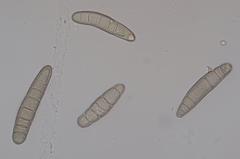 Bipolaris sorokinianae0pathogen
- Outcome
- prevalence of Bipolaris sorokiniana seedlingse0
- Direction
- increasede0
- Value
- 2.1 timese0
Not reportedComparator
Organisms pictured · Representative pictures of the matched species, not figures from the paper.
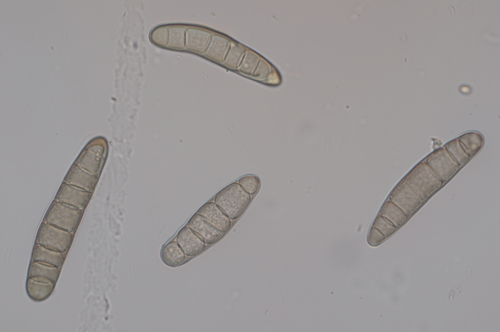
Verbatim
t0“barley seedlings”
e0“significantly increased the prevalence of Bipolaris sorokiniana seedlings by 2.1 times and its prevalence by 1.8 times at a dose of 5 kGy”
Claim · model-written summary
At 5 kGy, irradiation increased the second reported Bipolaris sorokiniana prevalence measure by 1.8 times.
- Taxon
- barleyHordeum vulgaret0
- Treatment
- a dose of 5 kGye0
- Interactor
- Bipolaris sorokinianaBipolaris sorokinianae0pathogen
- Outcome
- its prevalencee0
- Direction
- increasede0
- Value
- 1.8 timese0
Not reportedComparator
Organisms pictured · Representative pictures of the matched species, not figures from the paper.
Verbatim
t0“barley seedlings”
e0“significantly increased the prevalence of Bipolaris sorokiniana seedlings by 2.1 times and its prevalence by 1.8 times at a dose of 5 kGy”
Claim · model-written summary
Electron irradiation did not affect enzyme activity in barley seedlings.
- Taxon
- barleyHordeum vulgaret0
- Treatment
- Electron irradiatione0
- Outcome
- activity of enzymese0
- Direction
- had no effecte0
- Comparator
- controle1
Organisms pictured · Representative pictures of the matched species, not figures from the paper.
Verbatim
t0“barley seedlings”
e0“Electron irradiation of barley seeds had no effect on the activity of enzymes and phytohormones”
e1“non-irradiated seeds served as control”
Claim · model-written summary
Electron irradiation did not generally affect barley seedling phytohormones apart from reported exceptions.
- Taxon
- barleyHordeum vulgaret0
- Treatment
- Electron irradiatione0
- Outcome
- phytohormonese0
- Direction
- had no effecte0
- Comparator
- controle1
Organisms pictured · Representative pictures of the matched species, not figures from the paper.
Verbatim
t0“barley seedlings”
e0“Electron irradiation of barley seeds had no effect on the activity of enzymes and phytohormones, except for a significant increase”
e1“non-irradiated seeds served as control”
Claim · model-written summary
At 5 kGy, irradiation increased IAA content 1.5 times in seven-day-old seedlings versus control.
- Taxon
- barleyHordeum vulgaret0
- Organ / stage
- 7-day-old seedlingse0
- Treatment
- a dose of 5 kGye0
- Outcome
- content of IAAe0
- Direction
- increasee0
- Value
- 1.5 timese0
- Comparator
- controle0
Organisms pictured · Representative pictures of the matched species, not figures from the paper.
Verbatim
t0“barley seedlings”
e0“significant increase in 7-day-old seedlings of the content of IAA at a dose of 5 kGy by 1.5 times and IBA at a dose of 1 kGy by 2.7 times compared with the control”
Claim · model-written summary
At 1 kGy, irradiation increased IBA content 2.7 times in seven-day-old seedlings versus control.
- Taxon
- barleyHordeum vulgaret0
- Organ / stage
- 7-day-old seedlingse0
- Treatment
- a dose of 1 kGye0
- Outcome
- IBAe0
- Direction
- increasee0
- Value
- 2.7 timese0
- Comparator
- controle0
Organisms pictured · Representative pictures of the matched species, not figures from the paper.
Verbatim
t0“barley seedlings”
e0“significant increase in 7-day-old seedlings of the content of IAA at a dose of 5 kGy by 1.5 times and IBA at a dose of 1 kGy by 2.7 times compared with the control”
The same questions in other papers
radiation · growth · Hordeum vulgare (barley)Results differ
12 papers in the same direction as this paper · 22 in the opposite direction · 1 reporting no difference from an alternative
- negative
- negative
- negative
32 papers more in this group
See all 36 papers →seed treatment · growth · Hordeum vulgare (barley)Positive and negative results
10 papers in the same direction as this paper · 47 in the opposite direction
- positive
- positive
- positive
54 papers more in this group
See all 58 papers →radiation · physiology: enzyme activity · Hordeum vulgare (barley)Results agree
1 paper in the same direction as this paper
- no effect
radiation · Fusarium · Hordeum vulgare (barley)Results agree
1 paper in the same direction as this paper
- positive
radiation · physiology: hormones · Hordeum vulgare (barley)Results agree
1 paper in the same direction as this paper
- no effect
radiation · Penicillium · Hordeum vulgare (barley)Results agree
2 papers in the same direction as this paper
- positive
- positive
Claims are grouped by organism, treatment and what was measured or targeted. A paper counts as positive when any of its claims in the group is positive.