Abstract
Pollen deformities remain as bio -indicator of vehicular pollution.Different types of deformities were observed in the pollen grains collected from polluted sites of Chapra town belonging to fifteen plant species such as abnormal shape and reduced size of pollen grains, black spot on exine, broken exine and accumulation of cytoplasmic grainules on the pollen surface.These deformities were recorded in percentage of occurrence.17percent abnormal shaped pollen grains were observed for Cassia fistula.The percentage occurrence of 21% reduced sized pollen grains, 7 percent pollen grains having black spot on surface, 9% pollen having broken exine and 13% pollen grains having cytoplasmic granules on surface were observed with respect of Cassia fistula.Maximum pollen deformities as compared to other species were observed for this plant species.Higher percentage of deformed pollen grains were also observed for Amaranthus spinosus, Azadiracta indica and Parthenium hysteroforus.Minimum number of deformed pollen grains were observed among Acacia arabica, Brassica compestris, Dalbergia sisso, Hibiscus rosa sinensis, Mangifera indica and Mimosa sp.There were no any broken exine having pollen grains noticed among pollens of Argemone mexicana, Acacia arabica, Brassica compestris, Dalbergia sisso, Datura alba, Hibiscus rosa sinensis, Mangifera indica, and Mimosa sp.The pollen grains having cytoplasmic granules was not observed for these plant species of plants except Datura alba.
Abstract from the paper’s OpenAlex record; open copy licensed other-oa. Read at the source ↗
The text the model read, with the source record’s inline markup (italics, sub- and superscripts) rendered and its character entities decoded; quote offsets refer to the raw text.
Claims 12
Claim · model-written summary
Cassia fistula showed the maximum pollen deformities compared with other species.
- Taxon
- Cassia fistula
 Cassia fistulae1
- Outcome
- pollen deformitiese0
- Comparator
- other speciese0
Organisms pictured · Representative pictures of the matched species, not figures from the paper.

Verbatim
e0“Maximum pollen deformities as compared to other species were observed for this plant species”
e1“17percent abnormal shaped pollen grains were observed for Cassia fistula”
Claim · model-written summary
Cassia fistula pollen grains were 17 percent abnormal in shape.
- Taxon
- Cassia fistulaCassia fistulae1
- Outcome
- abnormal shaped pollen grainse1
- Value
- 17percente1
Organisms pictured · Representative pictures of the matched species, not figures from the paper.
Verbatim
e1“17percent abnormal shaped pollen grains were observed for Cassia fistula”
Claim · model-written summary
Cassia fistula pollen showed 21% reduced-size grains.
- Taxon
- Cassia fistulaCassia fistulae2
- Outcome
- reduced sized pollen grainse2
- Value
- 21%e2
Organisms pictured · Representative pictures of the matched species, not figures from the paper.
Verbatim
e2“The percentage occurrence of 21% reduced sized pollen grains, 7 percent pollen grains having black spot on surface, 9% pollen having broken exine and 13% pollen grains having cytoplasmic granules on surface were observed with respect of Cassia fistula”
Claim · model-written summary
Cassia fistula pollen showed 7 percent grains with a black spot on the surface.
- Taxon
- Cassia fistulaCassia fistulae2
- Outcome
- pollen grains having black spot on surfacee2
- Value
- 7 percente2
Organisms pictured · Representative pictures of the matched species, not figures from the paper.
Verbatim
e2“The percentage occurrence of 21% reduced sized pollen grains, 7 percent pollen grains having black spot on surface, 9% pollen having broken exine and 13% pollen grains having cytoplasmic granules on surface were observed with respect of Cassia fistula”
Claim · model-written summary
Cassia fistula pollen showed 9% grains with broken exine.
- Taxon
- Cassia fistulaCassia fistulae2
- Outcome
- pollen having broken exinee2
- Value
- 9%e2
Organisms pictured · Representative pictures of the matched species, not figures from the paper.
Verbatim
e2“The percentage occurrence of 21% reduced sized pollen grains, 7 percent pollen grains having black spot on surface, 9% pollen having broken exine and 13% pollen grains having cytoplasmic granules on surface were observed with respect of Cassia fistula”
Claim · model-written summary
Cassia fistula pollen showed 13% grains with cytoplasmic granules on the surface.
- Taxon
- Cassia fistulaCassia fistulae2
- Outcome
- pollen grains having cytoplasmic granules on surfacee2
- Value
- 13%e2
Organisms pictured · Representative pictures of the matched species, not figures from the paper.
Verbatim
e2“The percentage occurrence of 21% reduced sized pollen grains, 7 percent pollen grains having black spot on surface, 9% pollen having broken exine and 13% pollen grains having cytoplasmic granules on surface were observed with respect of Cassia fistula”
Claim · model-written summary
Amaranthus spinosus had a higher percentage of deformed pollen grains.
- Taxon
- Amaranthus spinosus
 Amaranthus spinosuse2
- Outcome
- Higher percentage of deformed pollen grainse2
Organisms pictured · Representative pictures of the matched species, not figures from the paper.

Verbatim
e2“Higher percentage of deformed pollen grains were also observed for Amaranthus spinosus, Azadiracta indica and Parthenium hysteroforus”
Claim · model-written summary
Azadiracta indica had a higher percentage of deformed pollen grains.
Verbatim
e2“Higher percentage of deformed pollen grains were also observed for Amaranthus spinosus, Azadiracta indica and Parthenium hysteroforus”
Claim · model-written summary
Parthenium hysteroforus had a higher percentage of deformed pollen grains.
Verbatim
e2“Higher percentage of deformed pollen grains were also observed for Amaranthus spinosus, Azadiracta indica and Parthenium hysteroforus”
Claim · model-written summary
Minimum numbers of deformed pollen grains were observed among six plant species.
Verbatim
e0“Minimum number of deformed pollen grains were observed among Acacia arabica, Brassica compestris, Dalbergia sisso, Hibiscus rosa sinensis, Mangifera indica and Mimosa sp”
Claim · model-written summary
No pollen grains with broken exine were noticed among eight plant species.
Verbatim
e0“There were no any broken exine having pollen grains noticed among pollens of Argemone mexicana, Acacia arabica, Brassica compestris, Dalbergia sisso, Datura alba, Hibiscus rosa sinensis, Mangifera indica, and Mimosa sp”
Claim · model-written summary
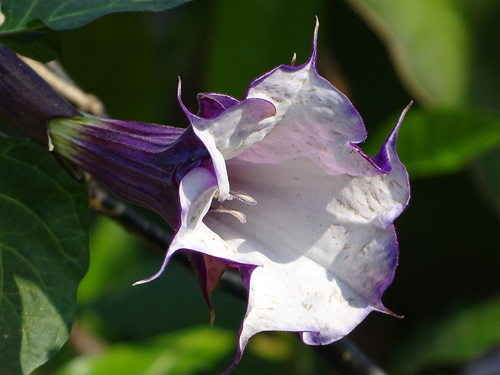
Cytoplasmic granules on pollen were observed only in Datura alba among the listed species.
- Taxon
- Datura alba
 Datura metele0
- Outcome
- pollen grains having cytoplasmic granulese0
- Qualifier
- except Datura albae0
Organisms pictured · Representative pictures of the matched species, not figures from the paper.
Verbatim
e0“The pollen grains having cytoplasmic granules was not observed for these plant species of plants except Datura alba”