Claim · model-written summary
Cytoplasmic granules on pollen were observed only in Datura alba among the listed species.
- Taxon
- Datura alba
 Datura metele0
- Outcome
- pollen grains having cytoplasmic granulese0
- Qualifier
- except Datura albae0
Not reportedMaterialGeneCompoundOrgan / stageInteractorInteractor roleSecond interactorSecond interactor roleTreatmentComparatorSettingDirectionValue
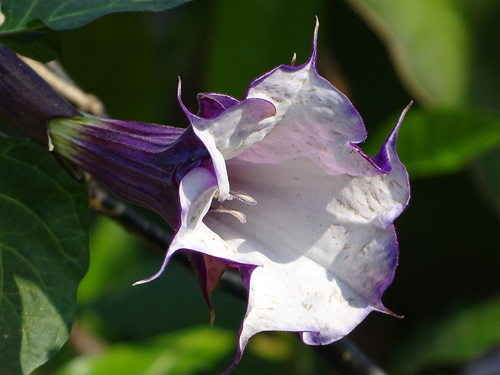
Organisms pictured · Representative pictures of the matched species, not figures from the paper.
Verbatim
e0“The pollen grains having cytoplasmic granules was not observed for these plant species of plants except Datura alba”
Title
Dimensions of Pollen Deformities as Bio-Indicator of Vehicular Pollution
Naira Nayab Anzer Alam International Journal of Science and Research (IJSR) 2024. doi:10.21275/mr24327102950
Other claims from this paper (11)
- Observation Cassia fistula showed the maximum pollen deformities compared with other species.
- Observation Cassia fistula pollen grains were 17 percent abnormal in shape.
- Observation Cassia fistula pollen showed 21% reduced-size grains.
- Observation Cassia fistula pollen showed 7 percent grains with a black spot on the surface.
- Observation Cassia fistula pollen showed 9% grains with broken exine.
- Observation Cassia fistula pollen showed 13% grains with cytoplasmic granules on the surface.
- Observation Amaranthus spinosus had a higher percentage of deformed pollen grains.
- Observation Azadiracta indica had a higher percentage of deformed pollen grains.
- Observation Parthenium hysteroforus had a higher percentage of deformed pollen grains.
- Observation Minimum numbers of deformed pollen grains were observed among six plant species.
- Observation No pollen grains with broken exine were noticed among eight plant species.