Abstract
Ailanthus altissima, an invasive plant species, exhibits pharmacological properties, but also some allergic effects on humans. This study aimed to evaluate the potential toxicity of A. altissima leaves, using a complex approach towards different organisms. The ecotoxic impact of a crude extract was investigated on seeds germination and brine shrimp lethality. Cytotoxicity was studied in vitro using non-target (haemolysis, liposomal model, fibroblast), and target (cancer cells) assays. Leaf extract at 1000 µg/mL significantly inhibited wheat and tomato germination, while no significant effects were found on parsley germination. A slight stimulatory effect on wheat and tomato germination was found at 125 µg/mL. In a brine shrimp-test, the extract showed a low toxicity at 24 h post-exposure (LC50 = 951.04 ± 28.26 μg/mL), the toxic effects increasing with the exposure time and extract concentration. Leaf extract caused low hematotoxicity. The extract was biocompatible with human gingival fibroblasts. No anti-proliferative effect was found within the concentration range of 10–500 µg/mL on malignant melanoma (MeWo) and hepatocellular carcinoma (HepG2). In a liposomal model-test, the extract proved to possess low capability to alter the eukaryotic cell-mimicking membranes within the tested concentration range. Given the low to moderate toxicity on tested organisms/cells, the A. altissima autumn leaves may find useful applications.
Abstract from the paper’s OpenAlex record; open copy licensed cc-by. Read at the source ↗
The text the model read, with the source record’s inline markup (italics, sub- and superscripts) rendered and its character entities decoded; quote offsets refer to the raw text.
Claims 5
Claim · model-written summary
Ailanthus leaf extract at 1000 µg/mL significantly inhibited wheat germination.
- Taxon
- wheat
 Triticum aestivume0
- Treatment
- Leaf extract at 1000 µg/mLe0
- Outcome
- wheat and tomato germinatione0
- Direction
- inhibitede0
Not reportedComparator
Organisms pictured · Representative pictures of the matched species, not figures from the paper.

Verbatim
e0“Leaf extract at 1000 µg/mL significantly inhibited wheat and tomato germination, while no significant effects were found on parsley germination”
Claim · model-written summary
Ailanthus leaf extract at 1000 µg/mL significantly inhibited tomato germination.
- Taxon
- tomato
 Solanum lycopersicume0
- Treatment
- Leaf extract at 1000 µg/mLe0
- Outcome
- wheat and tomato germinatione0
- Direction
- inhibitede0
Not reportedComparator
Organisms pictured · Representative pictures of the matched species, not figures from the paper.

Verbatim
e0“Leaf extract at 1000 µg/mL significantly inhibited wheat and tomato germination, while no significant effects were found on parsley germination”
Claim · model-written summary
At 1000 µg/mL, Ailanthus leaf extract had no statistically significant effect on parsley germination.
- Taxon
- parsley
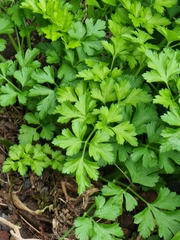 Petroselinum crispume0
- Treatment
- Leaf extract at 1000 µg/mLe0
- Outcome
- parsley germinatione0
Not reportedComparatorDirection
Organisms pictured · Representative pictures of the matched species, not figures from the paper.
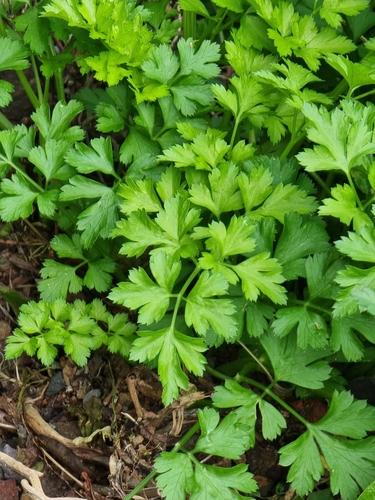
Verbatim
e0“Leaf extract at 1000 µg/mL significantly inhibited wheat and tomato germination, while no significant effects were found on parsley germination”
Claim · model-written summary
Ailanthus leaf extract at 125 µg/mL slightly stimulated wheat germination.
- Taxon
- wheatTriticum aestivume0
- Treatment
- 125 µg/mLe0
- Outcome
- wheat and tomato germinatione0
- Direction
- stimulatorye0
Not reportedComparator
Organisms pictured · Representative pictures of the matched species, not figures from the paper.
Verbatim
e0“A slight stimulatory effect on wheat and tomato germination was found at 125 µg/mL”
Claim · model-written summary
Ailanthus leaf extract at 125 µg/mL slightly stimulated tomato germination.
- Taxon
- tomatoSolanum lycopersicume0
- Treatment
- 125 µg/mLe0
- Outcome
- wheat and tomato germinatione0
- Direction
- stimulatorye0
Not reportedComparator
Organisms pictured · Representative pictures of the matched species, not figures from the paper.
Verbatim
e0“A slight stimulatory effect on wheat and tomato germination was found at 125 µg/mL”
The same questions in other papers
botanical · growth · Petroselinum crispum (parsley)Positive and negative results
5 in the opposite direction
- positive
- positive
- positive
2 papers more in this group
See all 6 papers →botanical · growth · Solanum lycopersicum (tomato)Positive and negative results
87 papers in the same direction as this paper · 203 in the opposite direction
- positive
- positive
- positive
287 papers more in this group
See all 291 papers →botanical · growth · Triticum aestivum (wheat)Positive and negative results
228 papers in the same direction as this paper · 206 in the opposite direction
- no effect
- positive
- positive
431 papers more in this group
See all 435 papers →Claims are grouped by organism, treatment and what was measured or targeted. A paper counts as positive when any of its claims in the group is positive.