Abstract
Auxin and its PIN-FORMED (PIN) exporters are essential for tissue repair and regeneration in flowering plants. To gain insight into the evolution of this mechanism, we investigated their roles in leaves excised from Physcomitrium patens, a bryophyte known for its remarkable cell reprogramming capacity. We used various approaches to manipulate auxin levels, including exogenous application, pharmacological manipulations, and auxin biosynthesis mutants. We observed no significant effect on the rate of cell reprogramming. Rather, our analysis of auxin dynamics revealed a decrease in auxin levels upon excision, which was followed by a local increase before the reprogramming process began. Mutant analysis revealed that PpPINs are required for effective cell reprogramming, and endogenously expressed PpPINA-GFP accumulates polarly at sites that will develop into future filamentous stem cells. In addition, hyperpolarized PpPINA variants carrying mutated phosphorylation sites showed a marked delay in reprogramming, whereas endogenous or nonpolar versions do not have this effect. These results underscore that both the levels and the polarity of PpPINA are important for efficient cell reprogramming. Overall, these findings highlight the pivotal role of PIN polarity in plant regeneration. Furthermore, they suggest that understanding polarity mechanisms could have broader implications for improving regenerative processes across various plant species.
Abstract from the paper’s OpenAlex record, shown for indexing and research. Copyright remains with the authors or the publisher. Read at the source ↗
The text the model read, with the source record’s inline markup (italics, sub- and superscripts) rendered and its character entities decoded; quote offsets refer to the raw text.
Claims 6
Claim · model-written summary
Manipulating auxin levels had no significant effect on cell reprogramming rate.
- Taxon
- Physcomitrium patens
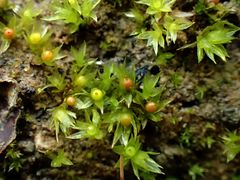 Physcomitrium patense1
- Treatment
- manipulate auxin levelse0
- Outcome
- rate of cell reprogramminge0
- Direction
- no significant effecte0
Not reportedComparator
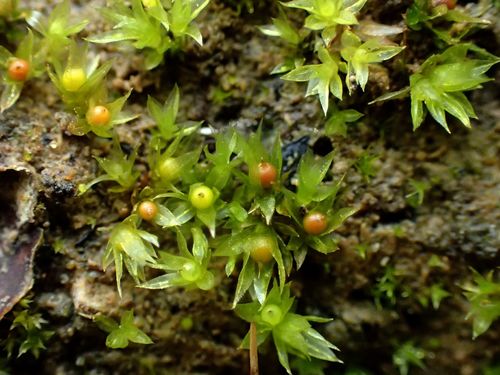
Organisms pictured · Representative pictures of the matched species, not figures from the paper.
Verbatim
e0“We used various approaches to manipulate auxin levels, including exogenous application, pharmacological manipulations, and auxin biosynthesis mutants. We observed no significant effect on the rate of cell reprogramming.”
e1“Physcomitrium patens”
Claim · model-written summary
Auxin levels fell after leaf excision.
- Taxon
- Physcomitrium patensPhyscomitrium patense1
- Organ / stage
- leavese0
- Outcome
- auxin levelse0
- Direction
- decreasee0
Organisms pictured · Representative pictures of the matched species, not figures from the paper.
Verbatim
e0“leaves excised from Physcomitrium patens, a bryophyte known for its remarkable cell reprogramming capacity. We used various approaches to manipulate auxin levels, including exogenous application, pharmacological manipulations, and auxin biosynthesis mutants. We observed no significant effect on the rate of cell reprogramming. Rather, our analysis of auxin dynamics revealed a decrease in auxin levels upon excision”
e1“Physcomitrium patens”
Claim · model-written summary
Auxin levels rose locally before reprogramming began.
- Taxon
- Physcomitrium patensPhyscomitrium patense1
- Outcome
- auxin levelse0
- Direction
- increasee0
- Qualifier
- before the reprogramming process begane0
Organisms pictured · Representative pictures of the matched species, not figures from the paper.
Verbatim
e0“Physcomitrium patens, a bryophyte known for its remarkable cell reprogramming capacity. We used various approaches to manipulate auxin levels, including exogenous application, pharmacological manipulations, and auxin biosynthesis mutants. We observed no significant effect on the rate of cell reprogramming. Rather, our analysis of auxin dynamics revealed a decrease in auxin levels upon excision, which was followed by a local increase before the reprogramming process began.”
e1“Physcomitrium patens”
Claim · model-written summary
PpPINs are required for effective cell reprogramming.
- Taxon
- Physcomitrium patensPhyscomitrium patense1
- Gene
- PpPINse0
- Outcome
- effective cell reprogramminge0
Organisms pictured · Representative pictures of the matched species, not figures from the paper.
Verbatim
e0“Physcomitrium patens, a bryophyte known for its remarkable cell reprogramming capacity. We used various approaches to manipulate auxin levels, including exogenous application, pharmacological manipulations, and auxin biosynthesis mutants. We observed no significant effect on the rate of cell reprogramming. Rather, our analysis of auxin dynamics revealed a decrease in auxin levels upon excision, which was followed by a local increase before the reprogramming process began. Mutant analysis revealed that PpPINs are required for effective cell reprogramming”
e1“Physcomitrium patens”
Claim · model-written summary
Endogenous PpPINA-GFP accumulated polarly at future filamentous stem cell sites.
- Taxon
- Physcomitrium patensPhyscomitrium patense1
- Gene
- PpPINA-GFPe0
- Outcome
- accumulates polarly at sites that will develop into future filamentous stem cellse0
Organisms pictured · Representative pictures of the matched species, not figures from the paper.
Verbatim
e0“Physcomitrium patens, a bryophyte known for its remarkable cell reprogramming capacity. We used various approaches to manipulate auxin levels, including exogenous application, pharmacological manipulations, and auxin biosynthesis mutants. We observed no significant effect on the rate of cell reprogramming. Rather, our analysis of auxin dynamics revealed a decrease in auxin levels upon excision, which was followed by a local increase before the reprogramming process began. Mutant analysis revealed that PpPINs are required for effective cell reprogramming, and endogenously expressed PpPINA-GFP accumulates polarly at sites that will develop into future filamentous stem cells.”
e1“Physcomitrium patens”
Claim · model-written summary
Hyperpolarized PpPINA variants with mutated phosphorylation sites markedly delayed reprogramming.
- Taxon
- Physcomitrium patensPhyscomitrium patense1
- Treatment
- hyperpolarized PpPINA variants carrying mutated phosphorylation sitese0
- Gene
- PpPINAe0
- Outcome
- reprogramminge0
- Direction
- delaye0
- Comparator
- endogenous or nonpolar versionse0
Organisms pictured · Representative pictures of the matched species, not figures from the paper.
Verbatim
e0“Physcomitrium patens, a bryophyte known for its remarkable cell reprogramming capacity. We used various approaches to manipulate auxin levels, including exogenous application, pharmacological manipulations, and auxin biosynthesis mutants. We observed no significant effect on the rate of cell reprogramming. Rather, our analysis of auxin dynamics revealed a decrease in auxin levels upon excision, which was followed by a local increase before the reprogramming process began. Mutant analysis revealed that PpPINs are required for effective cell reprogramming, and endogenously expressed PpPINA-GFP accumulates polarly at sites that will develop into future filamentous stem cells. In addition, hyperpolarized PpPINA variants carrying mutated phosphorylation sites showed a marked delay in reprogramming, whereas endogenous or nonpolar versions do not have this effect.”
e1“Physcomitrium patens”