Abstract
The Garcinia genus is considered an underutilized variety and is recognized as a valuable dietary source of phytochemical compounds with various health benefits. The physicochemical analysis of the fruits revealed that they are generally globular in shape but vary in size and are highly acidic, with GP (Garcinia pedunculata) exhibiting the highest TTA% at 5.79 ± 0.09. Key minerals detected include magnesium, iron, and calcium, with calcium being the most abundant across all species. The highest phenolic content was determined in GP (6.55 ± 0.27 mg. GAE. g-1), while the highest flavonoid content was analyzed in GX (Garcinia xanthochymus) (34.99 ± 0.51 mg. QE. g-1). GM (Garcinia morella) showed the highest DPPH• and ABTS•+ scavenging activities and demonstrated the lowest IC50 values for these assays. Hydroxycitric acid content was highest in GM (472.88 ± 4.78 mg. g-1) among the three species. Antimicrobial assays revealed inhibition zones against both bacterial and fungal strains. These findings confirm that Garcinia fruit is a potent source of antioxidants and exhibits significant antimicrobial properties, which could be beneficial for the formulation of value-added products.
Abstract from the paper’s OpenAlex record; open copy licensed cc-by-nc-sa. Read at the source ↗
The text the model read, with the source record’s inline markup (italics, sub- and superscripts) rendered and its character entities decoded; quote offsets refer to the raw text.
Claims 9
Claim · model-written summary
Garcinia pedunculata fruits had the highest titratable acidity (TTA%) of the three species, at 5.79 ± 0.09.
- Taxon
- Garcinia pedunculata
 Garcinia pedunculatae0
- Outcome
- TTA%e0
- Direction
- higheste0
- Value
- 5.79 ± 0.09e0
Organisms pictured · Representative pictures of the matched species, not figures from the paper.

Verbatim
e0“GP (Garcinia pedunculata) exhibiting the highest TTA% at 5.79 ± 0.09”
Claim · model-written summary
Calcium was the most abundant mineral across all three Garcinia species.
 Garcinia
Organisms pictured · Representative pictures of the matched species, not figures from the paper.

Verbatim
e0“calcium being the most abundant across all species”
t0“Garcinia species”
Claim · model-written summary
The fruits are generally globular but vary in size and are highly acidic.
- Outcome
- globular in shape but vary in size and are highly acidice0
Organisms pictured · Representative pictures of the matched species, not figures from the paper.
Verbatim
e0“they are generally globular in shape but vary in size and are highly acidic”
t0“Garcinia species”
Claim · model-written summary
Garcinia pedunculata had the highest phenolic content, 6.55 ± 0.27 mg GAE per g.
- Taxon
- Garcinia pedunculataGarcinia pedunculatat0
- Outcome
- phenolic contente0
- Direction
- higheste0
- Value
- 6.55 ± 0.27 mg. GAE. g-1e0
Organisms pictured · Representative pictures of the matched species, not figures from the paper.
Verbatim
e0“The highest phenolic content was determined in GP (6.55 ± 0.27 mg. GAE. g-1)”
t0“Garcinia pedunculata”
Claim · model-written summary
Garcinia xanthochymus had the highest flavonoid content, 34.99 ± 0.51 mg QE per g.
- Taxon
- Garcinia xanthochymus
 Garcinia xanthochymuse0
- Outcome
- flavonoid contente0
- Direction
- higheste0
- Value
- 34.99 ± 0.51 mg. QE. g-1e0
Organisms pictured · Representative pictures of the matched species, not figures from the paper.

Verbatim
e0“the highest flavonoid content was analyzed in GX (Garcinia xanthochymus) (34.99 ± 0.51 mg. QE. g-1)”
Claim · model-written summary
Garcinia morella had the highest DPPH and ABTS scavenging activities and the lowest IC50 values in these assays.
- Taxon
- Garcinia morella
 Garcinia morellae0
- Outcome
- DPPH• and ABTS•+ scavenging activitiese0
- Direction
- higheste0
Organisms pictured · Representative pictures of the matched species, not figures from the paper.
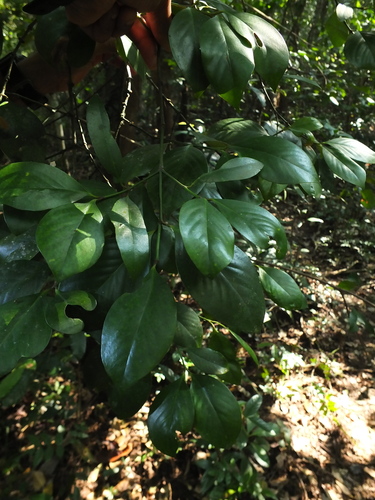
Verbatim
e0“GM (Garcinia morella) showed the highest DPPH• and ABTS•+ scavenging activities and demonstrated the lowest IC50 values for these assays”
Claim · model-written summary
Garcinia morella had the highest hydroxycitric acid content among the three species, 472.88 ± 4.78 mg per g.
- Taxon
- Garcinia morellaGarcinia morellat0
- Outcome
- Hydroxycitric acid contente0
- Direction
- higheste0
- Value
- 472.88 ± 4.78 mg. g-1e0
Organisms pictured · Representative pictures of the matched species, not figures from the paper.
Verbatim
e0“Hydroxycitric acid content was highest in GM (472.88 ± 4.78 mg. g-1) among the three species”
t0“Garcinia morella”
Claim · model-written summary
Antimicrobial assays of the Garcinia fruits showed inhibition zones against both bacterial and fungal strains.
- Outcome
- inhibition zonese0
Not reportedDirection
Organisms pictured · Representative pictures of the matched species, not figures from the paper.
Verbatim
e0“Antimicrobial assays revealed inhibition zones against both bacterial and fungal strains”
t0“Garcinia species”
Claim · model-written summary
The authors conclude that Garcinia fruit is a potent source of antioxidants and has significant antimicrobial properties.
- Outcome
- potent source of antioxidantse0
Organisms pictured · Representative pictures of the matched species, not figures from the paper.
Verbatim
e0“Garcinia fruit is a potent source of antioxidants and exhibits significant antimicrobial properties”