Abstract
ABSTRACT Salt and water stresses affect the agronomic performance of the beet crop (Beta vulgaris L.). The aim of the present study was therefore to evaluate the effect of suppressing irrigation on the yield and quality of the tuberous root of beet under salt stress. The experiment was conducted from February to May 2023 in a greenhouse at the University of the International Integration of Afro-Brazilian Lusophony (UNILAB), Redenção, Ceará, Brazil. The experimental design used was completely randomized in a 5 × 2 factorial arrangement, with 5 repetitions, corresponding to five intervals of irrigation suppression: SI1= no water suppression interval (control), SI2 = suppression interval from 20 to 35 days after sowing (DAS), SI3 = suppression interval from 35 to 50 DAS, SI4 = suppression interval from 50 to 65 DAS and SI5 = suppression interval from 65 to 80 DAS, and the two levels of electrical conductivity of the irrigation water: 0.8 and 6.2 dS m-1. The use of water with high salinity reduced the mass and length of the tuberous root, as well as its yield; however, it promoted an increase in the soluble solids content of beet. Salt stress negatively affected root diameter and pH in the water suppression intervals from 20 to 35 DAS and from 50 to 65 DAS. The treatment with water suppression interval from 35 to 50 DAS resulted lower performance in tuberous root mass and yield.
Abstract from the paper’s OpenAlex record; open copy licensed cc-by. Read at the source ↗
The text the model read, with the source record’s inline markup (italics, sub- and superscripts) rendered and its character entities decoded; quote offsets refer to the raw text.
Claims 4
Claim · model-written summary
High-salinity irrigation water reduced the mass, length and yield of the beet tuberous root.
- Taxon
- beet
 Beta vulgarise0
- Treatment
- use of water with high salinitye1
- Outcome
- mass and length of the tuberous root, as well as its yielde1
- Direction
- reducede1
Not reportedComparator
Organisms pictured · Representative pictures of the matched species, not figures from the paper.
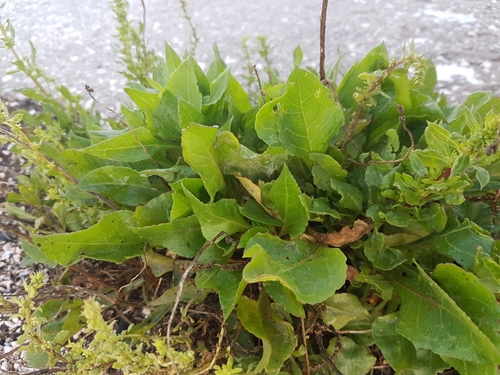
Verbatim
e0“Salt and water stresses affect the agronomic performance of the beet crop (Beta vulgaris L.)”
e1“The use of water with high salinity reduced the mass and length of the tuberous root, as well as its yield; however, it promoted an increase in the soluble solids content of beet”
Claim · model-written summary
High-salinity irrigation water increased the soluble solids content of beet.
- Taxon
- beetBeta vulgarise0
- Treatment
- use of water with high salinitye1
- Outcome
- soluble solids contente1
- Direction
- increasee1
Not reportedComparator
Organisms pictured · Representative pictures of the matched species, not figures from the paper.
Verbatim
e0“Salt and water stresses affect the agronomic performance of the beet crop (Beta vulgaris L.)”
e1“The use of water with high salinity reduced the mass and length of the tuberous root, as well as its yield; however, it promoted an increase in the soluble solids content of beet”
Claim · model-written summary
Salt stress negatively affected root diameter and pH in the water suppression intervals from 20 to 35 DAS and from 50 to 65 DAS.
- Taxon
- beetBeta vulgarise0
- Treatment
- Salt stresse2
- Outcome
- root diameter and pHe2
- Direction
- decreaseinferrede2
- Qualifier
- in the water suppression intervals from 20 to 35 DAS and from 50 to 65 DASe2
Not reportedComparator
Organisms pictured · Representative pictures of the matched species, not figures from the paper.
Verbatim
e0“Salt and water stresses affect the agronomic performance of the beet crop (Beta vulgaris L.)”
e2“Salt stress negatively affected root diameter and pH in the water suppression intervals from 20 to 35 DAS and from 50 to 65 DAS”
Claim · model-written summary
The water suppression interval from 35 to 50 DAS gave lower tuberous root mass and yield in beet.
- Taxon
- beetBeta vulgarise0
- Treatment
- water suppression interval from 35 to 50 DASe3
- Outcome
- tuberous root mass and yielde3
- Direction
- lowere3
Not reportedComparator
Organisms pictured · Representative pictures of the matched species, not figures from the paper.
Verbatim
e0“Salt and water stresses affect the agronomic performance of the beet crop (Beta vulgaris L.)”
e3“The treatment with water suppression interval from 35 to 50 DAS resulted lower performance in tuberous root mass and yield”
The same questions in other papers
salinity · growth · Beta vulgaris (beet)Results differ
40 papers in the same direction as this paper · 13 in the opposite direction
- positive
- negative
- positive
50 papers more in this group
See all 54 papers →salinity · yield · Beta vulgaris (beet)Positive and negative results
12 papers in the same direction as this paper · 4 in the opposite direction
- negative
- positive
- positive
13 papers more in this group
See all 17 papers →Claims are grouped by organism, treatment and what was measured or targeted. A paper counts as positive when any of its claims in the group is positive.