Abstract
The glucosinolate-myrosinase system is a well-known chemical defense in the Brassicales order, which has been extensively studied in Arabidopsis thaliana. Here, we assessed natural variation of leaf glucosinolate content and profiles in seven species of the Brassicaceae family, using over 300 cauline leaf samples collected from wild populations in Germany and France. Total glucosinolate content varied substantially among individuals, populations and species. Analysis of glucosinolate profiles identified two types of profiles each for Cardamine amara and C. pratensis, and three profile types for C. impatiens. One profile type for each Cardamine species showed glucosinolate compositions distinct from previously described profile types. In contrast, the glucosinolate profiles of the other four species - Lepidium draba, Lunaria rediviva, Hesperis matronalis, and Descurainia sophia - were less variable. The obtained dataset paves the way for more detailed analyses of the genetic basis of glucosinolate biosynthesis in these species. Our data indicate that, among plutellid species whose larvae feed exclusively on cruciferous host plants, the oligophagous Eidophasia messingiella and Rhigognostis senilella are exposed to a diverse array of glucosinolate structures. In contrast, Plutella porrectella primarily encounters only a limited set of unusual glucosinolates when feeding on its preferred host plant, H. matronalis. Future research is required to evaluate whether this has led to specialized adaptations in this Lepidopteran herbivore. Furthermore, our study indicates that the unpredictable variation in total glucosinolate content as detected in our field-collected samples might pose a substantial challenge even to adapted herbivores.
Abstract from the paper’s OpenAlex record; open copy licensed cc-by. Read at the source ↗
The text the model read, with the source record’s inline markup (italics, sub- and superscripts) rendered and its character entities decoded; quote offsets refer to the raw text.
Claims 10
Claim · model-written summary
Total leaf glucosinolate content varied among individuals, populations, and species.
- Taxon
- BrassicaceaeBrassicaceaee1
- Outcome
- Total glucosinolate contente0
Not reportedOrgan / stage
Verbatim
e0“Total glucosinolate content varied substantially among individuals, populations and species”
e1“seven species of the Brassicaceae family”
Claim · model-written summary
Cardamine amara had two glucosinolate profile types.
- Taxon
- Cardamine amara
 Cardamine amarae0
- Outcome
- types of profilese0
- Value
- twoe0
Organisms pictured · Representative pictures of the matched species, not figures from the paper.

Verbatim
e0“two types of profiles each for Cardamine amara and C. pratensis”
Claim · model-written summary
C. pratensis had two glucosinolate profile types.
- Taxon
- C. pratensis
 Cardamine pratensise0
- Outcome
- types of profilese0
- Value
- twoe0
Organisms pictured · Representative pictures of the matched species, not figures from the paper.

Verbatim
e0“two types of profiles each for Cardamine amara and C. pratensis”
Claim · model-written summary
C. impatiens had three glucosinolate profile types.
- Taxon
- C. impatiens
 Cardamine impatiense0
- Outcome
- profile typese0
- Value
- threee0
Organisms pictured · Representative pictures of the matched species, not figures from the paper.

Verbatim
e0“three profile types for C. impatiens”
Claim · model-written summary
Each Cardamine species had one profile distinct from previously described types.
- Outcome
- glucosinolate compositions distinct from previously described profile typese0
- Value
- One profile typee0
 Cardamine
Organisms pictured · Representative pictures of the matched species, not figures from the paper.

Verbatim
e0“One profile type for each Cardamine species showed glucosinolate compositions distinct from previously described profile types”
Claim · model-written summary
Glucosinolate profiles of four other species were less variable.
- Taxon
- Lepidium draba, Lunaria rediviva, Hesperis matronalis, and Descurainia sophia
 Descurainia sophia
 Lepidium draba
 Hesperis matronalis
 Lunaria redivivae0
- Outcome
- glucosinolate profilese0
- Direction
- less variablee0
Organisms pictured · Representative pictures of the matched species, not figures from the paper.


Verbatim
e0“the glucosinolate profiles of the other four species - Lepidium draba, Lunaria rediviva, Hesperis matronalis, and Descurainia sophia - were less variable”
Claim · model-written summary
Eidophasia messingiella larvae encounter diverse glucosinolate structures on cruciferous hosts.
- Taxon
- cruciferous host plantse1
- Interactor
- Eidophasia messingiella
 Eidophasia messingiellae0herbivore
- Outcome
- exposed to a diverse array of glucosinolate structurese0
Organisms pictured · Representative pictures of the matched species, not figures from the paper.

Verbatim
e0“the oligophagous Eidophasia messingiella and Rhigognostis senilella are exposed to a diverse array of glucosinolate structures”
e1“cruciferous host plants”
Claim · model-written summary
Rhigognostis senilella larvae encounter diverse glucosinolate structures on cruciferous hosts.
- Taxon
- cruciferous host plantse1
- Interactor
- Rhigognostis senilella
 Rhigognostis senilellae0herbivore
- Outcome
- exposed to a diverse array of glucosinolate structurese0
Organisms pictured · Representative pictures of the matched species, not figures from the paper.

Verbatim
e0“the oligophagous Eidophasia messingiella and Rhigognostis senilella are exposed to a diverse array of glucosinolate structures”
e1“cruciferous host plants”
Claim · model-written summary
Plutella porrectella encounters a limited set of unusual glucosinolates on H. matronalis.
- Taxon
- H. matronalisHesperis matronalise0
- Interactor
- Plutella porrectella
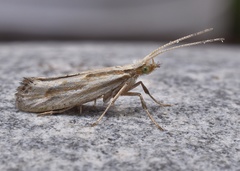 Plutella porrectellae0herbivore
- Outcome
- limited set of unusual glucosinolatese0
Organisms pictured · Representative pictures of the matched species, not figures from the paper.
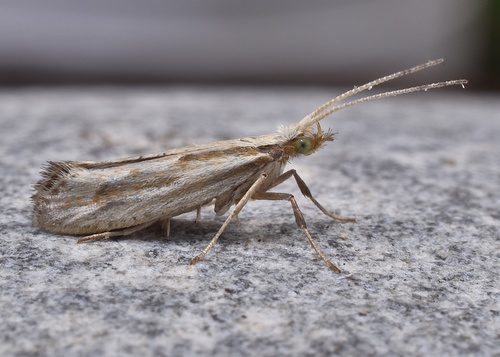
Verbatim
e0“Plutella porrectella primarily encounters only a limited set of unusual glucosinolates when feeding on its preferred host plant, H. matronalis”
Claim · model-written summary
Unpredictable glucosinolate content variation may challenge adapted herbivores.
- Taxon
- BrassicaceaeBrassicaceaee1
- Outcome
- substantial challenge even to adapted herbivorese0
- Qualifier
- unpredictable variation in total glucosinolate contente0
Verbatim
e0“unpredictable variation in total glucosinolate content as detected in our field-collected samples might pose a substantial challenge even to adapted herbivores”
e1“seven species of the Brassicaceae family”