Abstract
Lolium multiflorum Lam. (ryegrass, or azevém in Portuguese) is a grass used as forage and cover crop in vineyards of the southern region of Brazil. However, it has become invasive, with some biotypes identified as resistant to glyphosate. Its control is performed with herbicides, prior to flowering. Aside from plant resistance and damage to the ecosystem and to the population’s health, these herbicides might cause lesions to plant tissues, and change photosynthesis and fruit maturation, as already observed in vineyards. Due to the presence of bioactive substances with phytotoxic activity, extracts of native plants might be exploited to develop natural products with herbicidal activity. The present study evaluated the effects of aqueous extracts by decoction and infusion of Ilex paraguariensis A. St.-Hil. leaves on germination, seedling formation, growth, and on the chlorophyll and tissues of adult L. multiflorum plants. In vitro bioassays were performed at the concentrations of 0% (control - only purified water), 0.5%, 1%, and 2%, comprised of five replicates of 20 L. multiflorum caryopses. Germination percentage, average germination time, average seedling formation time, average seedling length, and dry mass were calculated. Adult L. multiflorum plants were submitted to treatments using extracts by decoction in the concentration of 3% and 5% (and control - only purified water), and chlorophyll content, dry mass, and anatomical cuts were evaluated. Chemical compounds present in the extracts were identified through High-performance liquid chromatography (HPLC). Data were submitted to a unidirectional analysis of variance (ANOVA) and a polynomial regression analysis (p < 0.05). Both extracts showed phytotoxic activity, yet the decoction extract had higher phytotoxicity, especially at the concentrations of 1% and 2%, reducing germination percentage and speed, as well as seedling formation and growth. Damage was lower in adult plants, although there was rupture of epidermal cells and chlorophyll parenchyma, as well as plasmolysis at 3 and 6% of the extract. The chemical profile of I. paraguariensis is consistent with the biological activity observed. The hypothesis that the aqueous extract by decoction of I. paraguariensis leaves has potential to develop a natural product with herbicidal activity against L. multiflorum, to be used in vineyards, was confirmed. However, further studies are required to evaluate extract application methodology, individual action of each compound present, and their action mechanisms.
Abstract from the paper’s OpenAlex record; open copy licensed cc-by. Read at the source ↗
The text the model read, with the source record’s inline markup (italics, sub- and superscripts) rendered and its character entities decoded; quote offsets refer to the raw text.
Claims 8
Claim · model-written summary
Both aqueous extracts of Ilex paraguariensis leaves showed phytotoxic activity against Lolium multiflorum relative to the water control.
- Taxon
- Lolium multiflorum
 Lolium multiflorume0
- Treatment
- Both extractse1
- Outcome
- phytotoxic activitye1
- Direction
- increaseinferrede1
- Comparator
- control - only purified watere2
Organisms pictured · Representative pictures of the matched species, not figures from the paper.

Verbatim
e0“Lolium multiflorum Lam.”
e1“Both extracts showed phytotoxic activity”
e2“0% (control - only purified water)”
Claim · model-written summary
The decoction extract had higher phytotoxicity than the infusion extract against Lolium multiflorum, especially at 1% and 2%.
- Taxon
- Lolium multiflorumLolium multiflorume0
- Treatment
- decoction extracte3
- Outcome
- phytotoxicitye3
- Direction
- highere3
- Qualifier
- especially at the concentrations of 1% and 2%e3
- Comparator
- infusione4
Organisms pictured · Representative pictures of the matched species, not figures from the paper.
Verbatim
e0“Lolium multiflorum Lam.”
e3“the decoction extract had higher phytotoxicity, especially at the concentrations of 1% and 2%”
e4“decoction and infusion of Ilex paraguariensis”
Claim · model-written summary
The decoction extract at 1% and 2% reduced germination percentage and speed of Lolium multiflorum caryopses relative to the water control.
- Taxon
- Lolium multiflorumLolium multiflorume0
- Treatment
- decoction extracte3
- Outcome
- germination percentage and speede5
- Direction
- reducinge5
- Qualifier
- especially at the concentrations of 1% and 2%e3
- Comparator
- control - only purified watere2
Organisms pictured · Representative pictures of the matched species, not figures from the paper.
Verbatim
e0“Lolium multiflorum Lam.”
e3“the decoction extract had higher phytotoxicity, especially at the concentrations of 1% and 2%”
e5“reducing germination percentage and speed, as well as seedling formation and growth”
e2“0% (control - only purified water)”
Claim · model-written summary
The decoction extract at 1% and 2% reduced seedling formation and growth of Lolium multiflorum relative to the water control.
- Taxon
- Lolium multiflorumLolium multiflorume0
- Treatment
- decoction extracte3
- Outcome
- seedling formation and growthe5
- Direction
- reducinge5
- Qualifier
- especially at the concentrations of 1% and 2%e3
- Comparator
- control - only purified watere2
Organisms pictured · Representative pictures of the matched species, not figures from the paper.
Verbatim
e0“Lolium multiflorum Lam.”
e3“the decoction extract had higher phytotoxicity, especially at the concentrations of 1% and 2%”
e5“reducing germination percentage and speed, as well as seedling formation and growth”
e2“0% (control - only purified water)”
Claim · model-written summary
Damage to adult Lolium multiflorum plants treated with 3% and 5% decoction extracts was lower than in other plants.
- Taxon
- Lolium multiflorumLolium multiflorume0
- Organ / stage
- adult plantse3
- Treatment
- 3% and 5%e1
- Outcome
- Damagee3
- Direction
- lowere3
- Comparator
- control - only purified watere2
Organisms pictured · Representative pictures of the matched species, not figures from the paper.
Verbatim
e0“Lolium multiflorum Lam.”
e1“in the concentration of 3% and 5%”
e2“(and control - only purified water)”
e3“Damage was lower in adult plants”
Claim · model-written summary
Decoction extract at 3 and 6% caused rupture of epidermal cells and chlorophyll parenchyma and plasmolysis in adult Lolium multiflorum plants.
- Taxon
- Lolium multiflorumLolium multiflorume0
- Treatment
- 3 and 6% of the extracte1
- Outcome
- rupture of epidermal cells and chlorophyll parenchyma, as well as plasmolysise1
- Comparator
- control - only purified watere2
Not reportedDirection
Organisms pictured · Representative pictures of the matched species, not figures from the paper.
Verbatim
e0“Lolium multiflorum Lam.”
e1“rupture of epidermal cells and chlorophyll parenchyma, as well as plasmolysis at 3 and 6% of the extract”
e2“(and control - only purified water)”
Claim · model-written summary
The chemical profile of Ilex paraguariensis is consistent with its biological activity.
- Taxon
- I. paraguariensis
 Ilex paraguariensise0
- Outcome
- biological activitye0
- Qualifier
- chemical profilee0
Organisms pictured · Representative pictures of the matched species, not figures from the paper.
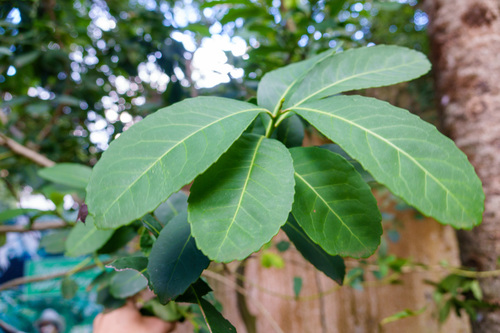
Verbatim
e0“The chemical profile of I. paraguariensis is consistent with the biological activity observed”
Claim · model-written summary
The aqueous decoction extract of Ilex paraguariensis has potential to develop a natural herbicide against Lolium multiflorum.
- Taxon
- Lolium multiflorumLolium multiflorume0
- Outcome
- natural product with herbicidal activitye1
Organisms pictured · Representative pictures of the matched species, not figures from the paper.
Verbatim
e0“Lolium multiflorum Lam.”
e1“has potential to develop a natural product with herbicidal activity against L. multiflorum”
The same questions in other papers
botanical · growth · Lolium multiflorum (Italian ryegrass)Positive and negative results
18 papers in the same direction as this paper · 18 in the opposite direction
- negative
- negative
- negative
33 papers more in this group
See all 37 papers →botanical · crop injury · Lolium multiflorum (Italian ryegrass)Results agree
1 paper in the same direction as this paper
- positive
Claims are grouped by organism, treatment and what was measured or targeted. A paper counts as positive when any of its claims in the group is positive.