Abstract
Scrophularia ningpoensis Hemsl., whose roots (Scrophulariae Radix or Xuanshen) are an essential traditional Chinese medicinal herb with high clinical and economic value, is used to treat a variety of ailments. Its cultivation, however, is limited by reduced root biomass and lower accumulation of bioactive compounds. Biofertilizers show promise for boosting plant growth and secondary metabolism, but their use in S. ningpoensis cultivation remains underexplored. This study explored the use of biofertilizers in S. ningpoensis cultivation through the screening of substrate formulations co-fermented with 12 fungal and bacterial isolates. Field experiments evaluated the efficacy of these biofertilizers in enhancing root growth and active compound content. A total of three effective biofertilizers were identified—SR75 ( Plectosphaerella sp.), SR338 ( Mycolicibacterium frederiksbergense ), and SR327 ( Pseudomonas sp.)—with SR338 demonstrating the most significant impact ( P < 0.05). SR338 increased the root fresh weight of S. ningpoensis by 42.83% and significantly elevated levels of harpaside, caffeic acid, p-coumaric acid, and acteoside. While SR338 did not alter rhizosphere soil properties, it modulated root exudation by promoting beneficial compounds and suppressing harmful ones. Additionally, SR338 enriched beneficial rhizosphere microorganisms while suppressing pathogenic taxa, and specific root exudates were significantly correlated with shifts in microbial composition. Functional validation showed Arthrobacter oryzae was positively associated with nystose, a relationship that promoted SR338 growth. Application of either SR338 or 3-(4-hydroxyphenyl)-propionic acid significantly inhibited the growth of Trichoderma hamatum . Overall, the SR338 biofertilizer enhanced root growth and active compound accumulation by reshaping the microbial community and root exudate profile, demonstrating its potential for improving S. ningpoensis cultivation. • Biofertilizers boosted growth and active compounds in Scrophularia ningpoensis . • SR338 ( Mycolicibacterium frederiksbergense ) reshaped Scrophularia ningpoensis root exudation. • SR338 enriched beneficial rhizosphere microbes and suppressed pathogens. • Root exudates and rhizosphere microbes acted synergistically.
Abstract from the paper’s OpenAlex record; open copy licensed cc-by-nc. Read at the source ↗
The text the model read, with the source record’s inline markup (italics, sub- and superscripts) rendered and its character entities decoded; quote offsets refer to the raw text.
Claims 14
Claim · model-written summary
Three biofertilizers were identified as effective.
- Taxon
- Scrophularia ningpoensisScrophularia ningpoensist0
- Outcome
- three effective biofertilizerse0
- Value
- threee0
Verbatim
e0“A total of three effective biofertilizers were identified—SR75 ( Plectosphaerella sp.), SR338 ( Mycolicibacterium frederiksbergense ), and SR327 ( Pseudomonas sp.)—with SR338 demonstrating the most significant impact ( P < 0.05).”
t0“Scrophularia ningpoensis”
Claim · model-written summary
SR338 increased root fresh weight by 42.83%.
- Taxon
- S. ningpoensisScrophularia ningpoensise0
- Treatment
- SR338e0
- Interactor
- Mycolicibacterium frederiksbergenseMycolicibacterium frederiksbergenset0symbiont
- Outcome
- root fresh weighte0
- Direction
- increasede0
- Value
- 42.83%e0
Not reportedComparator
Verbatim
e0“SR338 increased the root fresh weight of S. ningpoensis by 42.83%”
t0“Mycolicibacterium frederiksbergense”
Claim · model-written summary
SR338 significantly elevated harpaside, caffeic acid, and p-coumaric acid levels.
- Taxon
- S. ningpoensisScrophularia ningpoensise0
- Treatment
- SR338e0
- Outcome
- levels of harpaside, caffeic acid, p-coumaric acide0
- Direction
- elevatede0
Not reportedComparator
Verbatim
e0“SR338 increased the root fresh weight of S. ningpoensis by 42.83% and significantly elevated levels of harpaside, caffeic acid, p-coumaric acid, and acteoside.”
Claim · model-written summary
SR338 significantly elevated acteoside levels.
- Taxon
- S. ningpoensisScrophularia ningpoensise0
- Treatment
- SR338e0
- Outcome
- acteosidee0
- Direction
- elevatede0
Not reportedComparator
Verbatim
e0“SR338 increased the root fresh weight of S. ningpoensis by 42.83% and significantly elevated levels of harpaside, caffeic acid, p-coumaric acid, and acteoside.”
Claim · model-written summary
SR338 did not alter rhizosphere soil properties.
- Taxon
- Scrophularia ningpoensisScrophularia ningpoensist0
- Treatment
- SR338e0
- Outcome
- rhizosphere soil propertiese0
- Direction
- did not altere0
Not reportedComparator
Verbatim
e0“While SR338 did not alter rhizosphere soil properties”
t0“Scrophularia ningpoensis”
Claim · model-written summary
SR338 promoted beneficial root exudate compounds.
- Taxon
- Scrophularia ningpoensisScrophularia ningpoensist0
- Treatment
- SR338e0
- Outcome
- beneficial rhizosphere microorganismse0
- Direction
- enrichede0
Not reportedComparator
Verbatim
e0“SR338 enriched beneficial rhizosphere microorganisms while suppressing pathogenic taxa”
t0“Scrophularia ningpoensis”
Claim · model-written summary
SR338 suppressed harmful root exudate compounds.
- Taxon
- Scrophularia ningpoensisScrophularia ningpoensist0
- Outcome
- root exudatione0
Verbatim
e0“it modulated root exudation by promoting beneficial compounds and suppressing harmful ones.”
t0“Scrophularia ningpoensis”
Claim · model-written summary
SR338 enriched beneficial rhizosphere microorganisms.
- Taxon
- Scrophularia ningpoensisScrophularia ningpoensist0
- Treatment
- SR338e0
- Outcome
- beneficial rhizosphere microorganismse0
- Direction
- enrichede0
Not reportedComparator
Verbatim
e0“Additionally, SR338 enriched beneficial rhizosphere microorganisms while suppressing pathogenic taxa”
t0“Scrophularia ningpoensis”
Claim · model-written summary
SR338 suppressed pathogenic rhizosphere taxa.
- Taxon
- Scrophularia ningpoensisScrophularia ningpoensist0
- Treatment
- SR338e0
- Outcome
- pathogenic taxae0
- Direction
- suppressinge0
Not reportedComparator
Verbatim
e0“Additionally, SR338 enriched beneficial rhizosphere microorganisms while suppressing pathogenic taxa”
t0“Scrophularia ningpoensis”
Claim · model-written summary
Root exudates were significantly correlated with microbial composition changes.
- Taxon
- Scrophularia ningpoensisScrophularia ningpoensist0
- Organ / stage
- roote0
- Outcome
- shifts in microbial compositione0
Not reportedDirection
Verbatim
e0“specific root exudates were significantly correlated with shifts in microbial composition.”
t0“Scrophularia ningpoensis”
Claim · model-written summary
Arthrobacter oryzae was positively associated with nystose.
- Taxon
- Scrophularia ningpoensisScrophularia ningpoensist0
- Interactor
- Arthrobacter oryzaeArthrobacter oryzaee0symbiont
- Compound
- nystosee0
- Outcome
- Arthrobacter oryzaee0
- Direction
- positivelye0
Verbatim
e0“Functional validation showed Arthrobacter oryzae was positively associated with nystose”
t0“Scrophularia ningpoensis”
Claim · model-written summary
The Arthrobacter oryzae and nystose relationship promoted SR338 growth.
- Taxon
- Scrophularia ningpoensisScrophularia ningpoensist0
- Outcome
- SR338 growthe0
- Qualifier
- a relationshipe0
Verbatim
e0“a relationship that promoted SR338 growth.”
t0“Scrophularia ningpoensis”
Claim · model-written summary
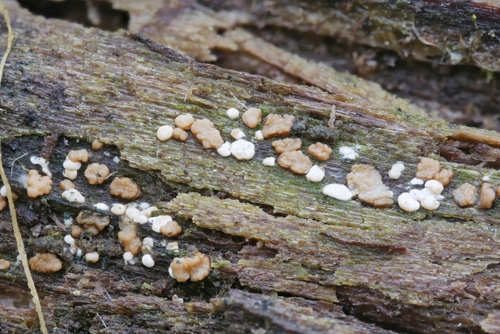
SR338 application significantly inhibited Trichoderma hamatum growth.
- Taxon
- Scrophularia ningpoensisScrophularia ningpoensist0
- Treatment
- SR338e0
- Interactor
- Trichoderma hamatum
 Trichoderma hamatume0pathogen
- Outcome
- growth of Trichoderma hamatume0
- Direction
- inhibitede0
Not reportedComparator
Organisms pictured · Representative pictures of the matched species, not figures from the paper.
Verbatim
e0“Application of either SR338 or 3-(4-hydroxyphenyl)-propionic acid significantly inhibited the growth of Trichoderma hamatum .”
t0“Scrophularia ningpoensis”
Claim · model-written summary
3-(4-hydroxyphenyl)-propionic acid application significantly inhibited Trichoderma hamatum growth.
- Taxon
- Scrophularia ningpoensisScrophularia ningpoensist0
- Treatment
- 3-(4-hydroxyphenyl)-propionic acide0
- Interactor
- Trichoderma hamatumTrichoderma hamatume0pathogen
- Outcome
- growth of Trichoderma hamatume0
- Direction
- inhibitede0
Not reportedComparator
Organisms pictured · Representative pictures of the matched species, not figures from the paper.
Verbatim
e0“Application of either SR338 or 3-(4-hydroxyphenyl)-propionic acid significantly inhibited the growth of Trichoderma hamatum .”
t0“Scrophularia ningpoensis”