View: List Claim type Research area Organism Taxon as written Decade Paper Intervention effect observed original result positive measured Claim · model-written summary
A suitable decrease in sowing density in creased panicle rate.
suitable decrease of sowing density e0 Not reported Comparator
Verbatim
e0 “suitable decrease of sowing density is beneficial to in crease panicle rate ”
✓ located verbatim in the source · abstract, characters 340–414 t0 “Early Rice ”
✓ located verbatim in the source · title, characters 63–73 Other claims from this paper (7) Intervention effect observed original result no effect measured Claim · model-written summary
Fumigation did not decrease purple nutsedge density .
purple nutsedge e0 weed purple nutsedge density e0 did not decrease e0 Not reported Comparator
Verbatim
t0 “Eggplant ”
✓ located verbatim in the source · title, characters 91–99 e0 “Fumigation and fomesafen did not decrease purple nutsedge density ”
✓ located verbatim in the source · abstract, characters 1293–1358 Other claims from this paper (9) Intervention effect observed original result no effect measured Claim · model-written summary
Fomesafen did not decrease purple nutsedge density .
purple nutsedge e0 weed purple nutsedge density e0 did not decrease e0 Not reported Comparator
Verbatim
t0 “Eggplant ”
✓ located verbatim in the source · title, characters 91–99 e0 “Fumigation and fomesafen did not decrease purple nutsedge density ”
✓ located verbatim in the source · abstract, characters 1293–1358 Other claims from this paper (9) Intervention effect observed original result measured Claim · model-written summary
Soil treatments had the slowest density decrease in the 1999 planting.
soil treatments e0 slowest decrease e0 Not reported Comparator
Verbatim
e0 “highest in itial emergence and slowest decrease in density occurring in soil treatments ”
✓ located verbatim in the source · abstract, characters 1276–1362 e1 “Disturbance only affected the 1999 planting ”
✓ located verbatim in the source · abstract, characters 1226–1269 e2 “measured forage kochia density ”
✓ located verbatim in the source · abstract, characters 703–733 Other claims from this paper (10) Intervention effect observed original result no effect not significant (as stated) measured Claim · model-written summary
In creasing orchard density did not significantly decrease yield.
increasing the density e0 does not decrease e0 Not reported Comparator
Verbatim
t0 “SOUR CHERRY ”
✓ located verbatim in the source · title, characters 80–91 e0 “in creasing the density in the orchard, the yield does not decrease significantly ”
✓ located verbatim in the source · abstract, characters 1858–1938 Other claims from this paper (13) Intervention effect observed original result positive measured Claim · model-written summary
Both application timings caused a similar decrease in subsequent pest population density .
pest population density e0 Not reported Treatment Comparator
Verbatim
e0 “leading to a similar decrease in pest population density in the following year ”
✓ located verbatim in the source · abstract, characters 812–890 t0 “cork oak forests ”
✓ located verbatim in the source · title, characters 109–125 Other claims from this paper (4) Intervention effect observed original result no effect not significant (as stated) measured Claim · model-written summary
At low versus high sowing density , grain yield in modern wheat cultivars did not decrease significantly.
modern cultivars e0 low sowing density e0 did not decrease e0 high sowing density e0 Verbatim
e0 “Compared to high sowing density , in modern cultivars grain yield did not decrease significantly with low sowing density ”
✓ located verbatim in the source · abstract, characters 905–1024 t0 “common wheat ”
✓ located verbatim in the source · title, characters 73–85 Other claims from this paper (8) Intervention effect observed original result negative measured Claim · model-written summary
Simazine caused moderate in jury to ball clover and small hop clover, with more than 32% decrease in leaf density .
ball clover and small hop clover e1 Not reported Comparator
Verbatim
e1 “yet moderate in jury to ball clover and small hop clover was observed (> 32% decrease in leaf density and > 27% decrease in flower density ) ”
✓ located verbatim in the source · abstract, characters 764–902 e2 “Simazine was well tolerated by white clover ”
✓ located verbatim in the source · abstract, characters 677–720 Other claims from this paper (12) Intervention effect Bentazon was moderately tolerated by the three Trifolium species, with less than 35% decrease in leaf density, height or flowering. Intervention effect Simazine was well tolerated by white clover, with less than 5% decrease in all response variables. Intervention effect Simazine caused moderate injury to ball clover and small hop clover, with more than 27% decrease in flower density. Intervention effect Pronamide was well tolerated by white and ball clovers, with no effect on the measured response variables. Intervention effect Pronamide decreased small hop clover height and flower density by 38 and 42%, respectively. Intervention effect Imazethapyr was moderately well tolerated by white clover and small hop clover, with less than 39% decrease in all response variables. Intervention effect Imazamox was moderately well tolerated by white clover and small hop clover, with less than 39% decrease in all response variables. Intervention effect Ball clover may be more susceptible to imazethapyr and imazamox than anticipated from previously reported tolerance. Intervention effect The herbicides 2,4-DB, halosulfuron and metribuzin were well tolerated by white clover, with no effect on the measured response variables. Intervention effect Results suggest that ball and small hop clovers are less tolerant to 2,4-DB, halosulfuron and metribuzin. Intervention effect Clopyralid, 2,4-D, glyphosate, imazaquin, metsulfuron-methyl and nicosulfuron caused varying degrees of injury across clover species and response variables. Recommendation These herbicides may not be viable options for maintaining any of the three clover species tested. Intervention effect observed original result negative measured Claim · model-written summary
Simazine caused moderate in jury to ball clover and small hop clover, with more than 27% decrease in flower density .
ball clover and small hop clover e1 Not reported Comparator
Verbatim
e1 “yet moderate in jury to ball clover and small hop clover was observed (> 32% decrease in leaf density and > 27% decrease in flower density ) ”
✓ located verbatim in the source · abstract, characters 764–902 e2 “Simazine was well tolerated by white clover ”
✓ located verbatim in the source · abstract, characters 677–720 Other claims from this paper (12) Intervention effect Bentazon was moderately tolerated by the three Trifolium species, with less than 35% decrease in leaf density, height or flowering. Intervention effect Simazine was well tolerated by white clover, with less than 5% decrease in all response variables. Intervention effect Simazine caused moderate injury to ball clover and small hop clover, with more than 32% decrease in leaf density. Intervention effect Pronamide was well tolerated by white and ball clovers, with no effect on the measured response variables. Intervention effect Pronamide decreased small hop clover height and flower density by 38 and 42%, respectively. Intervention effect Imazethapyr was moderately well tolerated by white clover and small hop clover, with less than 39% decrease in all response variables. Intervention effect Imazamox was moderately well tolerated by white clover and small hop clover, with less than 39% decrease in all response variables. Intervention effect Ball clover may be more susceptible to imazethapyr and imazamox than anticipated from previously reported tolerance. Intervention effect The herbicides 2,4-DB, halosulfuron and metribuzin were well tolerated by white clover, with no effect on the measured response variables. Intervention effect Results suggest that ball and small hop clovers are less tolerant to 2,4-DB, halosulfuron and metribuzin. Intervention effect Clopyralid, 2,4-D, glyphosate, imazaquin, metsulfuron-methyl and nicosulfuron caused varying degrees of injury across clover species and response variables. Recommendation These herbicides may not be viable options for maintaining any of the three clover species tested. Intervention effect observed original result positive measured Claim · model-written summary
Bentazon was moderately tolerated by the three Trifolium species, with less than 35% decrease in leaf density , height or flowering.
leaf density, height, or flowering e1 Not reported Comparator
Verbatim
e1 “The three Trifolium spp. were moderately tolerant of bentazon (< 35% decrease in leaf density , height, or flowering) ”
✓ located verbatim in the source · abstract, characters 559–675 Other claims from this paper (12) Intervention effect Simazine was well tolerated by white clover, with less than 5% decrease in all response variables. Intervention effect Simazine caused moderate injury to ball clover and small hop clover, with more than 32% decrease in leaf density. Intervention effect Simazine caused moderate injury to ball clover and small hop clover, with more than 27% decrease in flower density. Intervention effect Pronamide was well tolerated by white and ball clovers, with no effect on the measured response variables. Intervention effect Pronamide decreased small hop clover height and flower density by 38 and 42%, respectively. Intervention effect Imazethapyr was moderately well tolerated by white clover and small hop clover, with less than 39% decrease in all response variables. Intervention effect Imazamox was moderately well tolerated by white clover and small hop clover, with less than 39% decrease in all response variables. Intervention effect Ball clover may be more susceptible to imazethapyr and imazamox than anticipated from previously reported tolerance. Intervention effect The herbicides 2,4-DB, halosulfuron and metribuzin were well tolerated by white clover, with no effect on the measured response variables. Intervention effect Results suggest that ball and small hop clovers are less tolerant to 2,4-DB, halosulfuron and metribuzin. Intervention effect Clopyralid, 2,4-D, glyphosate, imazaquin, metsulfuron-methyl and nicosulfuron caused varying degrees of injury across clover species and response variables. Recommendation These herbicides may not be viable options for maintaining any of the three clover species tested. Lexical search (BM25). All words must match; if nothing does, any word. Organism names also match every spelling of the same organism. No semantic search yet.
 Solanum melongena
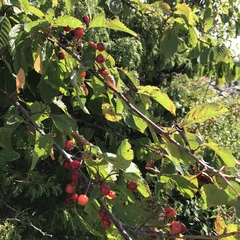 Prunus cerasus
 Quercus suber
 Triticum aestivum
 Trifolium