View: List Claim type Research area Organism Taxon as written Decade Paper Observation observed original result measured Claim · model-written summary
Its basic chromosome number was 11.
basic number of chromosomes e0 Verbatim
e0 “the basic number of chromosomes was 11 ”
✓ located verbatim in the source · abstract, characters 383–421 t0 “Rheum palmatum
✓ located verbatim in the source · title, characters 22–36 Other claims from this paper (5) Observation observed original result measured Claim · model-written summary
L. tuberiferum had basic chromosome number x=16.
basic chromosome number e0 Verbatim
e0 “L. tuberiferum had a basic chromosome number of x = 16 ”
✓ located verbatim in the source · abstract, characters 608–662 Other claims from this paper (10) Observation observed original result measured Claim · model-written summary
L. humile had basic chromosome number x=17.
basic chromosome number e0 Verbatim
e0 “L. humile had a basic chromosome number of x = 17 ”
✓ located verbatim in the source · abstract, characters 668–717 Other claims from this paper (10) Observation observed original result measured Claim · model-written summary
The basic chromosome number is x=13.
basic chromosome number e0 Not reported Taxon
Verbatim
e0 “its basic chromosome number is x=13 ”
✓ located verbatim in the source · abstract, characters 183–218 Other claims from this paper (3) Observation observed original result measured Claim · model-written summary
The basic chromosome number is x=9.
Verbatim
e0 “basic number is x=9 ”
✓ located verbatim in the source · abstract, characters 122–141 t0 “Caryopteris paniculata
✓ located verbatim in the source · title, characters 24–46 Other claims from this paper (5) Observation observed original result measured Claim · model-written summary
Its basic chromosome number is 13.
basic chromosome number e0 Verbatim
e0 “its basic chromosome number is 13 ”
✓ located verbatim in the source · abstract, characters 195–228 e1 “Crateva unilocularis
✓ located verbatim in the source · abstract, characters 44–64 Other claims from this paper (3) Method / resource observed original result simulated Claim · model-written summary
The model derived a basic reproduction number for coffee berry disease.
basic reproduction number e0 Not reported Comparator Value
Verbatim
e0 “We derived the basic reproduction number ”
✓ located verbatim in the source · abstract, characters 371–411 t0 “Coffee ”
✓ located verbatim in the source · title, characters 40–46 Other claims from this paper (1) Observation observed original result measured Claim · model-written summary
The basic chromosome number was x = 8.
basic chromosome number e0 Verbatim
e0 “The basic chromosome number of species is determined as x = 8 ”
✓ located verbatim in the source · abstract, characters 220–281 t0 “Astragalus stenosemioides
✓ located verbatim in the source · title, characters 22–47 Other claims from this paper (4) Observation observed original result measured Claim · model-written summary
The genus basic chromosome number was x = 15.
Verbatim
t0 “Dianthus
✓ located verbatim in the source · title, characters 24–32 e0 “The basic number is x = 15 according to the all chromosomal reports ”
✓ located verbatim in the source · abstract, characters 871–938 Other claims from this paper (4) Observation observed original result measured Claim · model-written summary
The basic chromosome number was seven.
basic chromosome number e0 Verbatim
e0 “The basic chromosome number was seven ”
✓ located verbatim in the source · abstract, characters 417–454 e1 “Rubus germplasm
✓ located verbatim in the source · abstract, characters 134–149 Other claims from this paper (4) Observation observed original result measured Claim · model-written summary
Basic chromosome number 11 predominates in the studied Primula species.
Verbatim
e0 “The basic number 11 is predominating in this genus studied. ”
✓ located verbatim in the source · abstract, characters 854–913 t0 “Primula
✓ located verbatim in the source · title, characters 35–42 Other claims from this paper (13) Observation observed original result measured Claim · model-written summary
Ascopholis was assigned basic chromosome number x=5.
basic number of x=5 e0 Verbatim
e0 “Ascopholis, a monotypic genus falls under the series having the basic number of x=5. ”
✓ located verbatim in the source · abstract, characters 1083–1167 Other claims from this paper (10) Observation observed original result measured Claim · model-written summary
The basic number x = 15 is supported as the preponderant basic number in Commelina .
preponderance of the basic number e7 Verbatim
e7 “The preponderance of the basic number x = 15 in Commelina is supported ”
✓ located verbatim in the source · abstract, characters 608–678 Other claims from this paper (9) Observation observed original result measured Claim · model-written summary
Peperomia has a basic chromosome number of 11.
Verbatim
e1 “rubella.11 is the basic number for Peperomia and 12 for Piper ”
✓ located verbatim in the source · abstract, characters 259–320 Other claims from this paper (7) Observation observed original result measured Claim · model-written summary
Piper has a basic chromosome number of 12.
Verbatim
e1 “rubella.11 is the basic number for Peperomia and 12 for Piper ”
✓ located verbatim in the source · abstract, characters 259–320 Other claims from this paper (7) Observation observed original result measured Claim · model-written summary
The basic chromosome number of Celosia is nine.
basic chromosome number e0 Verbatim
e0 “The basic chromosome number for the genus has been determined as nine. ”
✓ located verbatim in the source · abstract, characters 370–440 t0 “SPECIATION AND BASIC CHROMOSOME NUMBER IN THE GENUS CELOSIA ”
✓ located verbatim in the source · title, characters 0–59 Other claims from this paper (4) Observation observed original result measured Claim · model-written summary
The basic chromosome number in Hymenoxys is x = 15.
basic chromosome number e3 Not reported Material Gene Compound Organ / stage Treatment Comparator Setting Direction Qualifier
Verbatim
e3 “The basic chromosome number in Hymenoxys is x = 15 ”
✓ located verbatim in the source · abstract, characters 1055–1105 Other claims from this paper (4) Observation observed original result measured Claim · model-written summary
The basic chromosome number in Phoradendron is 14.
Verbatim
e0 “The basic number is 14 in Phoradendron ”
✓ located verbatim in the source · abstract, characters 88–126 Other claims from this paper (9) Observation author interpretation original result basis n/a Claim · model-written summary
The authors suggest 7 as the ancestral Araceae basic chromosome number .
ancestral basic number e0 Not reported Taxon
Verbatim
e0 “The number 7 is suggested as the ancestral basic number of the family. ”
✓ located verbatim in the source · abstract, characters 1337–1407 Other claims from this paper (18) Observation observed original result measured Claim · model-written summary
H. boreale has basic chromosome number n=8.
basic chromosome number e0 Verbatim
e0 “The basic chromosome number of H. boreale is n=8 ”
✓ located verbatim in the source · abstract, characters 619–667 Other claims from this paper (11) Observation observed original result measured Claim · model-written summary
Neither family has an evident basic chromosome number .
Not reported Taxon
Verbatim
e0 “No basic number is presently evident for either family as a whole. ”
✓ located verbatim in the source · abstract, characters 109–175 Other claims from this paper (15) Observation observed original result measured Claim · model-written summary
Dampiera and Brunonia have a basic chromosome number of 9.
Verbatim
e0 “Dampiera and Brunonia show a basic number of 9 ”
✓ located verbatim in the source · abstract, characters 96–142 Other claims from this paper (3) Observation author interpretation original result measured Claim · model-written summary
The basic chromosome number of Lepturus was tentatively inferred as nine.
basic chromosome number e0 Verbatim
e0 “The basic chromosome number of Lepturus may be 9 ”
✓ located verbatim in the source · abstract, characters 156–204 Other claims from this paper (6) Observation observed original result measured Claim · model-written summary
A reported Geissorhiza species has a basic chromosome number of 13.
Verbatim
e0 “One species in the genus Geissorhiza reported here has a basic number of 13. ”
✓ located verbatim in the source · abstract, characters 395–471 Other claims from this paper (3) Observation author interpretation original result measured Claim · model-written summary
Seven is suggested as the primary basic number .
primary basic number e0 Not reported Taxon
Verbatim
e0 “the number seven is likely to be the primary basic number ”
✓ located verbatim in the source · abstract, characters 515–572 Other claims from this paper (6) Observation observed original result measured Claim · model-written summary
The basic number based on maximum association is seven.
Not reported Taxon
Verbatim
e0 “the basic number based upon maximum association is seven ”
✓ located verbatim in the source · abstract, characters 127–183 Other claims from this paper (6) Observation author interpretation original result measured Claim · model-written summary
The basic chromosome number in Antennaria was probably seven.
basic chromosome number e0 Verbatim
e0 “The basic chromosome number in Antennaria is probably n = 7. ”
✓ located verbatim in the source · abstract, characters 699–759 Other claims from this paper (8) Observation author interpretation original result measured Claim · model-written summary
The probable basic chromosome number in Alisma is 7.
Basic chromosome numbers e0 Verbatim
e0 “Basic chromosome number s are probably 7 in Alisma ”
✓ located verbatim in the source · abstract, characters 593–642 Other claims from this paper (8) Observation author interpretation original result measured Claim · model-written summary
Basic chromosome number or karyotype alone did not resolve an exact palm phylogenetic line.
phylogenetic line e0 basic number or karyotype e0 Not reported Taxon
Verbatim
e0 “an exact phylogenetic line can not be drawn simply by the basic number or karyotype ”
✓ located verbatim in the source · abstract, characters 259–342 Other claims from this paper (5) Observation author interpretation original result measured Claim · model-written summary
The basic chromosome number of Brodiaea is suggested to be 6.
Verbatim
t0 “Cytological and Taxonomic Studies in the Genus Brodiaea ”
✓ located verbatim in the source · title, characters 0–55 e4 “It is suggested that the basic number for Brodiaea is 6, and for Dichelostemma the secondarily basic number 9, derived from 6 ”
✓ located verbatim in the source · abstract, characters 457–582 Other claims from this paper (8) Lexical search (BM25). All words must match; if nothing does, any word. Organism names also match every spelling of the same organism. No semantic search yet.
 Rheum palmatumt0
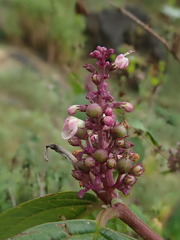 Pseudocaryopteris paniculata
 Crateva unilocularis
 Coffea
 Dianthus
 Rubus
 Primula
 Commelina
 Peperomia
 Piper
 Hymenoxys
 Phoradendron
 Hedysarum boreale
 Dampiera
 Lepturus
 Geissorhiza
 Antennaria
 Alisma
 Brodiaea