View: List Claim type Research area Organism Taxon as written Decade Paper Observation observed original result measured Claim · model-written summary
The basic number x = 15 is supported as the preponderant basic number in Commelina .
preponderance of the basic number e7 Verbatim
e7 “The preponderance of the basic number x = 15 in Commelina is supported ”
✓ located verbatim in the source · abstract, characters 608–678 Other claims from this paper (9) Observation observed original result measured Claim · model-written summary
The basic chromosome number is x=13.
basic chromosome number e0 Not reported Taxon
Verbatim
e0 “its basic chromosome number is x=13 ”
✓ located verbatim in the source · abstract, characters 183–218 Other claims from this paper (3) Observation author interpretation original result measured Claim · model-written summary
Seven is suggested as the primary basic number .
primary basic number e0 Not reported Taxon
Verbatim
e0 “the number seven is likely to be the primary basic number ”
✓ located verbatim in the source · abstract, characters 515–572 Other claims from this paper (6) Observation observed original result measured Claim · model-written summary
The basic chromosome number of Celosia is nine.
basic chromosome number e0 Verbatim
e0 “The basic chromosome number for the genus has been determined as nine. ”
✓ located verbatim in the source · abstract, characters 370–440 t0 “SPECIATION AND BASIC CHROMOSOME NUMBER IN THE GENUS CELOSIA ”
✓ located verbatim in the source · title, characters 0–59 Other claims from this paper (4) Observation observed original result measured Claim · model-written summary
The basic number based on maximum association is seven.
Not reported Taxon
Verbatim
e0 “the basic number based upon maximum association is seven ”
✓ located verbatim in the source · abstract, characters 127–183 Other claims from this paper (6) Observation observed original result measured Claim · model-written summary
The basic chromosome number is x=9.
Verbatim
e0 “basic number is x=9 ”
✓ located verbatim in the source · abstract, characters 122–141 t0 “Caryopteris paniculata
✓ located verbatim in the source · title, characters 24–46 Other claims from this paper (5) Observation observed original result measured Claim · model-written summary
Its basic chromosome number was 11.
basic number of chromosomes e0 Verbatim
e0 “the basic number of chromosomes was 11 ”
✓ located verbatim in the source · abstract, characters 383–421 t0 “Rheum palmatum
✓ located verbatim in the source · title, characters 22–36 Other claims from this paper (5) Observation observed original result measured Claim · model-written summary
Its basic chromosome number is 13.
basic chromosome number e0 Verbatim
e0 “its basic chromosome number is 13 ”
✓ located verbatim in the source · abstract, characters 195–228 e1 “Crateva unilocularis
✓ located verbatim in the source · abstract, characters 44–64 Other claims from this paper (3) Observation observed original result measured Claim · model-written summary
L. tuberiferum had basic chromosome number x=16.
basic chromosome number e0 Verbatim
e0 “L. tuberiferum had a basic chromosome number of x = 16 ”
✓ located verbatim in the source · abstract, characters 608–662 Other claims from this paper (10) Observation observed original result measured Claim · model-written summary
L. humile had basic chromosome number x=17.
basic chromosome number e0 Verbatim
e0 “L. humile had a basic chromosome number of x = 17 ”
✓ located verbatim in the source · abstract, characters 668–717 Other claims from this paper (10) Lexical search (BM25). All words must match; if nothing does, any word. Organism names also match every spelling of the same organism. No semantic search yet.
 Commelina
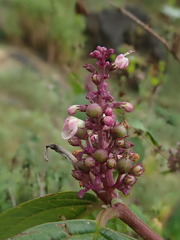 Pseudocaryopteris paniculata
 Rheum palmatum
 Crateva unilocularis