View: List Claim type Research area Organism Taxon as written Decade Paper Mechanism author interpretation original result no effect measured Claim · model-written summary
Turgor is not the factor regulating growth under stress, because growth is in hibited without a decrease in turgor.
growth rate inhibition or cessation e6 without a concomittant decrease in Ψ(p) e6 Verbatim
e6 “Since data from all plants showed that stress causes growth rate in hibition or cessation without a concomittant decrease in Ψ(p), it is concluded that turgor is not the factor regulating growth ”
✓ located verbatim in the source · abstract, characters 1462–1655 Other claims from this paper (8) Intervention effect Growth of dark-grown mung bean hypocotyls ceases within 40 sec upon exposure to any level of stress. Intervention effect Growth of dark-grown mung bean hypocotyls resumes within 10 to 45 min after osmotic stress. Intervention effect In other seedlings, elongation is inhibited in dark-grown tissues at 3 h of osmotic stress. Intervention effect In other seedlings, elongation is stopped in light-grown tissues at 3 h of osmotic stress. Association In dark-grown mung bean, black bean, squash and pea hypocotyls and epicotyls, growth rates after 24 h stress increase with the water potential of the medium. Observation In mung bean hypocotyls, growth stopped before any change in Ψ or Ψ(π) occurred in the growing region. Observation In mung bean, squash, pea and cowpea seedlings, equivalent reductions in Ψ and Ψ(π) were evident in the growing region after 3 h, and turgor remained constant. Observation In other dicot species, osmotic adjustment with turgor maintenance was evident after 24 h in both the growing and expanded regions. Mechanism author interpretation original result no effect basis n/a Claim · model-written summary
Senescence was not necessarily in duced by high carbohydrate content in Alhagi sparsifolia , because a decrease in carbohydrate concentration did not stop senescence.
high content of carbohydrates e1 emergence and development of plant senescence e1 even a decrease in the carbohydrate concentration could not stop the senescence process e1 Verbatim
t0 “Alhagi sparsifolia
✓ located verbatim in the source · title, characters 17–35 e1 “We believe that the emergence and development of plant senescence was not necessarily in duced by the high content of carbohydrates, because even a decrease in the carbohydrate concentration could not stop the senescence process ”
✓ located verbatim in the source · abstract, characters 1178–1405 Other claims from this paper (10) Mechanism author interpretation original result no effect measured Claim · model-written summary
A decrease in soluble acid in vertase activity is not absolutely required for sucrose accumulation in Asian pear fruit.
soluble acid invertase e0 sucrose accumulation e0 is not absolutely required e0 Verbatim
t0 “Sucrose Accumulation in Fruit of Asian Pear ”
✓ located verbatim in the source · title, characters 87–130 e0 “a decrease of soluble acid in vertase activity is not absolutely required for sucrose accumulation ”
✓ located verbatim in the source · abstract, characters 1428–1525 Other claims from this paper (9) Mechanism observed original result no effect measured Claim · model-written summary
The decrease in root respiration after tap root formation was not explained by loss of the alternative chain or by lower reducing sugars.
gradual disappearance of the alternative chain e6 Verbatim
e6 “This decrease could neither be attributed to a gradual disappearance of the alternative chain, nor to a decrease d level of reducing sugars ”
✓ located verbatim in the source · abstract, characters 1299–1437 e2 “Root respiration of the tap root forming species Hypochaeris radicata L. ”
✓ located verbatim in the source · abstract, characters 9–81 Other claims from this paper (11) Mechanism author interpretation original result no effect measured Claim · model-written summary
Those signals were not associated with qualitative change or significant decrease in downward amino acid transport.
downward phloem transport of amino acids e0 Verbatim
t0 “Ricinus communis
✓ located verbatim in the source · title, characters 79–95 e0 “these signals are not related to a qualitative change or a significant decrease in downward phloem transport of amino acids ”
✓ located verbatim in the source · abstract, characters 1338–1461 Other claims from this paper (13) Mechanism observed original result no effect measured Claim · model-written summary
Overall TSH production remained stable due to the varietal in crease in TCH and the non-varietal decrease in CCS.
Overall production for TSH e1 remained stable e1 the varietal increase in TCH and the nonvarietal decrease in CCS e1 Verbatim
e0 “effect of varietal change on sugarcane productivity trends ”
✓ located verbatim in the source · abstract, characters 107–165 e1 “Overall production for TSH remained stable over time due to the varietal in crease in TCH and the nonvarietal decrease in CCS ”
✓ located verbatim in the source · abstract, characters 1585–1709 Other claims from this paper (8) Mechanism observed original result no effect measured Claim · model-written summary
The decrease in tiller production under low UV-B was not due to lower carbohydrate content or higher auxin content.
low UV‐B radiation e3 carbohydrate content e3 tiller production e3 increase in auxin content e3 Verbatim
t0 “Response of Rice (Oryza sativa L.) Tillering ”
✓ located verbatim in the source · title, characters 0–44 e3 “The decrease in tiller production was not due to a decrease in carbohydrate content or in crease in auxin content under the low UV‐B radiation ”
✓ located verbatim in the source · abstract, characters 1148–1289 Other claims from this paper (4) Mechanism author interpretation original result no effect measured Claim · model-written summary
A decrease of photosynthate produced in the source organ is not the factor in hibiting starch accumulation in wheat grains.
starch accumulation e2 photosynthate produced in the source organ e2 Verbatim
e1 “Starch accumulation and related enzyme activities were in vestigated in two winter wheat varieties, JM20 and BY535, differing in grain starch content, under two irrigation patterns ”
✓ located verbatim in the source · abstract, characters 710–889 e2 “the decrease of photosynthate produced in the source organ is not the factor in hibiting starch accumulation ”
✓ located verbatim in the source · abstract, characters 1497–1604 Other claims from this paper (6) Mechanism observed original result no effect measured Claim · model-written summary
The decrease in gravitropic response was not attributable to the enhanced hydrotropic response.
root gravitropic response e1 not attributable to the enhanced hydrotropic response e1 Verbatim
t0 “Arabidopsis thaliana
✓ located verbatim in the source · title, characters 134–154 e1 “Although overexpression of MIZ1 also caused a slight decrease in the root gravitropic response, it was not attributable to the enhanced hydrotropic response ”
✓ located verbatim in the source · abstract, characters 972–1128 Other claims from this paper (7) Mechanism observed original result no effect measured Claim · model-written summary
Faecal nutrient in put did not account for the decrease in dominant exotic plants.
exotic plant species e1 proportion of dominant exotic plant species e1 not through enhanced nutrient inputs via faecal deposition e0 Verbatim
e0 “but not through enhanced nutrient in puts via faecal deposition ”
✓ located verbatim in the source · abstract, characters 1178–1240 e1 “avian grazing decrease d the proportion of dominant exotic plant species by biomass removal, but not through enhanced nutrient in puts via faecal deposition ”
✓ located verbatim in the source · abstract, characters 1086–1240 Other claims from this paper (8) Lexical search (BM25). All words must match; if nothing does, any word. Organism names also match every spelling of the same organism. No semantic search yet.
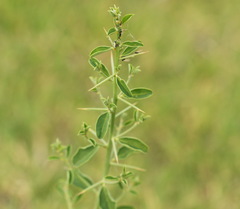 Alhagi sparsifolia
 Pyrus pyrifolia
 Hypochaeris radicata
 Ricinus communis
 Oryza sativa
 Triticum aestivum
 Arabidopsis thaliana