View: List Claim type Research area Organism Taxon as written Decade Paper Association observed original result positive measured Claim · model-written summary
Bracts and capsule wall showed less ontogenetic decrease in RuBPC activity (per dry weight ) than leaves at various days after anthesis.
bracts and capsule wall e3 less ontogenetic decrease e3 per dry weight e3 Verbatim
t0 “The Relative Contribution of Non-Foliar Organs of Cotton to Yield and Related Physiological Characteristics Under Water Deficit ”
✓ located verbatim in the source · title, characters 0–127 e3 “Non-foliar organs (bracts and capsule wall) showed less ontogenetic decrease in O2 evolution capacity and in RuBPC activity (per dry weight ) as well as better antioxidant systems than leaves at various days after anthesis ”
✓ located verbatim in the source · abstract, characters 900–1121 Other claims from this paper (6) Intervention effect observed original result positive measured Claim · model-written summary
Cultivar RY2 showed lower relative decrease rates of growth parameters than RY5 under low-P stress, especially for shoot and root dry weight .
relative decrease rates of growth parameters e2 especially for the reduction of shoot and root dry weight e2 Verbatim
e1 “Stylosanthes guianensis (stylo) is an important tropical legume
✓ located verbatim in the source · abstract, characters 187–250 e2 “lower values of relative decrease rates of growth parameters than RY5 at low-P stress, especially for the reduction of shoot and root dry weight ”
✓ located verbatim in the source · abstract, characters 611–755 e3 “cultivar RY2 was better adapted to Pi starvation than RY5 ”
✓ located verbatim in the source · abstract, characters 536–593 Other claims from this paper (10) Intervention effect observed original result positive measured Claim · model-written summary
Vegetative-stage rye residue reduced pigweed dry weight by 30.06%.
pigweed dry weight e0 Verbatim
e0 “Decrease in pigweed dry weight by adding vegetative, inflorescence, seedbulking stage residuals was 30.06, 37.87, and 35.70%, respectively, in comparison with control ”
✓ located verbatim in the source · abstract, characters 953–1119 Other claims from this paper (18) Intervention effect Rye residues significantly decreased pigweed height, leaf area and leaf number. Intervention effect Rye residues significantly decreased pigweed root length and root and shoot dry weight. Intervention effect Rye residues significantly decreased pigweed kernel weight and seed yield. Intervention effect At 50 g.m-2 rye residue, pigweed plant height fell 31.49% versus control. Intervention effect At 50 g.m-2 rye residue, pigweed leaf area fell 23.79% versus control. Intervention effect At 50 g.m-2 rye residue, pigweed shoot dry weight fell 12.92% versus control. Intervention effect At 50 g.m-2 rye residue, pigweed total kernel weight fell 41.02% versus control. Intervention effect At 50 g.m-2 rye residue, pigweed seed yield fell 11.58% versus control. Intervention effect At 200 g.m-2 rye residue, pigweed plant height reduction reached 76.32%. Intervention effect At 200 g.m-2 rye residue, pigweed leaf area reduction reached 128.74%. Intervention effect At 200 g.m-2 rye residue, pigweed shoot dry weight reduction reached 68.80%. Intervention effect At 200 g.m-2 rye residue, pigweed total kernel weight reduction reached 70.32%. Intervention effect At 200 g.m-2 rye residue, pigweed seed yield reduction reached 67.43%. Intervention effect Inflorescence-stage rye residue reduced pigweed dry weight by 37.87%. Intervention effect Seed-bulking-stage rye residue reduced pigweed dry weight by 35.70%. Intervention effect Pigweed seed bank declined by 15 to 72% under rye residues. Intervention effect Rye leaf residue at inflorescence had the greatest reduction of most pigweed traits and seed bank. Recommendation Use of rye allelopathic potential was recommended to reduce field pigweed and herbicides. Intervention effect observed original result positive measured Claim · model-written summary
Inflorescence-stage rye residue reduced pigweed dry weight by 37.87%.
pigweed dry weight e0 Verbatim
e0 “Decrease in pigweed dry weight by adding vegetative, inflorescence, seedbulking stage residuals was 30.06, 37.87, and 35.70%, respectively, in comparison with control ”
✓ located verbatim in the source · abstract, characters 953–1119 Other claims from this paper (18) Intervention effect Rye residues significantly decreased pigweed height, leaf area and leaf number. Intervention effect Rye residues significantly decreased pigweed root length and root and shoot dry weight. Intervention effect Rye residues significantly decreased pigweed kernel weight and seed yield. Intervention effect At 50 g.m-2 rye residue, pigweed plant height fell 31.49% versus control. Intervention effect At 50 g.m-2 rye residue, pigweed leaf area fell 23.79% versus control. Intervention effect At 50 g.m-2 rye residue, pigweed shoot dry weight fell 12.92% versus control. Intervention effect At 50 g.m-2 rye residue, pigweed total kernel weight fell 41.02% versus control. Intervention effect At 50 g.m-2 rye residue, pigweed seed yield fell 11.58% versus control. Intervention effect At 200 g.m-2 rye residue, pigweed plant height reduction reached 76.32%. Intervention effect At 200 g.m-2 rye residue, pigweed leaf area reduction reached 128.74%. Intervention effect At 200 g.m-2 rye residue, pigweed shoot dry weight reduction reached 68.80%. Intervention effect At 200 g.m-2 rye residue, pigweed total kernel weight reduction reached 70.32%. Intervention effect At 200 g.m-2 rye residue, pigweed seed yield reduction reached 67.43%. Intervention effect Vegetative-stage rye residue reduced pigweed dry weight by 30.06%. Intervention effect Seed-bulking-stage rye residue reduced pigweed dry weight by 35.70%. Intervention effect Pigweed seed bank declined by 15 to 72% under rye residues. Intervention effect Rye leaf residue at inflorescence had the greatest reduction of most pigweed traits and seed bank. Recommendation Use of rye allelopathic potential was recommended to reduce field pigweed and herbicides. Association observed original result positive significant (as stated) measured Claim · model-written summary
Controlling weeds twice significantly decrease d weed density and dry weight .
controlling for twice time e4 weed density and dry weight e4 significant decrease e4 Verbatim
e4 “controlling for twice time gave a significant decrease in weed density and dry weight and increasing weed control percentage with a significant decreas in actual productivity of the equipment ”
✓ located verbatim in the source · abstract, characters 1068–1259 Other claims from this paper (9) Intervention effect observed original result positive significant (as stated) measured Claim · model-written summary
Chemical weeding reduced weed dry weight 7.9 ... 9.1 times without fertilizer.
chemical weeding e0 dry weight of weeds e0 unfertilized background e0 Not reported Comparator
Verbatim
t0 “MAIZE ”
✓ located verbatim in the source · title, characters 32–37 e0 “A significant decrease in the dry weight of weeds was established due to chemical weeding: against an unfertilized background by 7.9 ... 9.1 times ”
✓ located verbatim in the source · abstract, characters 1267–1413 Other claims from this paper (7) Recommendation author interpretation original result positive basis n/a Claim · model-written summary
The authors conclude that reducing peanut plant population gives the best dry weight , seed weight , and high average seed yield.
decrease plant population of peanut e0 Verbatim
e0 “It can be concluded that, decrease plant population of peanut gave the best means of dry weight plant, rate of seed weight and gave high average of peanut seed yield. ”
✓ located verbatim in the source · abstract, characters 1160–1326 Other claims from this paper (9) Association observed original result positive measured Claim · model-written summary
Blueberry plant height, shoot length, leaf dry weight and leaf area increased as soil pH decrease d.
decrease of soil pH e0 plant height,shoot length,dry weight of 100 leaves and leaf area e0 Not reported Taxon
Verbatim
e0 “The plant height,shoot length, dry weight of 100 leaves and leaf area increased with the decrease of soil pH. ”
✓ located verbatim in the source · abstract, characters 306–414 Other claims from this paper (2) Intervention effect observed original result positive measured Claim · model-written summary
Hand weeding maximally reduced weed population and dry weight in both rice cultures.
weed population and their dry weight e0 maximum decrease e0 Not reported Comparator
Verbatim
e0 “Under both transplanted and direct- seeded puddled rice cultures hand-weeding caused maximum decrease in weed population and their dry weight ”
✓ located verbatim in the source · abstract, characters 532–673 t0 “rice (Oryza sativa ) ”
✓ located verbatim in the source · title, characters 53–72 Other claims from this paper (14) Intervention effect observed original result positive measured Claim · model-written summary
Flooding with stem nodulation increased shoot dry weight regardless of rhizobial isolate.
Flooding (and stem-nodulation) e0 rhizobial isolate e0 symbiont shoot (and a decrease in root) dry weight e0 Not reported Comparator
Verbatim
e0 “Flooding (and stem-nodulation) resulted in an increase in shoot (and a decrease in root) dry weight , regardless of rhizobial isolate ”
✓ located verbatim in the source · abstract, characters 188–320 t0 “Aeschynomene fluminensis
✓ located verbatim in the source · title, characters 53–77 Other claims from this paper (19) Lexical search (BM25). All words must match; if nothing does, any word. Organism names also match every spelling of the same organism. No semantic search yet.
 Gossypium hirsutum
 Stylosanthes guianensis
 Zea mays
 Arachis hypogaea
 Oryza sativa
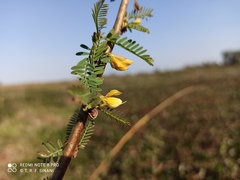 Aeschynomene fluminensis