Claim · model-written summary
Antibacterial testing against Acinetobacter baumannii showed significant efficacy, with MIC values as low as 0.056 mg/mL.
- Taxon
- C. canumCalophyllum canume1
- Organ / stage
- stem barke1
- Interactor
- Acinetobacter baumannii
 Acinetobacter baumanniie0other
- Outcome
- MIC valuese0
- Value
- 0.056 mg/mLe0
Verbatim
e0“Antibacterial testing against Acinetobacter baumannii revealed significant efficacy, with MIC values as low as 0.056 mg/mL”
e1“C. canum stem bark extracts”
Title
Mas Atikah Lizazman; Vivien Jong Yi Mian; Thiruventhan Karunakaran; et al. Chemistry & Biodiversity 2026. doi:10.1002/cbdv.202500773
Other claims from this paper (7)
- Observation The ethyl acetate extract of C. canum stem bark yielded known xanthones including 1-hydroxy-7-methoxyxanthone.
- Observation The ethyl acetate extract of C. canum stem bark yielded a novel compound, canumolactone.
- Observation The ethyl acetate extract had the highest total phenolic content (277.33 mg GAE/g).
- Observation The chloroform extract showed the highest total flavonoid content (139.56 mg QE/g).
- Observation The ethyl acetate extract exhibited the strongest antioxidant activity (IC50 = 7.52 µg/mL).
- Association Total phenolic content showed a strong negative correlation with DPPH scavenging activity (r = -0.968).
- Observation Molecular docking showed that gentisin had the highest binding energy against penicillin-binding proteins.
 Phaseolus vulgaris
 Acinetobacter
 Solanum lycopersicum
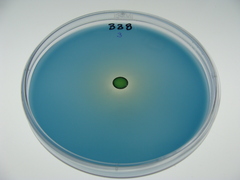 Acinetobacter calcoaceticus
 Cypripedium franchetii
 Agrobacterium
 Persea americana
 Pseudomonas
 Protomyces