Literal values, not normalised. 183,098 distinct spellings cover 1,706,259 claims; only letter case and spacing are merged, so “maize”, “corn” and “Zea mays L.” are three separate entries here. The By interacting organism view merges spellings of one organism through NCBI Taxonomy.
Observation observed original result measured Claim · model-written summary
A. citricidus was not detected.
A. citricidus was not detectede0 Verbatim
e0 “A. citricidus was not detected
✓ located verbatim in the source · abstract, characters 719–749 t0 “Aphid Species in Citrus Orchards ”
✓ located verbatim in the source · title, characters 0–32 Other claims from this paper (10) Observation observed original result measured Claim · model-written summary
A. citricidus was not detected in citrus orchards.
Not reported Direction
Verbatim
e0 “A. citricidus , the most efficient CTV vector, was not detected.
✓ located verbatim in the source · abstract, characters 787–850 t0 “Citrus
✓ located verbatim in the source · title, characters 0–6 Other claims from this paper (19) Intervention effect observed original result positive measured Claim · model-written summary
A. citricidus saliva decreased D. citri duration of the extracellular stylet pathway.
infiltration of A. citricidus saliva e0 duration of the extracellular stylet pathway e0 Not reported Comparator
Verbatim
e0 “By contrast, infiltration of A. citricidus saliva decreased the duration of the extracellular stylet pathway and phloem sap ingestion of D. citri . ”
✓ located verbatim in the source · abstract, characters 817–963 t0 “Two Citrus Aphid Species ”
✓ located verbatim in the source · title, characters 39–63 Other claims from this paper (7) Intervention effect observed original result positive measured Claim · model-written summary
A. citricidus saliva decreased D. citri phloem sap ingestion of D. citri .
infiltration of A. citricidus saliva e0 phloem sap ingestion of D. citri e0 Not reported Comparator
Verbatim
e0 “By contrast, infiltration of A. citricidus saliva decreased the duration of the extracellular stylet pathway and phloem sap ingestion of D. citri . ”
✓ located verbatim in the source · abstract, characters 817–963 t0 “Two Citrus Aphid Species ”
✓ located verbatim in the source · title, characters 39–63 Other claims from this paper (7) Intervention effect observed original result measured Claim · model-written summary
A. citricidus saliva activated two SA-pathway-related genes.
A. citricidus saliva infiltratione0 two SA-pathway-related genes e0 Not reported Comparator
Verbatim
e0 “However, two SA-pathway-related genes were activated and three JA-pathway-related genes were suppressed following A. citricidus saliva infiltration. ”
✓ located verbatim in the source · abstract, characters 1141–1289 t0 “Two Citrus Aphid Species ”
✓ located verbatim in the source · title, characters 39–63 Other claims from this paper (7) Intervention effect observed original result measured Claim · model-written summary
A. citricidus saliva suppressed three JA-pathway-related genes.
A. citricidus saliva infiltratione0 three JA-pathway-related genes e0 Not reported Comparator
Verbatim
e0 “However, two SA-pathway-related genes were activated and three JA-pathway-related genes were suppressed following A. citricidus saliva infiltration. ”
✓ located verbatim in the source · abstract, characters 1141–1289 t0 “Two Citrus Aphid Species ”
✓ located verbatim in the source · title, characters 39–63 Other claims from this paper (7) Intervention effect observed original result negative measured Claim · model-written summary
Feeding by Aphis spiraecola , but not Aphis citricidus , caused leaf curling on sweet orange.
feeding by A. spiraecola e1 A. citricidus e1 Not reported Direction
Verbatim
e0 “sweet orange, Citrus sinensis (L.) Osbeck (Rutaceae) ”
✓ located verbatim in the source · abstract, characters 328–380 e1 “feeding by A. spiraecola , but not A. citricidus , caused leaf curling, reduced shoot length, shoot fresh weight, and chlorophyll concentration ”
✓ located verbatim in the source · abstract, characters 671–814 Other claims from this paper (6) Intervention effect observed original result negative measured Claim · model-written summary
Feeding by Aphis spiraecola reduced shoot length, shoot fresh weight and chlorophyll concentration of sweet orange.
feeding by A. spiraecola e1 shoot length, shoot fresh weight, and chlorophyll concentration e1 A. citricidus e1 Verbatim
e0 “sweet orange, Citrus sinensis (L.) Osbeck (Rutaceae) ”
✓ located verbatim in the source · abstract, characters 328–380 e1 “feeding by A. spiraecola , but not A. citricidus , caused leaf curling, reduced shoot length, shoot fresh weight, and chlorophyll concentration ”
✓ located verbatim in the source · abstract, characters 671–814 Other claims from this paper (6) Intervention effect observed original result measured Claim · model-written summary
Feeding by Aphis spiraecola increased essential amino acid concentration in sweet orange leaves compared with uninfested control plants.
A. spiraecola feedinge2 concentration of essential amino acids e2 uninfested control plants e2 Verbatim
e0 “sweet orange, Citrus sinensis (L.) Osbeck (Rutaceae) ”
✓ located verbatim in the source · abstract, characters 328–380 e2 “A. spiraecola feeding increased the concentration of essential amino acids in leaves when compared with A. citricidus and uninfested control plants
✓ located verbatim in the source · abstract, characters 829–976 Other claims from this paper (6) Intervention effect observed original result measured Claim · model-written summary
Aphis citricidus gained faster access and acceptance of sweet orange phloem than Aphis spiraecola .
access and acceptance of phloem e3 A. spiraecola e3 Verbatim
e0 “sweet orange, Citrus sinensis (L.) Osbeck (Rutaceae) ”
✓ located verbatim in the source · abstract, characters 328–380 e3 “A. citricidus gained faster access and acceptance of phloem, and spent more time ingesting phloem sap, than A. spiraecola
✓ located verbatim in the source · abstract, characters 1027–1148 Other claims from this paper (6) 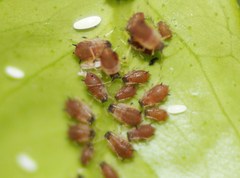 Aphis citriciduse0pest
 Citrus
 Diaphorina citri
 Aphis spiraecola