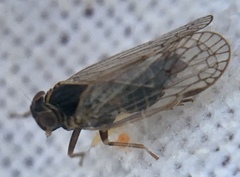
Cixiidae 36 claims

family · order Hemiptera · 7 taxa · NCBI Taxonomy ↗

7 entries

Observationobservedoriginal resultpositivemeasured

Claim · model-written summary

H. crudus acquired the phytoplasma from infected palm spear leaves after a 2-day access period.

Taxon
H. crudusHaplaxius cruduse0
Interactor
phytoplasmaCandidatus Phytoplasmae0pathogen
Outcome
acquisitions of the phytoplasmae0
Qualifier
2 days acquisition access periode0

Verbatim

t0

“Palm Spear Leaves”

✓ located verbatim in the source · title, characters 97–114
e0

“Successful acquisitions of the phytoplasma by H. crudus were observed at 2 days acquisition access period on LB-infected palm spear leaves.”

✓ located verbatim in the source · abstract, characters 546–685

Title

Acquisition and Transmission of the Lethal Bronzing Phytoplasma byHaplaxius crudusUsing Infected Palm Spear Leaves and Artificial Feeding Media

De-Fen Mou; Brandon Di Lella; Susan E. Halbert; et al. Phytopathology 2022. doi:10.1094/phyto-03-22-0079-r

Other claims from this paper (5)
Associationobservedoriginal resultmeasured

Claim · model-written summary

H. crudus phytoplasma infection rates increased with longer acquisition access periods.

Taxon
H. crudusHaplaxius cruduse0
Interactor
phytoplasmaCandidatus Phytoplasmae0pathogen
Outcome
phytoplasma infection ratese0
Direction
increasede0
Qualifier
longer acquisition access periodse0

Verbatim

e0

“Analyses revealed increased phytoplasma infection rates of H. crudus with longer acquisition access periods and latent periods.”

✓ located verbatim in the source · abstract, characters 686–813

Title

Acquisition and Transmission of the Lethal Bronzing Phytoplasma byHaplaxius crudusUsing Infected Palm Spear Leaves and Artificial Feeding Media

De-Fen Mou; Brandon Di Lella; Susan E. Halbert; et al. Phytopathology 2022. doi:10.1094/phyto-03-22-0079-r

Other claims from this paper (5)
Associationobservedoriginal resultmeasured

Claim · model-written summary

H. crudus phytoplasma infection rates increased with longer latent periods.

Taxon
H. crudusHaplaxius cruduse0
Interactor
phytoplasmaCandidatus Phytoplasmae0pathogen
Outcome
phytoplasma infection ratese0
Direction
increasede0
Qualifier
latent periodse0

Verbatim

e0

“Analyses revealed increased phytoplasma infection rates of H. crudus with longer acquisition access periods and latent periods.”

✓ located verbatim in the source · abstract, characters 686–813

Title

Acquisition and Transmission of the Lethal Bronzing Phytoplasma byHaplaxius crudusUsing Infected Palm Spear Leaves and Artificial Feeding Media

De-Fen Mou; Brandon Di Lella; Susan E. Halbert; et al. Phytopathology 2022. doi:10.1094/phyto-03-22-0079-r

Other claims from this paper (5)
Observationobservedoriginal resultsignificant (as stated)measured

Claim · model-written summary

H. crudus phytoplasma infection rates after acquisition and latent periods were significantly higher than those of field-collected H. crudus.

Taxon
H. crudusHaplaxius cruduse0
Interactor
phytoplasmaCandidatus Phytoplasmae0pathogen
Outcome
phytoplasma infection ratee0
Direction
highere0
Comparator
field-collected H. crudus populatione0

Verbatim

e0

“A significantly higher phytoplasma infection rate was shown after various acquisition access periods and latent periods than the infection rate of the field-collected H. crudus population.”

✓ located verbatim in the source · abstract, characters 814–1002

Title

Acquisition and Transmission of the Lethal Bronzing Phytoplasma byHaplaxius crudusUsing Infected Palm Spear Leaves and Artificial Feeding Media

De-Fen Mou; Brandon Di Lella; Susan E. Halbert; et al. Phytopathology 2022. doi:10.1094/phyto-03-22-0079-r

Other claims from this paper (5)
Observationobservedoriginal resultpositivemeasured

Claim · model-written summary

H. crudus transmitted phytoplasma from infected spear leaves to sucrose media.

Taxon
H. crudusHaplaxius cruduse0
Interactor
phytoplasmaCandidatus Phytoplasmae0pathogen
Outcome
Transmission of the phytoplasmae0
Qualifier
from LB-infected spear leaves to sucrose mediae0

Verbatim

e0

“Transmission of the phytoplasma from LB-infected spear leaves to sucrose media by H. crudus also was observed using digital PCR assays.”

✓ located verbatim in the source · abstract, characters 1003–1138

Title

Acquisition and Transmission of the Lethal Bronzing Phytoplasma byHaplaxius crudusUsing Infected Palm Spear Leaves and Artificial Feeding Media

De-Fen Mou; Brandon Di Lella; Susan E. Halbert; et al. Phytopathology 2022. doi:10.1094/phyto-03-22-0079-r

Other claims from this paper (5)
Observationauthor interpretationoriginal resultmeasured

Claim · model-written summary

The results support H. crudus as a vector of lethal bronzing phytoplasma.

Taxon
H. crudusHaplaxius cruduse0
Outcome
vector statuse0

Verbatim

e0

“These results further support the vector status of H. crudus”

✓ located verbatim in the source · abstract, characters 1139–1199

Title

Acquisition and Transmission of the Lethal Bronzing Phytoplasma byHaplaxius crudusUsing Infected Palm Spear Leaves and Artificial Feeding Media

De-Fen Mou; Brandon Di Lella; Susan E. Halbert; et al. Phytopathology 2022. doi:10.1094/phyto-03-22-0079-r

Other claims from this paper (5)
Observationobservedoriginal resultmeasured

Claim · model-written summary

Hyalesthes obsoletus was confirmed as the main BN vector, averaging 43.8% phytoplasma-positive individuals.

Taxon
Hyalesthes obsoletusHyalesthes obsoletuse0
Interactor
phytoplasmaCandidatus Phytoplasmae0pathogen
Outcome
phytoplasma positive individualse0
Value
43.8%e0
Qualifier
main BN vectore0

Not reportedDirection

Verbatim

e0

“The nested polymerase chain reaction-restriction fragment length polymorphism analyses confirmed Hyalesthes obsoletus as the main BN vector with 43.8% of phytoplasma positive individuals on average.”

✓ located verbatim in the source · abstract, characters 368–566

Title

Insight into epidemiological importance of phytoplasma vectors in vineyards in South Moravia, Czech Republic

Dana Šafářová; Pavel Lauterer; Martin Starý; et al. Plant Protection Science 2018. doi:10.17221/8/2018-pps

Other claims from this paper (8)
Observationobservedoriginal resultmeasured

Claim · model-written summary

Three of the species collected belong to the family Cixiidae.

Taxon
CixiidaeCixiidaee0
Interactor
potatoSolanum tuberosumt0host
Outcome
speciese0
Value
threee0

Verbatim

e0

“Nine species belong to the family Cicadellidae, three to Cixiidae and two to Delphacidae”

✓ located verbatim in the source · abstract, characters 327–415
t0

“potato fields”

✓ located verbatim in the source · title, characters 57–70

Title

Potential Hemipteran vectors of “stolbur” phytoplasma in potato fields in Serbia

Milana Mitrovic; Valeria Trivellone; Jelena Jovic; et al. Phytopathogenic Mollicutes 2015. doi:10.5958/2249-4677.2015.00020.1

Other claims from this paper (5)
Observationobservedoriginal resultmeasured

Claim · model-written summary

Bois Noir phytoplasmas occurred in 18% of Hyalesthes obsoletus in three Hungarian viticultural areas.

Taxon
Hyalesthes obsoletusHyalesthes obsoletuse0
Outcome
Bois Noir (16SrXII-A) phytoplasmase0
Value
18 %e0
Setting
Hungarye0

Verbatim

e0

“Bois Noir (16SrXII-A) phytoplasmas were identified in three viticultural areas of Hungary in 18 % of Hyalesthes obsoletus”

✓ located verbatim in the source · abstract, characters 0–121

Title

Presence of stolbur phytoplasma in Cixiidae in Hungarian vineyards

Palermo, S.; Elekes, M.; Botti, S.; et al. Federal Research Centre for Cultivated Plants (Julius Kühn-Institut) 2015. doi:10.5073/vitis.2004.43.201-203

Other claims from this paper (5)
Observationobservedoriginal resultmeasured

Claim · model-written summary

Reptalus panzeri was infected with 16SrXII-A phytoplasmas.

Taxon
Reptalus panzeriReptalus panzerie0
Outcome
infected with 16SrXII-Ae0

Verbatim

e0

“The cixiid Reptalus panzeri was found to be infected with 16SrXII-A and with 16SrIII (X-disease) phytoplasmas”

✓ located verbatim in the source · abstract, characters 161–270

Title

Presence of stolbur phytoplasma in Cixiidae in Hungarian vineyards

Palermo, S.; Elekes, M.; Botti, S.; et al. Federal Research Centre for Cultivated Plants (Julius Kühn-Institut) 2015. doi:10.5073/vitis.2004.43.201-203

Other claims from this paper (5)