Claim · model-written summary
Light absorption and utilization efficiency improved under low light intensity.
- Taxon
- Q. variabilis and Q. acutissima
 Quercus acutissima
 Quercus variabilise0
- Treatment
- low light intensitye1
- Outcome
- light absorption and light utilization efficiencye1
- Direction
- improvede1
Not reportedMaterialGeneCompoundOrgan / stageInteractorInteractor roleSecond interactorSecond interactor roleComparatorSettingValueQualifier
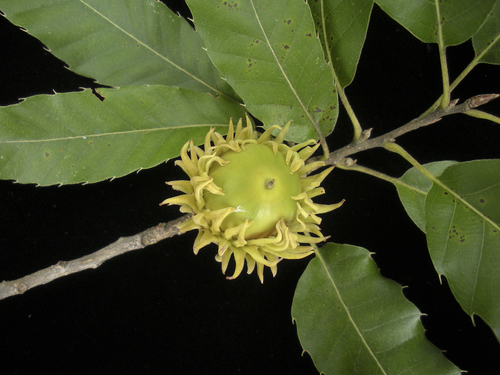
Organisms pictured · Representative pictures of the matched species, not figures from the paper.

Verbatim
e0“Q. variabilis and Q. acutissima showed increased leaf growth, chlorophyll content and net apparent quantum yield but reduced chlorophyll a/b and carboxylation efficiency under the low light intensity.”
e1“Therefore, light absorption and light utilization efficiency were improved under the low light intensity.”
Title
Photosynthetic Responses of four Oak Species to Changes in Light Environment
Sun-Hee Kim; Ju-Han Saung; Young-Kul Kim; et al. Korean Journal of Agricultural and Forest Meteorology 2008. doi:10.5532/kjafm.2008.10.4.141
Other claims from this paper (7)
- Intervention effect Q. variabilis increased leaf growth, chlorophyll content and net apparent quantum yield under low light.
- Intervention effect Q. acutissima increased leaf growth, chlorophyll content and net apparent quantum yield under low light.
- Intervention effect Q. variabilis had reduced chlorophyll a/b and carboxylation efficiency under low light.
- Intervention effect Q. acutissima had reduced chlorophyll a/b and carboxylation efficiency under low light.
- Observation Q. mongolica showed similar responses to Q. variabilis and Q. acutissima.
- Intervention effect Q. mongolica net apparent quantum yield was reduced.
- Intervention effect Shading effects on Q. serrata were lower than on the other three oak species.