Kalanchoe 510 claims

genus · family Crassulaceae · green plant · NCBI Taxonomy ↗

Common name: Palm-Beach bells — Also written in claims: Bryophyllum fedtschenkoi · Kitchingia — NCBI synonyms: Kitchingia

12 spellings

Kalanchoe
Kalanchoe · picture of the genus (one of its species)Stan Shebs · CC BY-SA 3.0 · Wikimedia Commons ↗
Observationobservedoriginal resultmeasured

Claim · model-written summary

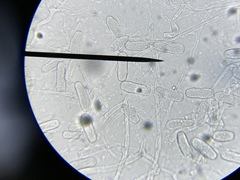
Erysiphe sedi conidia measured approximately 37.1 × 14.5 μm.

Taxon
KalanchoeKalanchoet1
Interactor
Erysiphe sediErysiphe sedit0pathogen
Outcome
dimensions of cylinder-shaped conidiae0
Value
37.1 × 14.5 μme0

Verbatim

e0

“dimensions of cylinder-shaped conidia were approximately 37.1 × 14.5 μm”

✓ located verbatim in the source · abstract, characters 364–435
t0

“Erysiphe sedi”

✓ located verbatim in the source · title, characters 54–67
t1

“Kalanchoe”

✓ located verbatim in the source · title, characters 28–37

Title

Molecular identification of Kalanchoe powdery mildew, Erysiphe sedi from Türkiye

Merve Almula BakirdÖĞen Bakar; Gözde Büşra Eroğlu Journal of Plant Pathology 2026. doi:10.1007/s42161-026-02189-w

Other claims from this paper (7)
Observationobservedoriginal resultmeasured

Claim · model-written summary

The ITS region had 100% identity to a Chinese Erysiphe sedi isolate.

Taxon
KalanchoeKalanchoet0
Interactor
Erysiphe sediErysiphe sedie0pathogen
Outcome
identitye0
Value
100%e0
Comparator
Erysiphe sedie0
Setting
Chinae0

Verbatim

e0

“100% identity with Erysiphe sedi (accession No. MW168996) isolated from Sedum aizoon in China”

✓ located verbatim in the source · abstract, characters 589–682
t0

“Kalanchoe”

✓ located verbatim in the source · title, characters 28–37

Title

Molecular identification of Kalanchoe powdery mildew, Erysiphe sedi from Türkiye

Merve Almula BakirdÖĞen Bakar; Gözde Büşra Eroğlu Journal of Plant Pathology 2026. doi:10.1007/s42161-026-02189-w

Other claims from this paper (7)
Observationobservedoriginal resultmeasured

Claim · model-written summary

The ITS region had 99.83% similarity to a previously reported Turkish isolate.

Taxon
KalanchoeKalanchoet0
Interactor
Erysiphe sediErysiphe sedit1pathogen
Outcome
nucleotide similaritye0
Value
99.83%e0
Comparator
previously reported isolate from Türkiyee0

Verbatim

e0

“99.83% nucleotide similarity with the previously reported isolate from Türkiye (MT568642)”

✓ located verbatim in the source · abstract, characters 700–789
t0

“Kalanchoe”

✓ located verbatim in the source · title, characters 28–37
t1

“Erysiphe sedi”

✓ located verbatim in the source · title, characters 54–67

Title

Molecular identification of Kalanchoe powdery mildew, Erysiphe sedi from Türkiye

Merve Almula BakirdÖĞen Bakar; Gözde Büşra Eroğlu Journal of Plant Pathology 2026. doi:10.1007/s42161-026-02189-w

Other claims from this paper (7)
Observationobservedoriginal resultmeasured

Claim · model-written summary

The isolate clustered with the Chinese isolate and far from the other Turkish isolate.

Taxon
KalanchoeKalanchoet0
Interactor
Erysiphe sediErysiphe sedit1pathogen
Outcome
clustered together with the Chinese isolatee0
Comparator
other Turkish isolatee0

Verbatim

e0

“they clustered together with the Chinese isolate, while they clustered quite far from the other Turkish isolate”

✓ located verbatim in the source · abstract, characters 863–974
t0

“Kalanchoe”

✓ located verbatim in the source · title, characters 28–37
t1

“Erysiphe sedi”

✓ located verbatim in the source · title, characters 54–67

Title

Molecular identification of Kalanchoe powdery mildew, Erysiphe sedi from Türkiye

Merve Almula BakirdÖĞen Bakar; Gözde Büşra Eroğlu Journal of Plant Pathology 2026. doi:10.1007/s42161-026-02189-w

Other claims from this paper (7)
Observationobservedoriginal resultmeasured

Claim · model-written summary

The transition/transversion distance between all E. sedi isolates was 0.000.

Taxon
KalanchoeKalanchoet0
Interactor
E. sediErysiphe sedie0pathogen
Outcome
transition/transversion distancee0
Value
0.000e0

Verbatim

e0

“transition/transversion distance between all E. sedi isolates was determined as 0.000”

✓ located verbatim in the source · abstract, characters 1058–1143
t0

“Kalanchoe”

✓ located verbatim in the source · title, characters 28–37

Title

Molecular identification of Kalanchoe powdery mildew, Erysiphe sedi from Türkiye

Merve Almula BakirdÖĞen Bakar; Gözde Büşra Eroğlu Journal of Plant Pathology 2026. doi:10.1007/s42161-026-02189-w

Other claims from this paper (7)
Method / resourceobservedoriginal resultmeasured

Claim · model-written summary

Sequence demarcation analysis yielded similarity values supporting the phylogenetic and Kimura-2 results.

Taxon
KalanchoeKalanchoet0
Outcome
similarity valuese0
Comparator
phylogenetic tree resultse0

Verbatim

e0

“Sequence demarcation tool (SDTv 1.3) analysis also provided similarity values ​​supporting both the phylogenetic tree results and the Kimura-2 parameter analysis”

✓ located verbatim in the source · abstract, characters 1145–1306
t0

“Kalanchoe”

✓ located verbatim in the source · title, characters 28–37

Title

Molecular identification of Kalanchoe powdery mildew, Erysiphe sedi from Türkiye

Merve Almula BakirdÖĞen Bakar; Gözde Büşra Eroğlu Journal of Plant Pathology 2026. doi:10.1007/s42161-026-02189-w

Other claims from this paper (7)
Observationobservedreview summarybasis n/a

Claim · model-written summary

Review of Kalanchoe species reports their chemical composition and biological activity.

Taxon
KalanchoeKalanchoee1
Outcome
chemical compositione1

Verbatim

e1

“a systematic review and analysis of up-to-date information on the chemical composition and biological activity of various species of the genus Kalanchoe”

✓ located verbatim in the source · abstract, characters 349–501

Title

Potential use of Kalanchoe plants in the development of innovative drug products: a review of chemical composition and pharmacological properties

Lev O. Solomatin Reviews on Clinical Pharmacology and Drug Therapy 2025. doi:10.17816/rcf686908

Observationobservedoriginal resultmeasured

Claim · model-written summary

The named Kalanchoe taxon was classified vom Aussterben bedroht (CR).

Taxon
KalanchoeKalanchoet0
Material
Kalanchoe aubrevilleie1
Outcome
vom Aussterben bedroht (CR)e1

Verbatim

t0

“Kalanchoe”

✓ located verbatim in the source · title, characters 41–50
e1

“Kalanchoe aubrevillei, K. boranae und K. fadeniorum wurden als vom Aussterben bedroht (CR) eingestuft”

✓ located verbatim in the source · abstract, characters 532–633

Title

Current conservation status of the genus Kalanchoe (Crassulaceae) in Kenya, East Africa

Gertrude V. Evusa; Timothy R. Pearce; Grace W. Gatheri; et al. Bradleya 2025. doi:10.25223/brad.n43.2025.a15

Other claims from this paper (2)
Observationobservedoriginal resultmeasured

Claim · model-written summary

The named Kalanchoe taxon was classified vom Aussterben bedroht (CR).

Taxon
KalanchoeKalanchoet0
Material
K. boranaee1
Outcome
vom Aussterben bedroht (CR)e1

Verbatim

t0

“Kalanchoe”

✓ located verbatim in the source · title, characters 41–50
e1

“Kalanchoe aubrevillei, K. boranae und K. fadeniorum wurden als vom Aussterben bedroht (CR) eingestuft”

✓ located verbatim in the source · abstract, characters 532–633

Title

Current conservation status of the genus Kalanchoe (Crassulaceae) in Kenya, East Africa

Gertrude V. Evusa; Timothy R. Pearce; Grace W. Gatheri; et al. Bradleya 2025. doi:10.25223/brad.n43.2025.a15

Other claims from this paper (2)
Observationobservedoriginal resultmeasured

Claim · model-written summary

The named Kalanchoe taxon was classified vom Aussterben bedroht (CR).

Taxon
KalanchoeKalanchoet0
Material
K. fadeniorume1
Outcome
vom Aussterben bedroht (CR)e1

Verbatim

t0

“Kalanchoe”

✓ located verbatim in the source · title, characters 41–50
e1

“Kalanchoe aubrevillei, K. boranae und K. fadeniorum wurden als vom Aussterben bedroht (CR) eingestuft”

✓ located verbatim in the source · abstract, characters 532–633

Title

Current conservation status of the genus Kalanchoe (Crassulaceae) in Kenya, East Africa

Gertrude V. Evusa; Timothy R. Pearce; Grace W. Gatheri; et al. Bradleya 2025. doi:10.25223/brad.n43.2025.a15

Other claims from this paper (2)