Abstract
The mode of action of a potent elicitor, N-acetylchitooligosaccharide, in rice plants was examined. In intact seedlings, no significant uptake of the elicitor via the roots was observed within 3 h, whereas rapid uptake was observed in excised leaves. Rapid and transient expression of an elicitor-responsive gene, EL2, was induced in the leaves of intact seedlings sprayed with the elicitor or in the roots and leaves of intact seedlings by immersing roots in the elicitor solution. Histochemical analysis indicated that EL2 was expressed in cells exposed to the elicitor of root and leaves. In seedlings treated with the elicitor for 1 d or longer, hyphal growth of rice blast fungus was significantly delayed, and an accumulation of auto-fluorescence around the infection site was observed. Two defense-related genes, PR-1 and PR-10 (PBZ1), were induced in a systemic and local manner by elicitor treatment, in correlation with the induction of resistance against rice blast fungus. N-Acetylchitoheptaose did not inhibit the hyphal growth of the fungi. These results indicate the occurrence of systemic signal transmission from N-acetylchitooligosaccharide in rice plants.
Abstract from the paper’s OpenAlex record, shown for indexing and research. Copyright remains with the authors or the publisher. Read at the source ↗
The text the model read, with the source record’s inline markup (italics, sub- and superscripts) rendered and its character entities decoded; quote offsets refer to the raw text.
Claims 11
Claim · model-written summary
No significant uptake of the elicitor via the roots of intact rice seedlings was observed within 3 h
- Taxon
- rice plants
 Oryza sativae0
- Organ / stage
- rootse1
- Outcome
- uptake of the elicitor via the rootse1
- Qualifier
- within 3 he1
Organisms pictured · Representative pictures of the matched species, not figures from the paper.

Verbatim
e0“The mode of action of a potent elicitor, N-acetylchitooligosaccharide, in rice plants was examined”
e1“In intact seedlings, no significant uptake of the elicitor via the roots was observed within 3 h”
Claim · model-written summary
Rapid uptake of the elicitor occurred in excised rice leaves
- Taxon
- rice plantsOryza sativae0
- Organ / stage
- excised leavese2
- Outcome
- rapid uptakee2
Organisms pictured · Representative pictures of the matched species, not figures from the paper.
Verbatim
e0“The mode of action of a potent elicitor, N-acetylchitooligosaccharide, in rice plants was examined”
e2“whereas rapid uptake was observed in excised leaves”
Claim · model-written summary
Spraying with the elicitor transiently induced EL2 expression in rice leaves
- Taxon
- rice plantsOryza sativae0
- Organ / stage
- leavese3
- Treatment
- sprayed with the elicitore3
- Gene
- EL2e3
- Outcome
- expressione3
- Direction
- inducede3
- Qualifier
- Rapid and transiente3
Not reportedComparator
Organisms pictured · Representative pictures of the matched species, not figures from the paper.
Verbatim
e0“The mode of action of a potent elicitor, N-acetylchitooligosaccharide, in rice plants was examined”
e3“Rapid and transient expression of an elicitor-responsive gene, EL2, was induced in the leaves of intact seedlings sprayed with the elicitor or in the roots and leaves of intact seedlings by immersing roots in the elicitor solution”
Claim · model-written summary
Immersing roots in the elicitor solution transiently induced EL2 expression in roots and leaves
- Taxon
- rice plantsOryza sativae0
- Organ / stage
- roots and leavese3
- Treatment
- by immersing roots in the elicitor solutione3
- Gene
- EL2e3
- Outcome
- expressione3
- Direction
- inducede3
- Qualifier
- Rapid and transiente3
Not reportedComparator
Organisms pictured · Representative pictures of the matched species, not figures from the paper.
Verbatim
e0“The mode of action of a potent elicitor, N-acetylchitooligosaccharide, in rice plants was examined”
e3“Rapid and transient expression of an elicitor-responsive gene, EL2, was induced in the leaves of intact seedlings sprayed with the elicitor or in the roots and leaves of intact seedlings by immersing roots in the elicitor solution”
Claim · model-written summary
EL2 was expressed in cells exposed to the elicitor in roots and leaves
- Taxon
- rice plantsOryza sativae0
- Organ / stage
- root and leavese4
- Gene
- EL2e4
- Outcome
- EL2 was expressede4
Organisms pictured · Representative pictures of the matched species, not figures from the paper.
Verbatim
e0“The mode of action of a potent elicitor, N-acetylchitooligosaccharide, in rice plants was examined”
e4“Histochemical analysis indicated that EL2 was expressed in cells exposed to the elicitor of root and leaves”
Claim · model-written summary
Elicitor treatment for 1 day or longer significantly delayed hyphal growth of rice blast fungus
- Taxon
- rice plantsOryza sativae0
- Treatment
- the elicitor for 1 d or longere5
- Interactor
- rice blast fungus
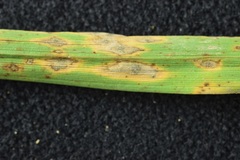 Pyricularia oryzaee5pathogen
- Outcome
- hyphal growth of rice blast funguse5
- Direction
- delayede5
Not reportedComparator
Organisms pictured · Representative pictures of the matched species, not figures from the paper.
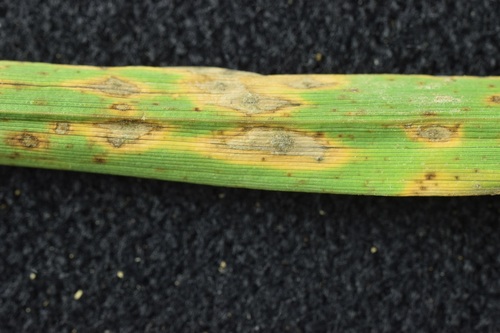
Verbatim
e0“The mode of action of a potent elicitor, N-acetylchitooligosaccharide, in rice plants was examined”
e5“In seedlings treated with the elicitor for 1 d or longer, hyphal growth of rice blast fungus was significantly delayed”
Claim · model-written summary
Elicitor-treated seedlings showed accumulation of auto-fluorescence around the infection site
- Taxon
- rice plantsOryza sativae0
- Outcome
- accumulation of auto-fluorescence around the infection sitee6
Organisms pictured · Representative pictures of the matched species, not figures from the paper.
Verbatim
e0“The mode of action of a potent elicitor, N-acetylchitooligosaccharide, in rice plants was examined”
e6“an accumulation of auto-fluorescence around the infection site was observed”
Claim · model-written summary
Elicitor treatment induced defence-related genes PR-1 and PR-10 (PBZ1) systemically and locally
- Taxon
- rice plantsOryza sativae0
- Treatment
- elicitor treatmente7
- Gene
- PR-1 and PR-10 (PBZ1)e7
- Outcome
- defense-related genese7
- Direction
- inducede7
- Qualifier
- in a systemic and local mannere7
Not reportedComparator
Organisms pictured · Representative pictures of the matched species, not figures from the paper.
Verbatim
e0“The mode of action of a potent elicitor, N-acetylchitooligosaccharide, in rice plants was examined”
e7“Two defense-related genes, PR-1 and PR-10 (PBZ1), were induced in a systemic and local manner by elicitor treatment, in correlation with the induction of resistance against rice blast fungus”
Claim · model-written summary
Elicitor treatment induced resistance against rice blast fungus
- Taxon
- rice plantsOryza sativae0
- Treatment
- elicitor treatmente7
- Interactor
- rice blast fungusPyricularia oryzaee7pathogen
- Outcome
- resistance against rice blast funguse7
- Direction
- inductione7
Not reportedComparator
Organisms pictured · Representative pictures of the matched species, not figures from the paper.
Verbatim
e0“The mode of action of a potent elicitor, N-acetylchitooligosaccharide, in rice plants was examined”
e7“Two defense-related genes, PR-1 and PR-10 (PBZ1), were induced in a systemic and local manner by elicitor treatment, in correlation with the induction of resistance against rice blast fungus”
Claim · model-written summary
N-Acetylchitoheptaose did not inhibit hyphal growth of the rice blast fungi
- Taxon
- rice plantsOryza sativae0
- Treatment
- N-Acetylchitoheptaosee1
- Outcome
- hyphal growth of the fungie1
- Direction
- did not inhibite1
Not reportedComparator
Organisms pictured · Representative pictures of the matched species, not figures from the paper.
Verbatim
e0“The mode of action of a potent elicitor, N-acetylchitooligosaccharide, in rice plants was examined”
e1“N-Acetylchitoheptaose did not inhibit the hyphal growth of the fungi”
Claim · model-written summary
Systemic signal transmission from N-acetylchitooligosaccharide occurs in rice plants
- Taxon
- rice plantsOryza sativae0
- Treatment
- N-acetylchitooligosaccharidee1
- Outcome
- systemic signal transmissione1
Organisms pictured · Representative pictures of the matched species, not figures from the paper.
Verbatim
e0“The mode of action of a potent elicitor, N-acetylchitooligosaccharide, in rice plants was examined”
e1“These results indicate the occurrence of systemic signal transmission from N-acetylchitooligosaccharide in rice plants”
The same questions in other papers
resistance inducer · Pyricularia oryzae · Oryza sativa (rice)Positive and negative results
3 papers in the same direction as this paper · 2 in the opposite direction
- negative
- negative
- positive
2 papers more in this group
See all 6 papers →resistance inducer · molecular: expression · Oryza sativa (rice)Positive and negative results
14 papers in the same direction as this paper · 2 in the opposite direction
- negative
- negative
- positive
13 papers more in this group
See all 17 papers →application · molecular: expression · Oryza sativa (rice)Positive and negative results
19 papers in the same direction as this paper · 1 in the opposite direction
- negative
- positive
- positive
17 papers more in this group
See all 21 papers →Claims are grouped by organism, treatment and what was measured or targeted. A paper counts as positive when any of its claims in the group is positive.