Abstract
Fifteen fungi were obtained from arsenic-contaminated agricultural fields in West Bengal, India and examined for their arsenic tolerance and removal ability in our previous study. Of these, the four best arsenic-remediating isolates were tested for plant growth promotion effects on rice and pea in the present study. A greenhouse-based pot experiment was conducted using soil inocula of individual fungi. The results indicated a significant (P<0.05) increase in plant growth and improvement of soil properties in inoculated soils compared to the control. A significant increase in plant growth was recorded in treated soils and varied from 16-293%. Soil chemical and enzymatic properties varied from 20-222% and 34-760%, respectively, in inoculated soil. Plants inoculated with inocula of Westerdykella and Trichoderma showed better stimulatory effects on plant growth and soil nutrient availability than Rhizopus and Lasiodiplodia. These fungi improved soil nutrient content and enhanced plant growth. These fungi may be used as bioinoculants for plant growth promotion and improved soil properties in arsenic-contaminated agricultural soils.
Abstract from the paper’s OpenAlex record, shown for indexing and research. Copyright remains with the authors or the publisher. Read at the source ↗
The text the model read, with the source record’s inline markup (italics, sub- and superscripts) rendered and its character entities decoded; quote offsets refer to the raw text.
Claims 9
Claim · model-written summary
Fungal inoculation significantly increased rice growth by 16-293% relative to control.
- Taxon
- rice
 Oryza sativae0
- Treatment
- inoculated soilse2
- Outcome
- plant growthe1
- Direction
- increasee1
- Value
- 16-293%e1
- Comparator
- controle2
Not reportedInteractor
Organisms pictured · Representative pictures of the matched species, not figures from the paper.

Verbatim
e0“plant growth promotion effects on rice and pea”
e1“A significant increase in plant growth was recorded in treated soils and varied from 16-293%”
e2“in inoculated soils compared to the control”
Claim · model-written summary
Fungal inoculation significantly increased pea growth by 16-293% relative to control.
- Taxon
- pea
 Lathyrus oleraceuse0
- Treatment
- inoculated soilse2
- Outcome
- plant growthe1
- Direction
- increasee1
- Value
- 16-293%e1
- Comparator
- controle2
Organisms pictured · Representative pictures of the matched species, not figures from the paper.

Verbatim
e0“plant growth promotion effects on rice and pea”
e1“A significant increase in plant growth was recorded in treated soils and varied from 16-293%”
e2“in inoculated soils compared to the control”
Claim · model-written summary
Soil chemical properties varied by 20-222% with fungal inoculation.
- Taxon
- riceOryza sativae1
- Treatment
- inoculated soile0
- Outcome
- Soil chemicale0
- Value
- 20-222%e0
Organisms pictured · Representative pictures of the matched species, not figures from the paper.
Verbatim
e0“Soil chemical and enzymatic properties varied from 20-222% and 34-760%, respectively, in inoculated soil”
e1“plant growth promotion effects on rice and pea”
Claim · model-written summary
Soil enzymatic properties varied by 34-760% with fungal inoculation.
- Taxon
- riceOryza sativae1
- Treatment
- inoculated soile0
- Outcome
- enzymatic propertiese0
- Value
- 34-760%e0
Organisms pictured · Representative pictures of the matched species, not figures from the paper.
Verbatim
e0“Soil chemical and enzymatic properties varied from 20-222% and 34-760%, respectively, in inoculated soil”
e1“plant growth promotion effects on rice and pea”
Claim · model-written summary
Westerdykella inocula stimulated plant growth more than Rhizopus and Lasiodiplodia inocula.
- Taxon
- riceOryza sativae1
- Treatment
- Westerdykellae0
- Interactor
- Westerdykella
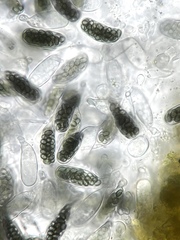 Westerdykellae0symbiont
- Outcome
- plant growthe0
- Direction
- bettere0
- Comparator
- Rhizopus and Lasiodiplodiae0
Organisms pictured · Representative pictures of the matched species, not figures from the paper.

Verbatim
e0“Plants inoculated with inocula of Westerdykella and Trichoderma showed better stimulatory effects on plant growth and soil nutrient availability than Rhizopus and Lasiodiplodia”
e1“plant growth promotion effects on rice and pea”
Claim · model-written summary
Trichoderma inocula stimulated plant growth more than Rhizopus and Lasiodiplodia inocula.
- Taxon
- riceOryza sativae1
- Treatment
- Trichodermae0
- Interactor
- Trichoderma
 Trichodermae0symbiont
- Outcome
- plant growthe0
- Direction
- bettere0
- Comparator
- Rhizopus and Lasiodiplodiae0
Organisms pictured · Representative pictures of the matched species, not figures from the paper.

Verbatim
e0“Plants inoculated with inocula of Westerdykella and Trichoderma showed better stimulatory effects on plant growth and soil nutrient availability than Rhizopus and Lasiodiplodia”
e1“plant growth promotion effects on rice and pea”
Claim · model-written summary
Westerdykella inocula improved soil nutrient availability more than Rhizopus and Lasiodiplodia inocula.
- Taxon
- riceOryza sativae1
- Treatment
- Westerdykellae0
- Interactor
- WesterdykellaWesterdykellae0symbiont
- Outcome
- soil nutrient availabilitye0
- Direction
- bettere0
- Comparator
- Rhizopus and Lasiodiplodiae0
Organisms pictured · Representative pictures of the matched species, not figures from the paper.
Verbatim
e0“Plants inoculated with inocula of Westerdykella and Trichoderma showed better stimulatory effects on plant growth and soil nutrient availability than Rhizopus and Lasiodiplodia”
e1“plant growth promotion effects on rice and pea”
Claim · model-written summary
Trichoderma inocula improved soil nutrient availability more than Rhizopus and Lasiodiplodia inocula.
- Taxon
- riceOryza sativae1
- Treatment
- Trichodermae0
- Interactor
- TrichodermaTrichodermae0symbiont
- Outcome
- soil nutrient availabilitye0
- Direction
- bettere0
- Comparator
- Rhizopus and Lasiodiplodiae0
Organisms pictured · Representative pictures of the matched species, not figures from the paper.
Verbatim
e0“Plants inoculated with inocula of Westerdykella and Trichoderma showed better stimulatory effects on plant growth and soil nutrient availability than Rhizopus and Lasiodiplodia”
e1“plant growth promotion effects on rice and pea”
Claim · model-written summary
The authors suggest using these fungi as bioinoculants for growth promotion and improved soil properties in arsenic contaminated agricultural soils.
- Taxon
- riceOryza sativae1
- Outcome
- bioinoculants for plant growth promotion and improved soil propertiese0
- Qualifier
- arsenic-contaminated agricultural soilse0
Organisms pictured · Representative pictures of the matched species, not figures from the paper.
Verbatim
e0“These fungi may be used as bioinoculants for plant growth promotion and improved soil properties in arsenic-contaminated agricultural soils”
e1“plant growth promotion effects on rice and pea”
The same questions in other papers
Trichoderma · growth · Oryza sativa (rice)Results differ
29 papers in the same direction as this paper · 6 in the opposite direction
- negative
- no effect
- no effect
32 papers more in this group
See all 36 papers →inoculation · growth · Lathyrus oleraceus (pea)Positive and negative results
71 papers in the same direction as this paper · 17 in the opposite direction
- negative
- no effect
- no effect
85 papers more in this group
See all 89 papers →inoculation · growth · Oryza sativa (rice)Positive and negative results
361 papers in the same direction as this paper · 34 in the opposite direction · 3 reporting no difference from an alternative
- positive
- no effect
- negative
395 papers more in this group
See all 399 papers →Claims are grouped by organism, treatment and what was measured or targeted. A paper counts as positive when any of its claims in the group is positive.