Abstract
A specific antiserum, raised against purified phenylalanine ammonialyase from irradiated cell suspension cultures of parsley (Petroselinum hortense Hoffm.), was used to compare the enzyme species induced either by dilution or by irradiation of the cell suspensions, to investigate the effect of dilution on the rate of synthesis of the enzyme protein in vivo, and to analyze the changes in specific activity of polyribosomal mRNA for the enzyme subunits in vitro. The mRNA activity in vitro was measured by translation of the polyribosomal RNA in a rabbit reticulocyte lysate.The results of immunodiffusion assays indicated that dilution and irradiation of the cell suspensions induced immunologically identical molecular species of phenylalanine ammonia-lyase. Dilution resulted in a large but short term increase in the rate of synthesis of the enzyme. Highest rates of synthesis were reached after 5 to 6 hours, and were followed by a rapid decline. The curves obtained for the changes in the rate of enzyme synthesis, both in vivo and in vitro, coincided with the curve for changes in the rate of appearance of catalytically active enzyme, as calculated from the observed changes in enzyme activity. These results suggested that the changes in enzyme activity were caused by corresponding changes in the amount of enzyme-specific polyribosomal mRNA.The dilution of cell cultures had no significant effect on the total rate of incorporation of radioactivity into protein in vivo or on the general template activity of the polyribosomal RNA in vitro throughout at least 25 hours.
Abstract from the paper’s OpenAlex record, shown for indexing and research. Copyright remains with the authors or the publisher. Read at the source ↗
The text the model read, with the source record’s inline markup (italics, sub- and superscripts) rendered and its character entities decoded; quote offsets refer to the raw text.
Claims 7
Claim · model-written summary
Dilution and irradiation induced immunologically identical phenylalanine ammonia-lyase species in parsley cultures.
- Taxon
- parsley
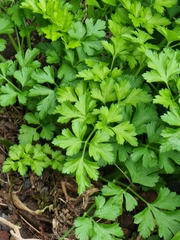 Petroselinum crispume1
- Treatment
- dilution and irradiatione0
- Gene
- phenylalanine ammonia-lyasee0
- Outcome
- immunologically identical molecular species of phenylalanine ammonia-lyasee0
Organisms pictured · Representative pictures of the matched species, not figures from the paper.
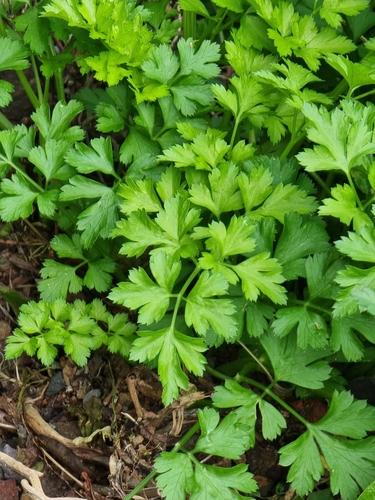
Verbatim
e0“dilution and irradiation of the cell suspensions induced immunologically identical molecular species of phenylalanine ammonia-lyase”
e1“parsley (Petroselinum hortense Hoffm.)”
Claim · model-written summary
Dilution briefly increased the rate of parsley enzyme synthesis.
- Taxon
- parsleyPetroselinum crispume1
- Treatment
- Dilutione0
- Outcome
- rate of synthesis of the enzymee0
- Direction
- increasee0
- Qualifier
- short terme0
Organisms pictured · Representative pictures of the matched species, not figures from the paper.
Verbatim
e0“Dilution resulted in a large but short term increase in the rate of synthesis of the enzyme.”
e1“parsley (Petroselinum hortense Hoffm.)”
Claim · model-written summary
The enzyme synthesis rate peaked after 5 to 6 hours and then rapidly declined.
- Taxon
- parsleyPetroselinum crispume1
- Outcome
- rates of synthesise0
- Direction
- Higheste0
- Value
- 5 to 6 hourse0
Organisms pictured · Representative pictures of the matched species, not figures from the paper.
Verbatim
e0“Highest rates of synthesis were reached after 5 to 6 hours, and were followed by a rapid decline.”
e1“parsley (Petroselinum hortense Hoffm.)”
Claim · model-written summary
In vivo and in vitro enzyme synthesis trajectories coincided with the active enzyme appearance trajectory.
- Taxon
- parsleyPetroselinum crispume1
- Gene
- enzymee0
- Outcome
- rate of enzyme synthesise0
Not reportedDirection
Organisms pictured · Representative pictures of the matched species, not figures from the paper.
Verbatim
e0“The curves obtained for the changes in the rate of enzyme synthesis, both in vivo and in vitro, coincided with the curve for changes in the rate of appearance of catalytically active enzyme”
e1“parsley (Petroselinum hortense Hoffm.)”
Claim · model-written summary
The authors suggest changes in enzyme activity were caused by changes in enzyme-specific polyribosomal mRNA amount.
- Taxon
- parsleyPetroselinum crispume1
- Gene
- enzyme-specific polyribosomal mRNAe0
- Outcome
- changes in enzyme activitye0
Organisms pictured · Representative pictures of the matched species, not figures from the paper.
Verbatim
e0“the changes in enzyme activity were caused by corresponding changes in the amount of enzyme-specific polyribosomal mRNA”
e1“parsley (Petroselinum hortense Hoffm.)”
Claim · model-written summary
Dilution did not significantly change overall radioactive incorporation into protein in vivo.
- Taxon
- parsleyPetroselinum crispume1
- Treatment
- dilution of cell culturese0
- Outcome
- total rate of incorporation of radioactivity into protein in vivoe0
- Direction
- no significant effecte0
Not reportedComparator
Organisms pictured · Representative pictures of the matched species, not figures from the paper.
Verbatim
e0“The dilution of cell cultures had no significant effect on the total rate of incorporation of radioactivity into protein in vivo or on the general template activity of the polyribosomal RNA in vitro throughout at least 25 hours.”
e1“parsley (Petroselinum hortense Hoffm.)”
Claim · model-written summary
Dilution did not significantly change general polyribosomal RNA template activity in vitro for at least 25 hours.
- Taxon
- parsleyPetroselinum crispume1
- Treatment
- dilution of cell culturese0
- Outcome
- general template activity of the polyribosomal RNA in vitroe0
- Direction
- no significant effecte0
- Qualifier
- throughout at least 25 hourse0
Not reportedComparator
Organisms pictured · Representative pictures of the matched species, not figures from the paper.
Verbatim
e0“The dilution of cell cultures had no significant effect on the total rate of incorporation of radioactivity into protein in vivo or on the general template activity of the polyribosomal RNA in vitro throughout at least 25 hours.”
e1“parsley (Petroselinum hortense Hoffm.)”