Abstract
Penicillium spp. are well known to produce a variety of beneficial metabolites for plant growth and survival, as well as they defend their hosts from attack of certain pathogens. In this study, effects of culture filtrate of different Penicillium spp. were tested on tomato seeds. On the whole, presoaking of seeds in the filtrates of the nine Penicillium isolates tested significantly increased seed germination when compared with the control seeds. Cultural extracts of P. expansum and P. bilaii were highly effective in growth promotion up to 90%. It was also observed that P. implicatum and P. oxalicum significantly enhanced the root growth in tomato seedling as compared to other species. In case of shoot length, P. verrucosum (3.38 cm), P. granulatum (2.81 cm) and P. implicatum (2.62 cm) were effective. P. implicatum was quite promising in increasing shoot and root length in tomato seedlings, while P. simplicissimum and P. citrinum were less effective on seedling growth. The plant growth-promoting ability of Penicillium strains may help in growth promotion in other plants and crops. Penicillium spp. are already known for producing various mycotoxins and enzymes. Plant growth-promoting ability of Penicillium spp. will open new aspects of research and investigations. The role of Penicillium spp. in tomato plant growth requires further exploration.
Abstract from the paper’s OpenAlex record, shown for indexing and research. Copyright remains with the authors or the publisher. Read at the source ↗
The text the model read, with the source record’s inline markup (italics, sub- and superscripts) rendered and its character entities decoded; quote offsets refer to the raw text.
Claims 10
Claim · model-written summary
Filtrates from nine Penicillium isolates significantly increased tomato seed germination relative to controls.
- Taxon
- tomato
 Solanum lycopersicumt0
- Treatment
- presoaking of seeds in the filtrates of the nine Penicillium isolatese0
- Interactor
- Penicillium
 Penicilliume0symbiont
- Outcome
- seed germinatione0
- Direction
- increasede0
- Comparator
- control seedse0
Organisms pictured · Representative pictures of the matched species, not figures from the paper.


Verbatim
e0“presoaking of seeds in the filtrates of the nine Penicillium isolates tested significantly increased seed germination when compared with the control seeds”
t0“tomato (Solanum lycopersicumL.)”
Claim · model-written summary
P. expansum extract promoted tomato growth up to 90%.
- Taxon
- tomatoSolanum lycopersicumt0
- Treatment
- Cultural extracts of P. expansume0
- Interactor
- P. expansum
 Penicillium expansume0symbiont
- Outcome
- growth promotione0
- Direction
- growth promotione0
- Value
- 90%e0
Not reportedComparator
Organisms pictured · Representative pictures of the matched species, not figures from the paper.

Verbatim
e0“Cultural extracts of P. expansum and P. bilaii were highly effective in growth promotion up to 90%”
t0“tomato (Solanum lycopersicumL.)”
Claim · model-written summary
P. bilaii extract promoted tomato growth up to 90%.
- Taxon
- tomatoSolanum lycopersicumt0
- Treatment
- P. bilaiie0
- Interactor
- P. bilaiie0symbiont
- Outcome
- growth promotione0
- Direction
- growth promotione0
- Value
- 90%e0
Not reportedComparator
Organisms pictured · Representative pictures of the matched species, not figures from the paper.
Verbatim
e0“Cultural extracts of P. expansum and P. bilaii were highly effective in growth promotion up to 90%”
t0“tomato (Solanum lycopersicumL.)”
Claim · model-written summary
P. implicatum significantly enhanced tomato seedling root growth compared with other species.
- Taxon
- tomatoSolanum lycopersicume0
- Treatment
- P. implicatume0
- Interactor
- P. implicatumPenicillium implicatume0symbiont
- Outcome
- root growthe0
- Direction
- enhancede0
- Comparator
- other speciese0
Organisms pictured · Representative pictures of the matched species, not figures from the paper.
Verbatim
e0“P. implicatum and P. oxalicum significantly enhanced the root growth in tomato seedling as compared to other species”
Claim · model-written summary
P. oxalicum significantly enhanced tomato seedling root growth compared with other species.
- Taxon
- tomatoSolanum lycopersicume0
- Treatment
- P. oxalicume0
- Interactor
- P. oxalicum
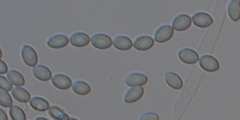 Penicillium oxalicume0symbiont
- Outcome
- root growthe0
- Direction
- enhancede0
- Comparator
- other speciese0
Organisms pictured · Representative pictures of the matched species, not figures from the paper.

Verbatim
e0“P. implicatum and P. oxalicum significantly enhanced the root growth in tomato seedling as compared to other species”
Claim · model-written summary
P. verrucosum treatment produced 3.38 cm tomato shoot length.
- Taxon
- tomatoSolanum lycopersicumt0
- Treatment
- P. verrucosume0
- Interactor
- P. verrucosumPenicillium verrucosume0symbiont
- Outcome
- shoot lengthe0
- Value
- 3.38 cme0
Not reportedComparatorDirection
Organisms pictured · Representative pictures of the matched species, not figures from the paper.
Verbatim
e0“In case of shoot length, P. verrucosum (3.38 cm), P. granulatum (2.81 cm) and P. implicatum (2.62 cm) were effective”
t0“tomato (Solanum lycopersicumL.)”
Claim · model-written summary
P. granulatum treatment produced 2.81 cm tomato shoot length.
- Taxon
- tomatoSolanum lycopersicumt0
- Treatment
- P. granulatume0
- Interactor
- P. granulatum
 Penicillium granulatume0symbiont
- Outcome
- shoot lengthe0
- Value
- 2.81 cme0
Not reportedComparatorDirection
Organisms pictured · Representative pictures of the matched species, not figures from the paper.

Verbatim
e0“In case of shoot length, P. verrucosum (3.38 cm), P. granulatum (2.81 cm) and P. implicatum (2.62 cm) were effective”
t0“tomato (Solanum lycopersicumL.)”
Claim · model-written summary
P. implicatum treatment produced 2.62 cm tomato shoot length.
- Taxon
- tomatoSolanum lycopersicumt0
- Treatment
- P. implicatume0
- Interactor
- P. implicatumPenicillium implicatume0symbiont
- Outcome
- shoot lengthe0
- Value
- 2.62 cme0
Not reportedComparatorDirection
Organisms pictured · Representative pictures of the matched species, not figures from the paper.
Verbatim
e0“In case of shoot length, P. verrucosum (3.38 cm), P. granulatum (2.81 cm) and P. implicatum (2.62 cm) were effective”
t0“tomato (Solanum lycopersicumL.)”
Claim · model-written summary
P. simplicissimum was less effective for tomato seedling growth.
- Taxon
- tomatoSolanum lycopersicumt0
- Treatment
- P. simplicissimume0
- Interactor
- P. simplicissimumPenicillium simplicissimume0symbiont
- Outcome
- seedling growthe0
- Direction
- less effectivee0
Not reportedComparator
Organisms pictured · Representative pictures of the matched species, not figures from the paper.
Verbatim
e0“P. simplicissimum and P. citrinum were less effective on seedling growth”
t0“tomato (Solanum lycopersicumL.)”
Claim · model-written summary
P. citrinum was less effective for tomato seedling growth.
- Taxon
- tomatoSolanum lycopersicumt0
- Treatment
- P. citrinume0
- Interactor
- P. citrinumPenicillium citrinume0symbiont
- Outcome
- seedling growthe0
- Direction
- less effectivee0
Not reportedComparator
Organisms pictured · Representative pictures of the matched species, not figures from the paper.
Verbatim
e0“P. simplicissimum and P. citrinum were less effective on seedling growth”
t0“tomato (Solanum lycopersicumL.)”
The same questions in other papers
Penicillium verrucosum · growth · Solanum lycopersicum (tomato)Results agree
1 paper in the same direction as this paper
- positive
Penicillium granulatum · growth · Solanum lycopersicum (tomato)Results agree
1 paper in the same direction as this paper
- positive
Penicillium implicatum · growth · Solanum lycopersicum (tomato)Results agree
1 paper in the same direction as this paper
- positive
Penicillium citrinum · growth · Solanum lycopersicum (tomato)Results agree
1 paper in the same direction as this paper
- negative
Penicillium · growth · Solanum lycopersicum (tomato)Results agree
3 papers in the same direction as this paper
- positive
- positive
- positive
botanical · growth · Solanum lycopersicum (tomato)Positive and negative results
202 papers in the same direction as this paper · 87 in the opposite direction · 1 reporting no difference from an alternative
- no effect
- negative
- negative
287 papers more in this group
See all 291 papers →Claims are grouped by organism, treatment and what was measured or targeted. A paper counts as positive when any of its claims in the group is positive.